
Nostalgia
This B2 lesson explores why we feel drawn to the past and what nostalgia really means. Students read about the history of the word, watch a video about missing the 90s, and learn eight vocabulary items like “bittersweet,” “longing,” and “cherish.” There’s plenty of speaking time built in, with topics ranging from childhood food to old fashion trends.
Lesson overview
- Learn eight vocabulary items related to nostalgia and memory, like “trigger” and “sentimental”
- Read a short text about the origin and meaning of nostalgia as a concept
- Watch a video about 90s memories and compare them with your own childhood
- Discuss personal memories around food, fashion, and pop culture from the past
| Level | Vocabulary | Video Length | Lesson Time |
| B2 / Upper-Intermediate | 8 words | 3:24 min | 60 min |
Vocabulary
- Nostalgia
- Bittersweet
- Longing
- Emotional distress
- Comforting
- Cherish
- Sentimental
- Trigger
Contents
- Lead-in
- Reading
- Vocabulary
- Vocabulary practice
- Video
- Discussion
- Questions
- Speaking
- Agree or disagree
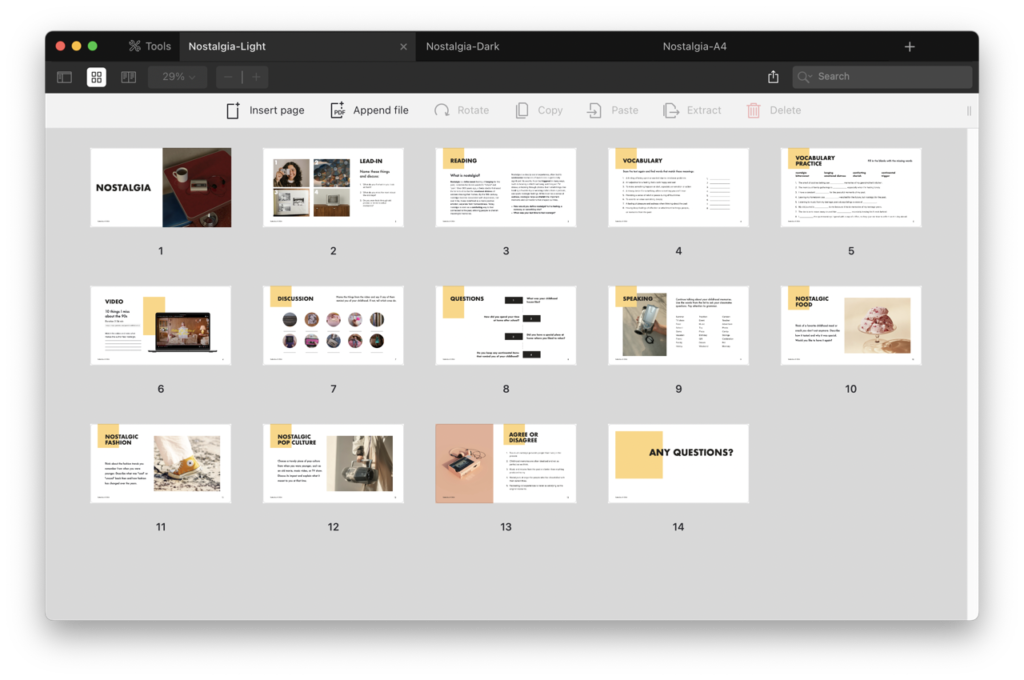
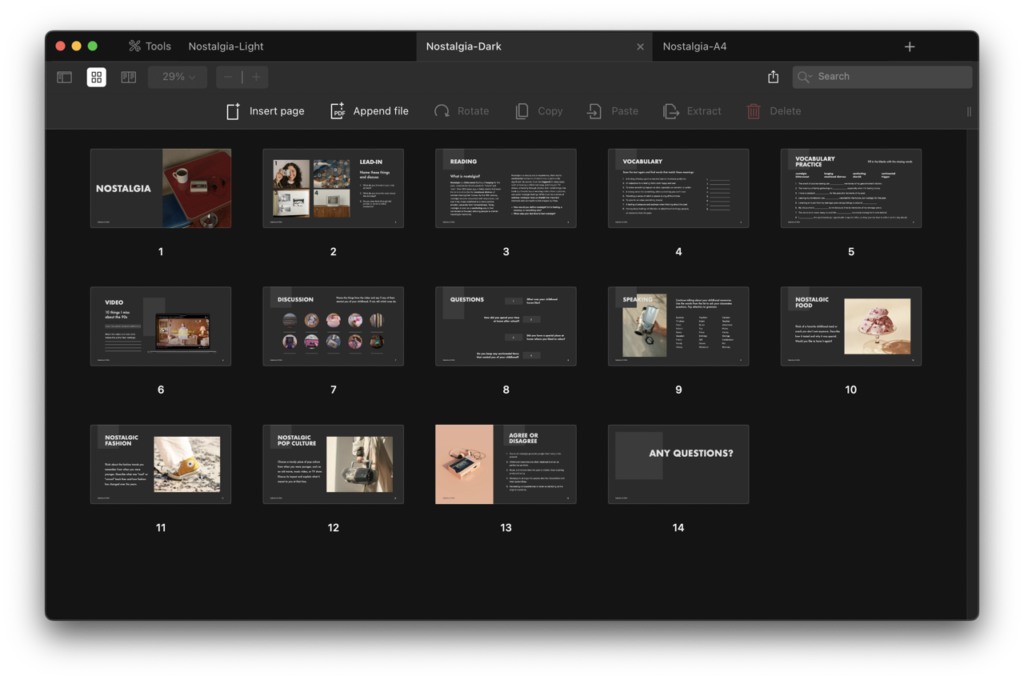
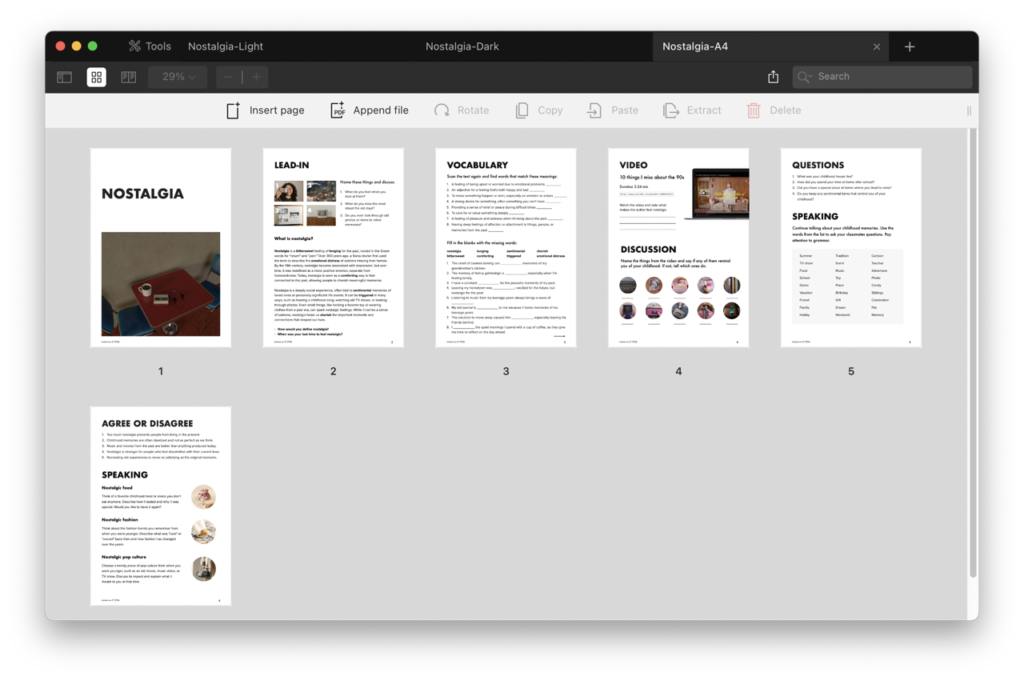
The lead-in works best if you can show the images on a big screen. Students name the old items they see and talk about how those things make them feel. This usually gets the room buzzing because everyone has something to say about the stuff they grew up with. Give pairs a few minutes, then ask a couple of people to share what they miss most about the old days.
Move into the reading on slide 3. It’s two short paragraphs about what nostalgia is and where the word comes from. The text is straightforward for B2, but the vocabulary exercise that follows asks students to scan for specific words, so tell them to read carefully. Go through the eight definitions on slide 4 and let students find the matching words in the text. Then have them complete the gap-fill sentences on slide 5. Words like “bittersweet” and “trigger” tend to stick quickly because students connect them to their own experiences.
The 90s video is about three and a half minutes long. Ask students to note what makes the author feel nostalgic while they watch. After the video, the discussion on slide 7 lets students name the items they saw and say whether any of those things remind them of their own childhood. This is where the lesson gets personal and students start swapping stories. The question cards on slides 8 and 9 keep the conversation going with topics like childhood homes, favorite games, and after-school routines. Don’t rush through these because B2 students often have a lot to say once they start remembering.
Finish with the three themed speaking tasks on slides 10 through 12, covering nostalgic food, fashion, and pop culture. Pick one or two depending on time. The agree or disagree statements on the last slide make a strong closer because opinions are usually split, especially on whether nostalgia stops people from living in the present.
