
Neuroscience of Giving
This C1 lesson examines the neuroscience of giving and explores what happens in our brains when we donate to others. Students watch a video about charitable behavior, discuss vocabulary related to generosity and philanthropy, and debate ethical spending decisions. The lesson challenges common assumptions about self-interest and encourages critical thinking about altruism.
Lesson overview
- Explore scientific research on brain activity during charitable giving and donation behavior
- Analyze vocabulary related to generosity, sacrifice, and philanthropic motivations
- Discuss ethical dilemmas involving money allocation and charitable spending priorities
- Develop presentation skills by researching and advocating for charitable causes
| Level | Vocabulary | Video Length | Lesson Time |
| C1 / Advanced | 8 words | 5:27 min | 60 min |
Vocabulary
- cynical
- generosity
- rewarding
- philanthropy
- sacrifice
- hunch
- audit
- tangible
Contents
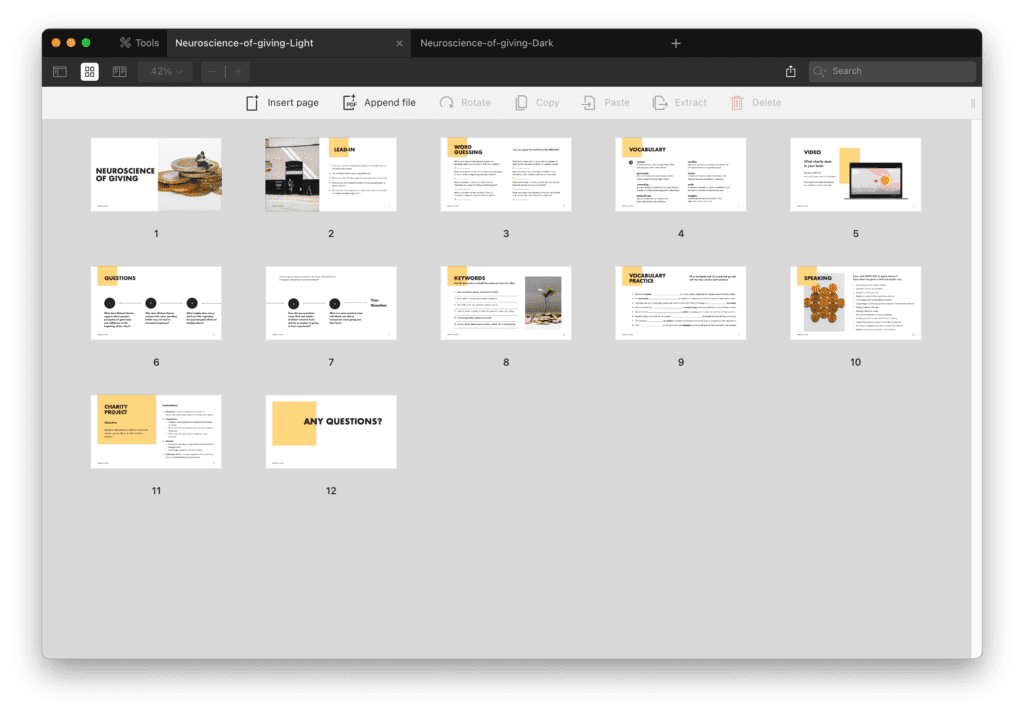
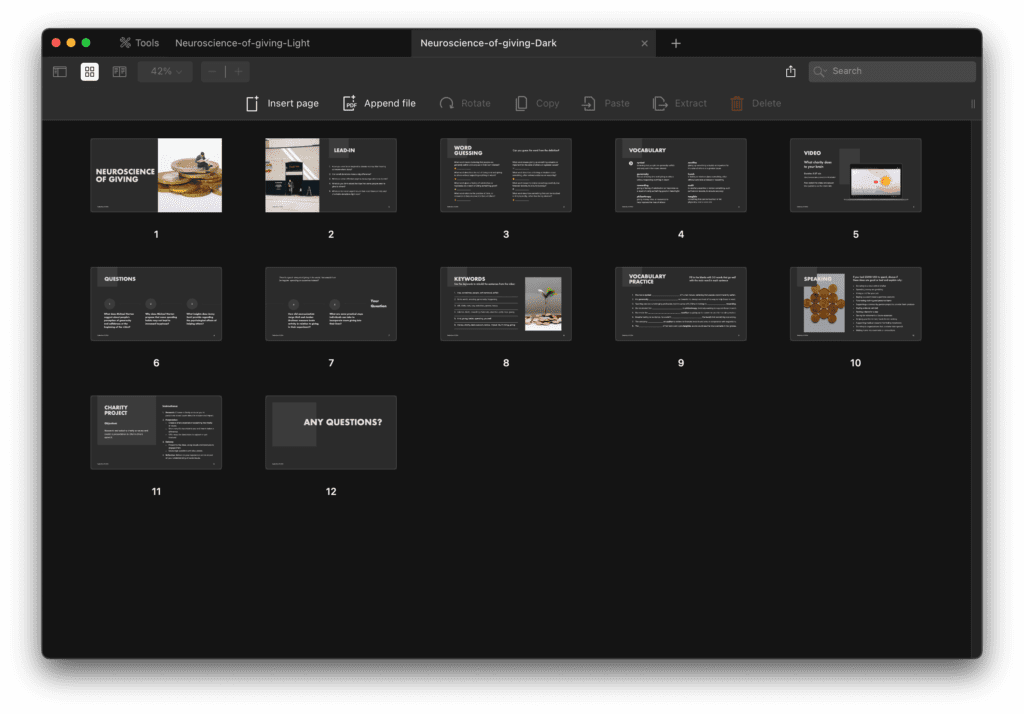
- Lead-in
- Guess the word
- Vocabulary
- Video
- Comprehension questions
- Practice 1
- Practice 2
- Speaking
- Charity project (homework)
Begin with the lead-in questions about donation experiences and charitable priorities. Some responses might touch on personal values or controversial topics like Robin Hood ethics, so create space for respectful disagreement from the start.
The word guessing activity on page 3 introduces key vocabulary before students encounter it in context. Students work through definitions to guess terms like cynical, generosity, and philanthropy. This pre-teaching makes the video easier to follow. The vocabulary page that follows gives students definitions they can reference throughout the lesson.
The video is central to this lesson. It runs about five and a half minutes and covers brain science, giving behavior, and happiness research. Play it once without stopping, then use the comprehension questions on pages 6-7 to check understanding. Replay sections if students struggle with specific details. The keywords activity on page 8 has students reconstruct sentences using language from the video.
The speaking activities on pages 9-10 move students toward freer production. Page 10’s spending debate works well as group discussion where students defend their positions on various uses of $5000. Some options are clearly unethical while others are debatable, which creates natural conversation. The charity project on page 11 works as homework or an extended task where students research causes they care about and present their findings.
