
Networking

This B2 lesson covers professional networking in English, from preparing an elevator pitch to following up after an event. Students read practical tips, learn useful phrases like “pick your brain” and “touch base,” and practice real networking scenarios through role plays. It’s a solid choice for business English classes or any group preparing for professional situations.
Lesson overview
- Learn key networking vocabulary including elevator pitch, referral, and build rapport
- Read and summarize three-stage networking advice: before, during, and after the event
- Practice six common networking phrases and match them to real situations
- Role-play conversations with different professionals at a networking event
| Level | Vocabulary | Lesson Time |
| B2 / Upper-Intermediate | 19 words | 60-80 min |
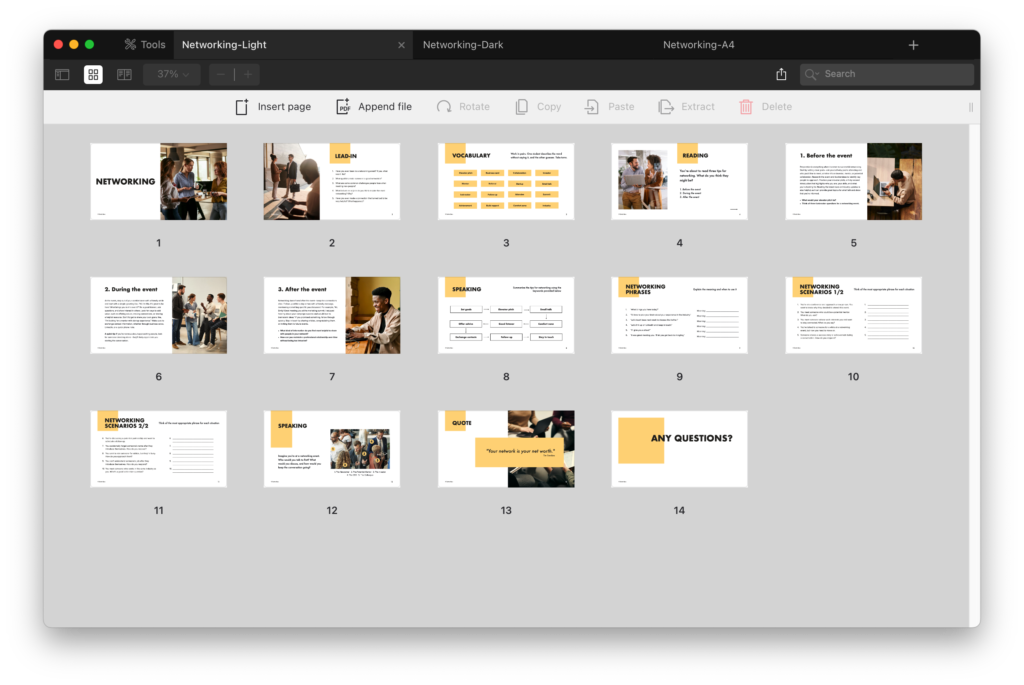
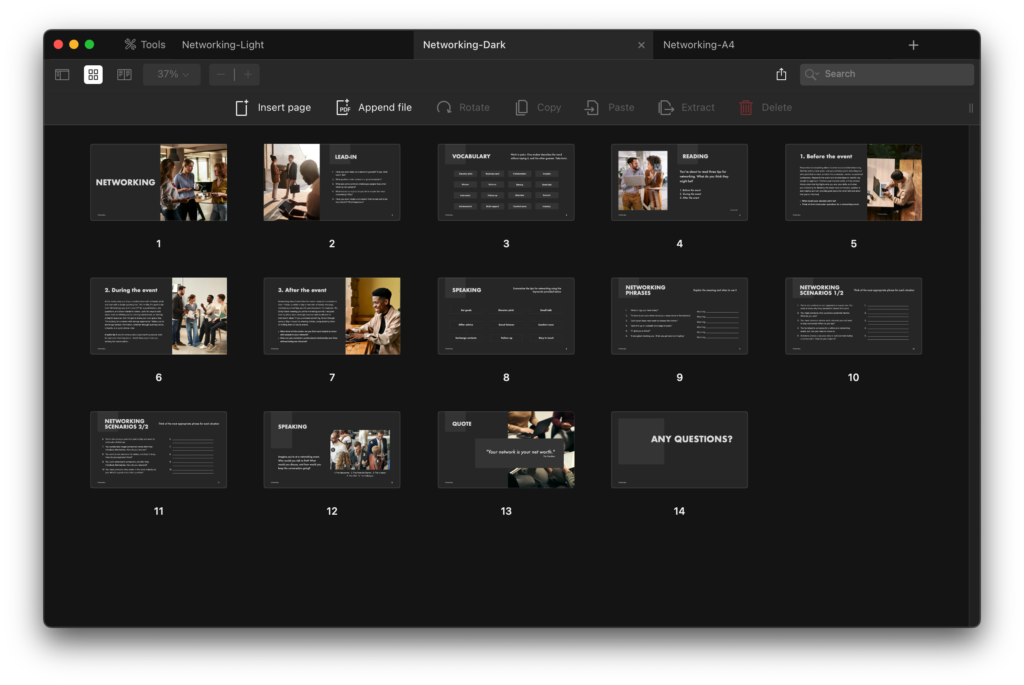
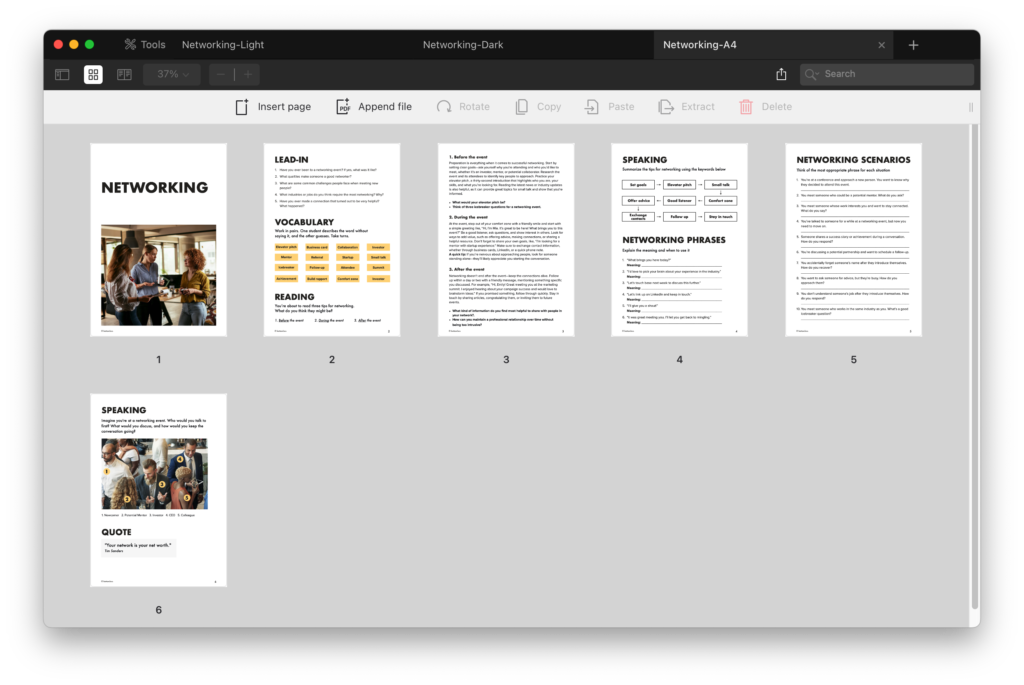
Vocabulary
- Elevator pitch
- Mentor
- Icebreaker
- Achievement
- Business card
- Referral
- Follow-up
- Build rapport
- Collaboration
- Startup
- Attendee
- Comfort zone
- Investor
- Small talk
- Summit
- Industry
- Pick someone’s brain
- Touch base
- Link up
- Give a shout
- Mingling
Contents
- Lead-in
- Vocabulary
- Reading
- Speaking
- Networking phrases
- Networking scenarios
- Speaking
- Quote
Start with the lead-in questions on slide 2. Question 1 splits the room quickly because some students have been to networking events and others haven’t. That difference is actually useful here since students who have experience can share what worked and what felt awkward. Don’t spend too long on this, five minutes is enough before moving to vocabulary.
Slide 3 has 16 vocabulary items set up as a guessing game. One student describes a word without saying it while their partner guesses. This is noisy and fun, and it works better than just reading definitions. Words like “elevator pitch,” “build rapport,” and “comfort zone” are the most important ones for the rest of the lesson, so make sure those come up. After the vocabulary round, move into the reading on slides 5 through 7. Each slide covers one stage of networking: before, during, and after the event. Have students read one section at a time and discuss the questions at the bottom before moving on. The summarizing task on slide 8 asks students to retell the tips using keywords, which is a good way to check they understood the main ideas.
The networking phrases on slide 9 are where this lesson really picks up. Phrases like “let’s touch base” and “I’ll give you a shout” are ones B2 students hear but rarely use on their own. Go through the meanings together, then move straight into the scenario activities on slides 10 and 11. There are ten situations in total, things like forgetting someone’s name or wrapping up a conversation politely. Students pick the best phrase for each one. These work well in pairs, with a quick class check afterward.
Finish with the speaking activity on slide 12. Students look at five people at a fictional networking event and decide who to approach first and what to say. This pulls everything together and gives students a chance to use the vocabulary, phrases, and strategies from the whole lesson in one activity.
