
Myths About the Middle Ages
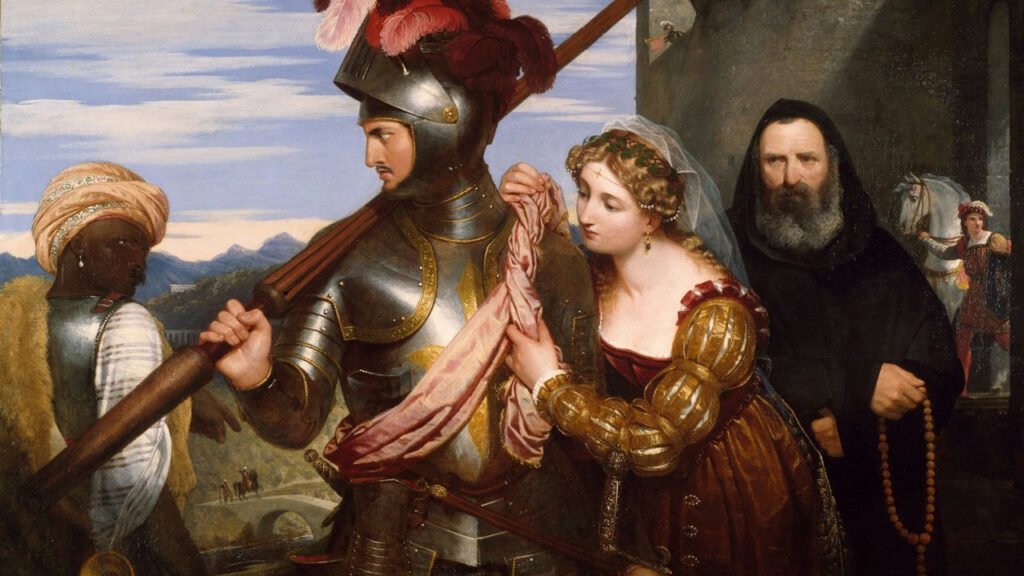
This B2 lesson debunks three common myths about the Middle Ages and challenges popular misconceptions about medieval life. Students explore historical evidence about hygiene practices, scientific knowledge, and social diversity in medieval Europe. The lesson combines reading comprehension with critical thinking about how historical narratives get distorted over time.
Lesson overview
- Explore common myths about medieval Europe through reading and comprehension activities
- Practice vocabulary related to historical periods, scientific knowledge, and social structures
- Discuss misconceptions about history and why they persist across generations
- Develop speaking skills by creating advice for imaginary time travelers
| Level | Vocabulary | Lesson Time |
| B2 / Upper-Intermediate | 10 words | 60 min |
Vocabulary
- backwardness
- superstition
- filthy
- hygiene
- sphere
- astronomical
- diverse
- ancestry
- queer
- nonconformity
Contents
- Lead-in
- Timeline
- Discussion
- Vocabulary preview
- Reading
- True or False
- Speaking
- Extra video
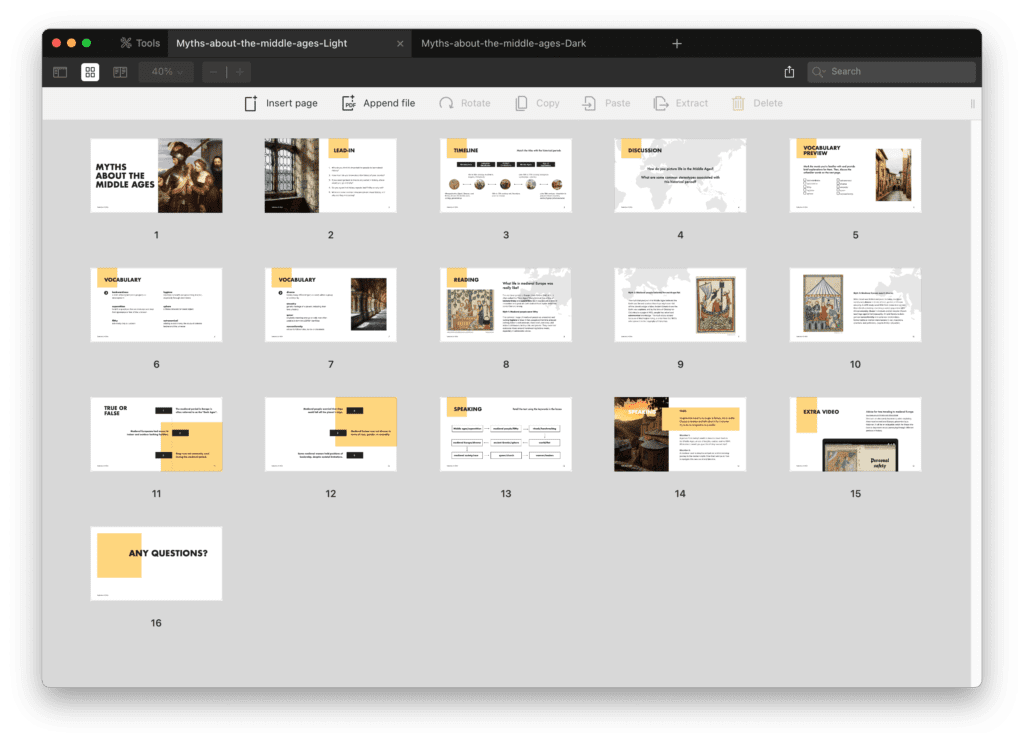
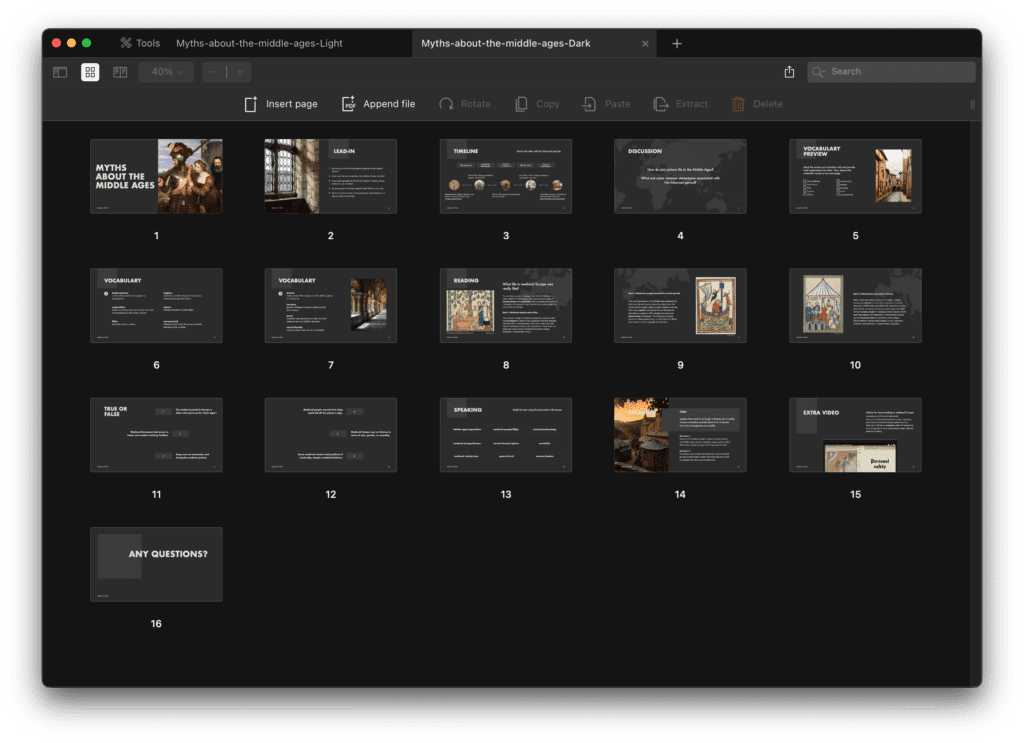
Open with the lead-in questions about history and misconceptions. These get students thinking about how historical knowledge gets passed down. The timeline activity on page 3 helps students place different periods before focusing on the Middle Ages.
The vocabulary preview on pages 5-7 uses a self-assessment approach where students mark familiar words before learning unfamiliar ones. This lets you see which terms need more attention. Words like backwardness, superstition, and hygiene come up in the myths students will read about.
The reading passage debunks three myths about medieval life. Have students read the introduction first, then tackle each myth section individually. After each myth, pause for quick comprehension checks before moving on. This prevents information overload and helps students process each point. The true or false activity on pages 11-12 works well as a comprehension check.
The keyword retelling activity on page 13 has students reconstruct the main ideas using limited prompts. This goes beyond simple comprehension questions. Students should work in pairs to support each other through the retelling.
The time travel speaking task on page 14 asks students to give practical advice to time travelers. They choose between advising a modern person visiting medieval times or a medieval person arriving in the present day. Give them a few minutes to plan before they speak for three minutes. The optional video on page 15 continues the time travel theme if you have extra class time.
