
My Skincare Routine
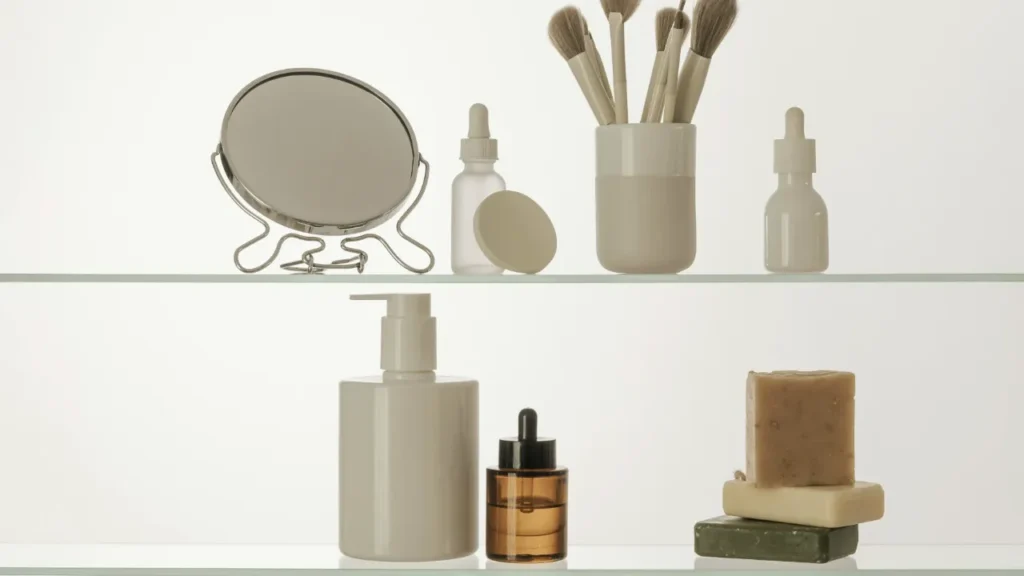
This A2 lesson looks at skincare routines and everyday habits for adult learners. Students learn 10 key vocabulary words like serum, toner, and cleanser, then read a short text about why lifestyle choices matter more than expensive products. There is plenty of speaking practice built in, so students get to talk about their own habits too. Good for adult groups who need practical, real-life vocabulary.
Lesson overview
- Learn 10 skincare vocabulary words through context and definitions
- Discuss good and bad habits that affect your skin every day
- Read a short text about common skincare mistakes and lifestyle tips
- Practice speaking about your own routine with one-minute monologues
| Level | Vocabulary | Reading Time | Lesson Time |
| A2 / Pre-Intermediate | 10 words | 315 words, 5 min | 60 min |
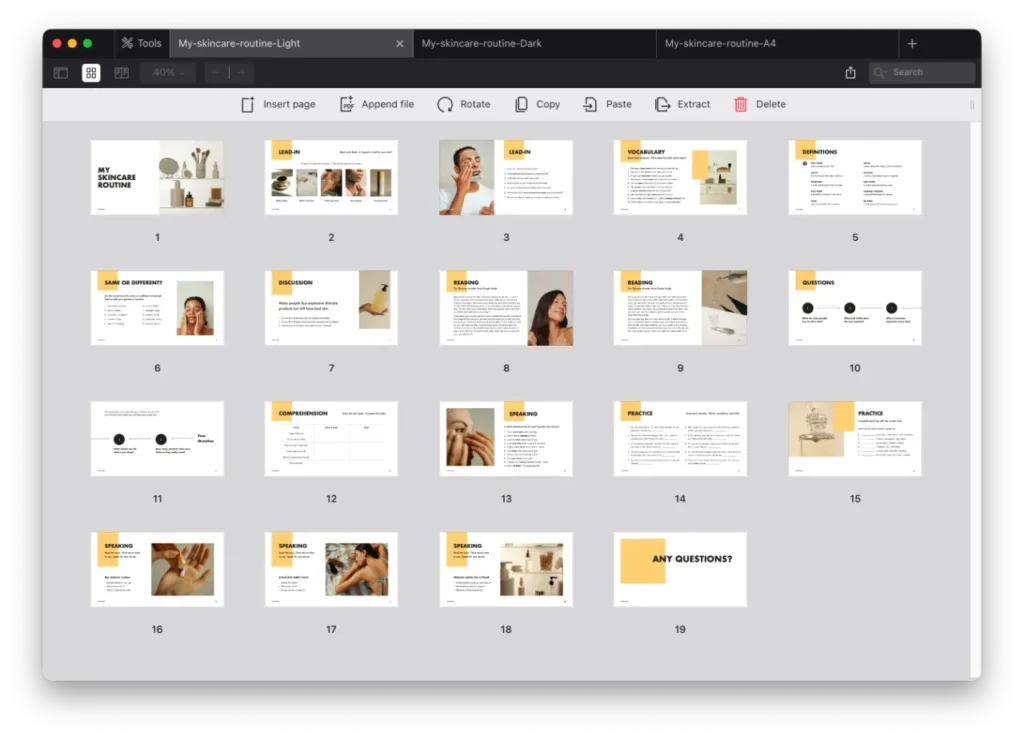
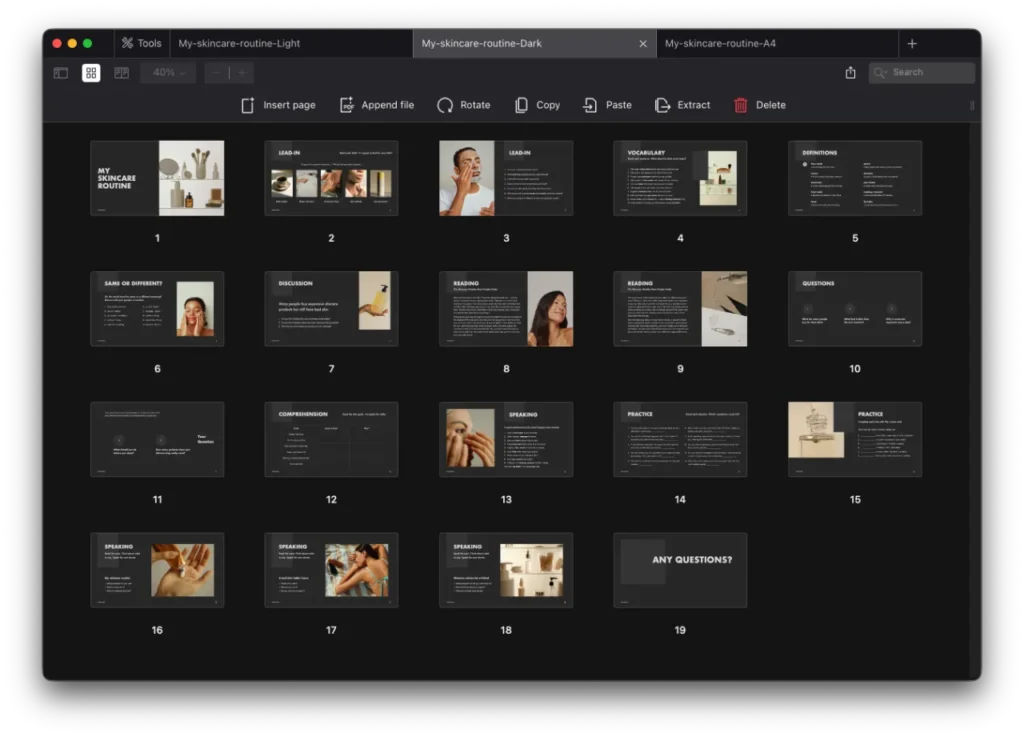
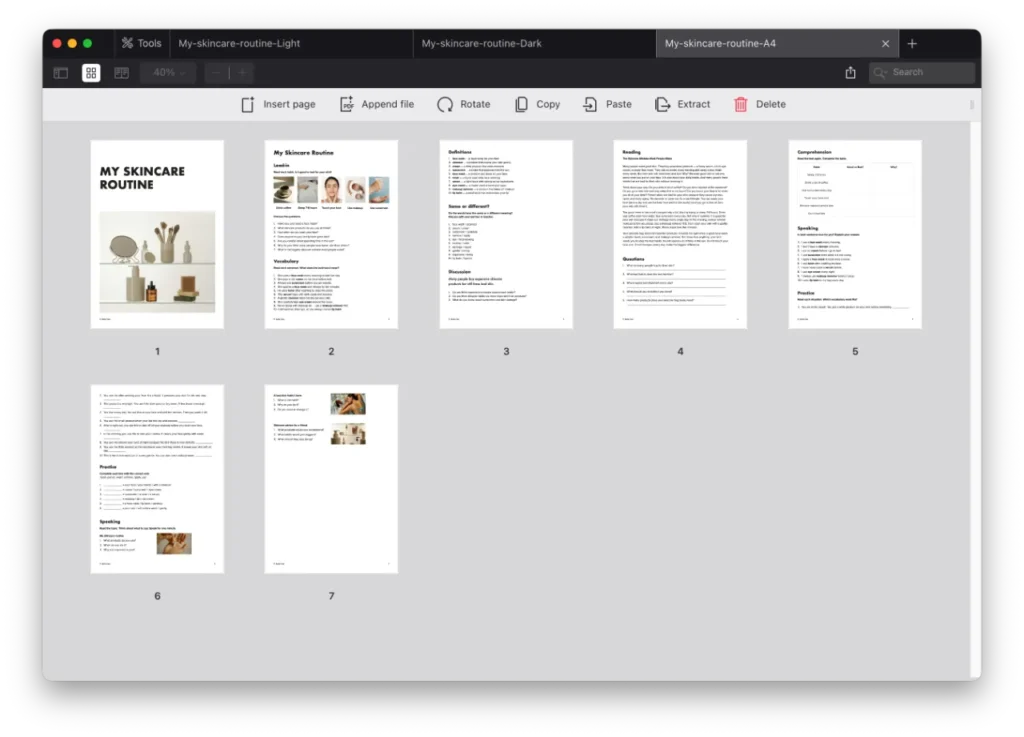
Vocabulary
- face wash
- cream
- sunscreen
- face mask
- toner
- serum
- cleanser
- eye cream
- makeup remover
- lip balm
Contents
- Lead-in
- Vocabulary
- Definitions
- Same or Different?
- Discussion
- Reading
- Questions
- Comprehension
- Speaking
- Practice
- Speaking
Start the lesson with the habit activity. Students read each habit and decide if it is good or bad for skin. They work in pairs and use the sentence frames given. This is quick and low pressure. It gets students talking right away and sets up the reading nicely.
Move into the vocabulary section next. Ask students to read each sentence and guess the bold word from context. Then go through the definitions card together. This works well because students see the word in a sentence first, which helps them remember it better than a list alone. After that, do the same or different activity in pairs. The face wash / cleanser pair is a good one to discuss because both words appear in the reading.
For the reading, split it across two pages and ask students to read for general understanding first. Then use the comprehension table to check. Students fill in whether each habit is good or bad and explain why. This gives them a clear structure and is easy to manage at A2 level. The questions page is also useful here. Pairs can take turns asking and answering before checking together.
Wrap up with the one-minute speaking topics. These work well at the end because students have done enough vocabulary and reading work to feel ready. Give them 30 seconds to think first. You can use all three topics or just pick one or two depending on time. The “bad habit I have” topic usually gets good reactions and natural conversation.
