My People
This A2 lesson helps students talk about important people in their lives using simple vocabulary. They learn words like siblings, support, grateful, and fortunate, then watch a short video about family support. Activities include describing appearance and personality, completing sentences about family, and creating a puzzle diagram showing their important people.
Lesson overview
- Learn family vocabulary including siblings, parents, support, grateful, and fortunate with matching exercises
- Watch a video where someone describes feeling grateful for her large family’s support
- Practice expressing gratitude using sentence starters like I’m happy that and I’m fortunate that
- Create a puzzle diagram with names of important people and describe each one
| Level | Vocabulary | Video Length | Lesson Time |
| A2 / Pre-Intermediate | 9 words | 0:35 min | 60 min |

Vocabulary
- Arrive
- Support
- Siblings
- Grateful
- Fortunate
- Huge
- Dad
- Parents
- Family
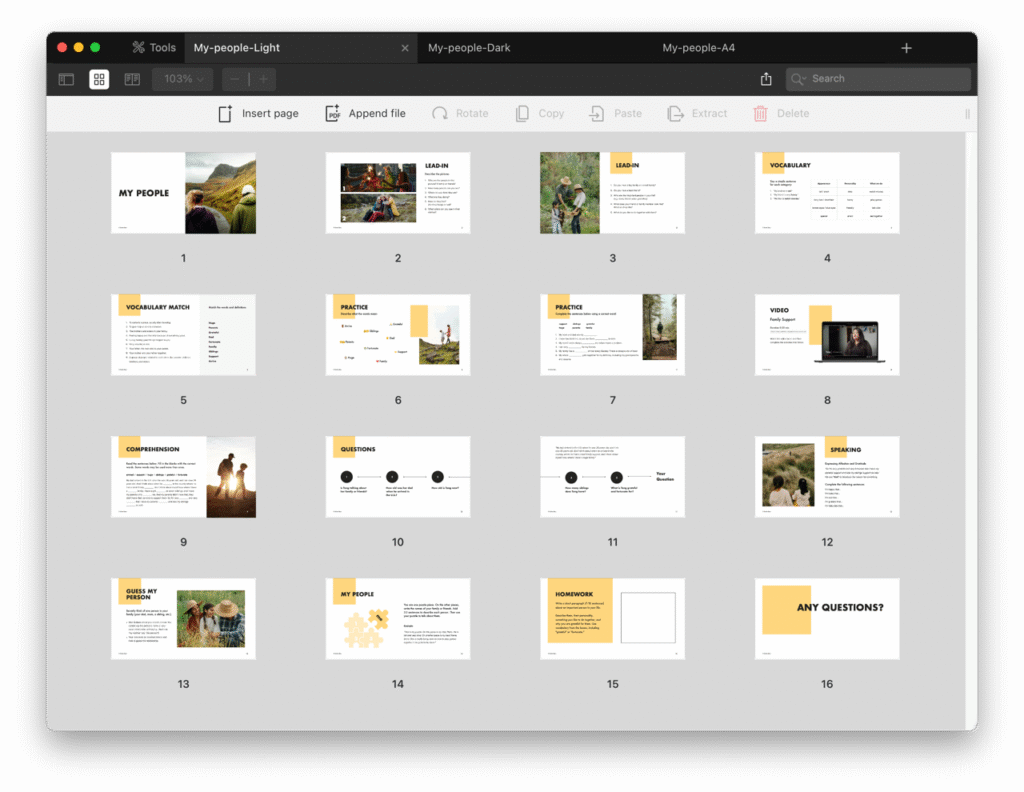
Contents
- Lead-in 1
- Lead-in 2
- Vocabulary
- Vocabulary Match
- Practice 1
- Practice 2
- Video
- Comprehension
- Questions
- Speaking
- Guess My Person
- My People Puzzle
- Optional Homework
Start by describing the two photos together. Ask the six questions and let students answer in simple sentences. This activates basic vocabulary like family, friends, happy, and colors. Then do the lead-in questions. Question 4 about what someone looks like and what they’re like introduces the appearance versus personality distinction covered in the vocabulary table.
The vocabulary table has three columns: appearance, personality, and activities. Students make simple sentences for each category using examples like “My brother is tall” or “We like to watch movies.” Then move to the matching exercise with nine words. Check answers and drill pronunciation on “siblings” and “grateful.” The emoji practice page shows the nine words with icons. Students explain what each means in their own words. This reinforces meaning without just repeating definitions.
The sentence completion practice has six gaps. Students use the word bank to fill in blanks about parents, siblings, and family gatherings. Now play the video. It’s 35 seconds showing Tang talking about her family support compared to her dad’s experience. Play it twice. The first time students just listen, the second time they can take notes. The comprehension gap-fill uses the video transcript with six blanks. Some words repeat, which is fine at A2 level.
After the gap-fill, students answer five comprehension questions. Question 5 asks what Tang is grateful for, which sets up the speaking practice. The gratitude expression box shows how to use “that” with feelings. Students complete five sentence starters. The guessing game has students think of one family member, give three clues without saying the relationship, and classmates guess. End with the puzzle activity. Students draw themselves as one piece, then add other pieces for family or friends with names and descriptions.