
My Neighborhood

This A2 lesson helps students talk about their neighborhoods and describe local places. They learn twelve basic words like “playground,” “pharmacy,” and “bakery,” listen to short descriptions of each place, and read a simple text about a London neighborhood. The activities include picture matching, listening practice, and speaking tasks where students describe where they live.
Lesson overview
- Learn twelve vocabulary words for common neighborhood places like shops and services
- Listen to descriptions and identify places based on what you hear
- Read a short text about Notting Hill and answer comprehension questions
- Describe your own neighborhood using sentence starters and simple present tense
| Level | Vocabulary | Listening Time | Lesson Time |
| A2 / Pre-Intermediate | 12 words | 1:11 min | 60 min |

Vocabulary
- Post office
- Market
- Bus stop
- Hair salon
- Bakery
- Cafe
- Gym
- Pharmacy
- Playground
- Garden
- Paring lot
- Convenience store
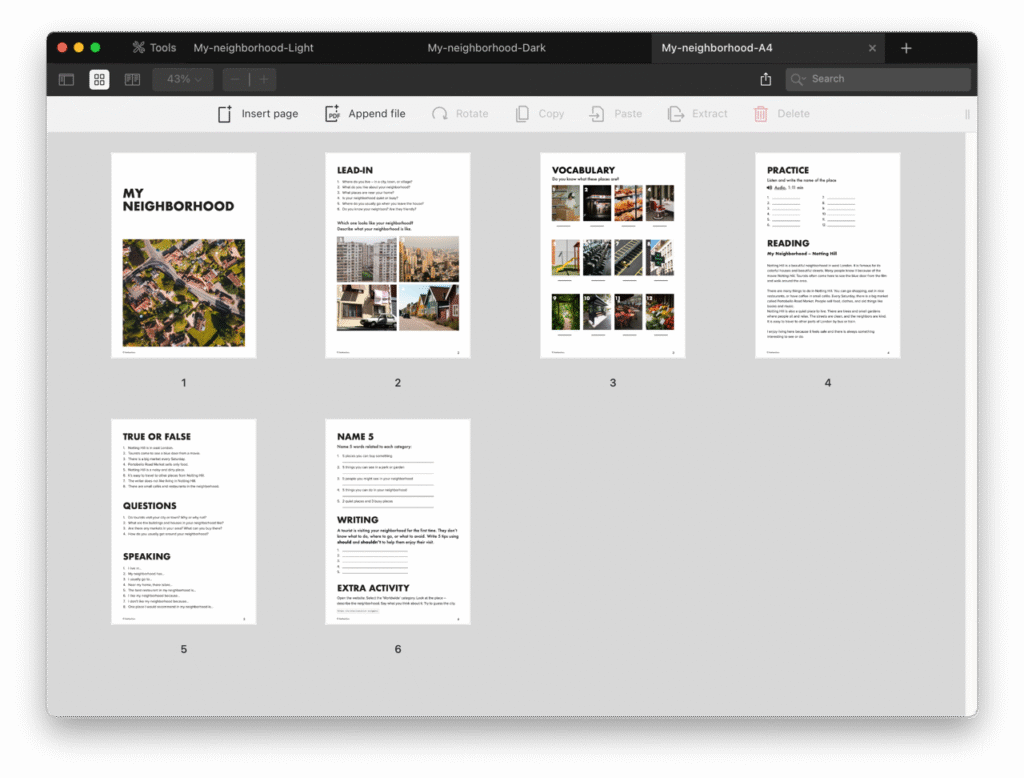
Contents
- Lead-in
- Speaking
- Vocabulary
- Practice
- Reading
- True or false
- Questions
- Speaking
- Name 5
- Writing
- Extra activity
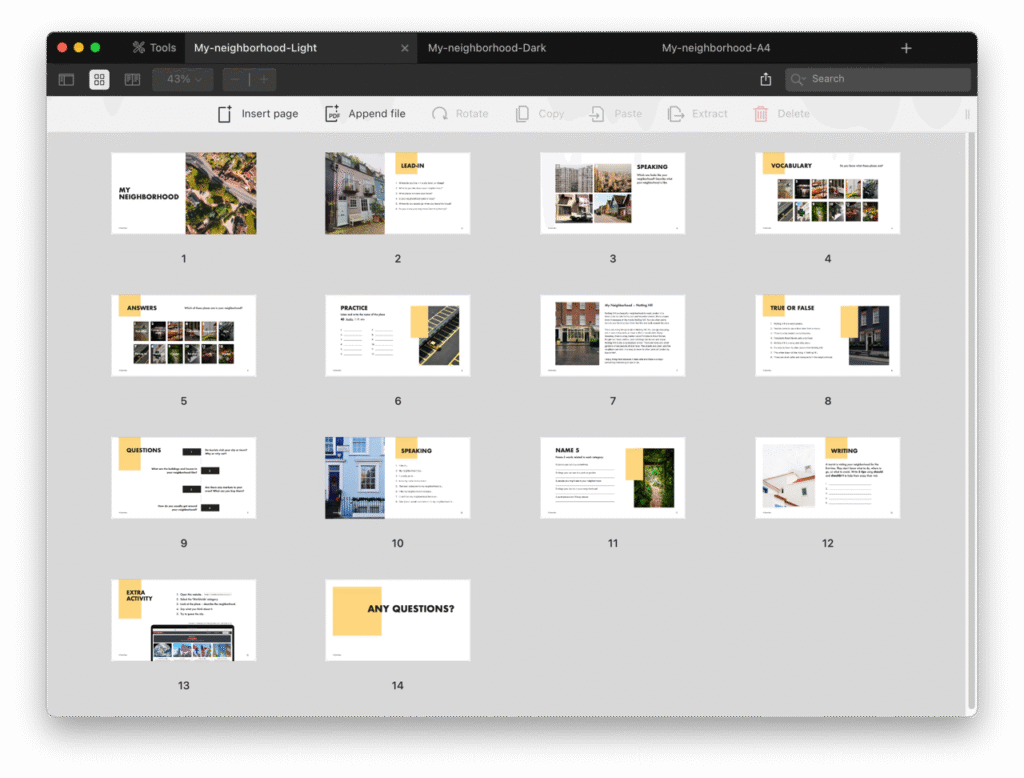
Start with the lead-in questions about where students live and what their neighborhoods are like. Keep it simple and personal. Students answer whether they live in a city or village, what places are nearby, and whether they know their neighbors. After pairs talk, show the four neighborhood photos and ask which one looks like their area. Students point and describe using basic language, which warms them up for the new vocabulary.
The vocabulary section uses twelve clear pictures of neighborhood places. Show the images and let students guess the words before revealing answers. Some will know “café” and “market,” but others like “convenience store” might be new. After going through all twelve together, ask students to raise their hands if they have each place in their neighborhood. This makes it real and helps you see what vocabulary will be most useful for them.
The listening plays twelve short audio clips describing different places. Students write the name of each place as they listen. This is good ear training for A2 students. Play it twice so everyone can catch the details. Go through answers together and replay any tricky ones. The listening reinforces both recognition and spelling of the new words.
The reading about Notting Hill is short and uses simple sentences. Students read it and mark eight statements true or false. The text describes a real London neighborhood with markets, cafés, and colorful houses, which gives students a model for talking about their own areas. After checking the true/false answers, use the discussion questions to make connections. Students compare Notting Hill to where they live.
The speaking section gives sentence starters like “I live in…” and “My neighborhood has…” These prompts help A2 students build complete sentences without getting stuck. They complete each starter and share with a partner. The Name 5 activity reviews vocabulary in a quick game format. Students list five places where you can buy things, five things in a park, and so on.
Finish with the writing task where students give five tips to a tourist using should and shouldn’t. This is good modal practice at A2 level. If you have time and computer access, the virtual vacation guessing game makes a fun ending activity where students look at street view images and describe what they see.
