
My Crazy Neighbors

This B1 lesson uses three funny stories about terrible neighbors to teach vocabulary for arguments, noise, and everyday conflicts. Students learn words like “hoarder,” “heated argument,” and “hold one’s breath,” then compare how each story’s narrator handles their neighbor problem. Everyone has a neighbor story, which makes this one of those lessons that practically runs itself.
Lesson overview
- Learn fourteen words related to noise, conflict, and apartment living through matching and pictures
- Read three short stories about strange neighbors and complete a comprehension table
- Practice spelling target vocabulary by filling in missing vowels in context sentences
- Create an AI image of a bad neighbor and describe what’s happening to the class
| Level | Vocabulary | Lesson time |
| B1 / Intermediate | 14 words | 60 min |
Vocabulary
- calm
- banging noise
- throw
- knock
- find out
- heated argument
- confused
- shout
- avoid
- hoarder
- pile
- hallway
- hold one’s breath
- stress
Contents
- Lead-in 1
- Lead-in 2
- Vocabulary 1
- Vocabulary 2
- Reading
- Story 1
- Story 2
- Story 3
- Comprehension
- Practice
- Agree/disagree
- AI neighbor
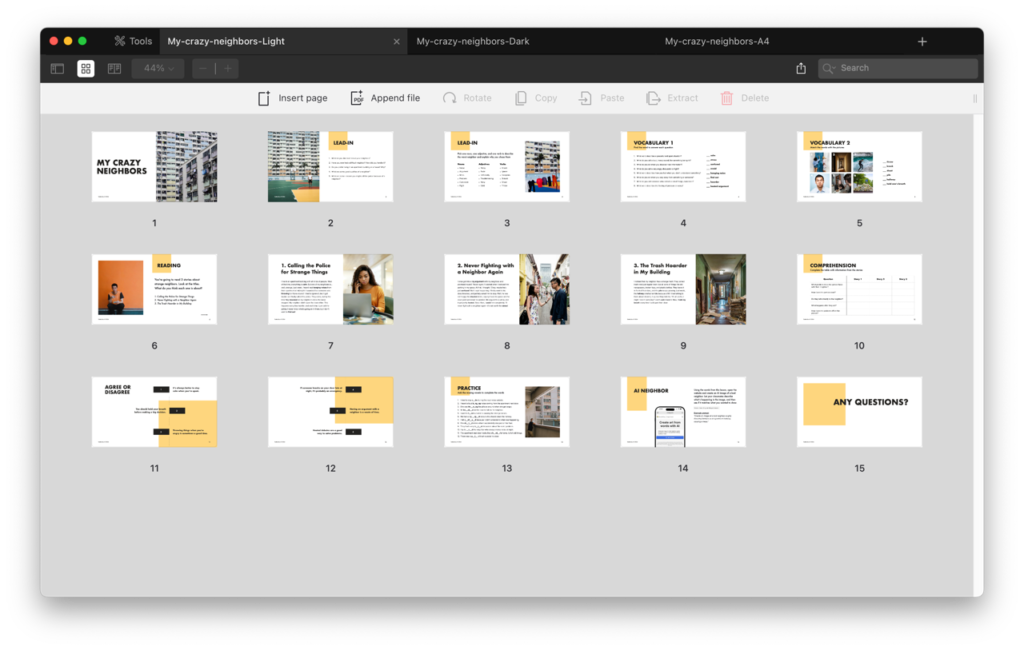
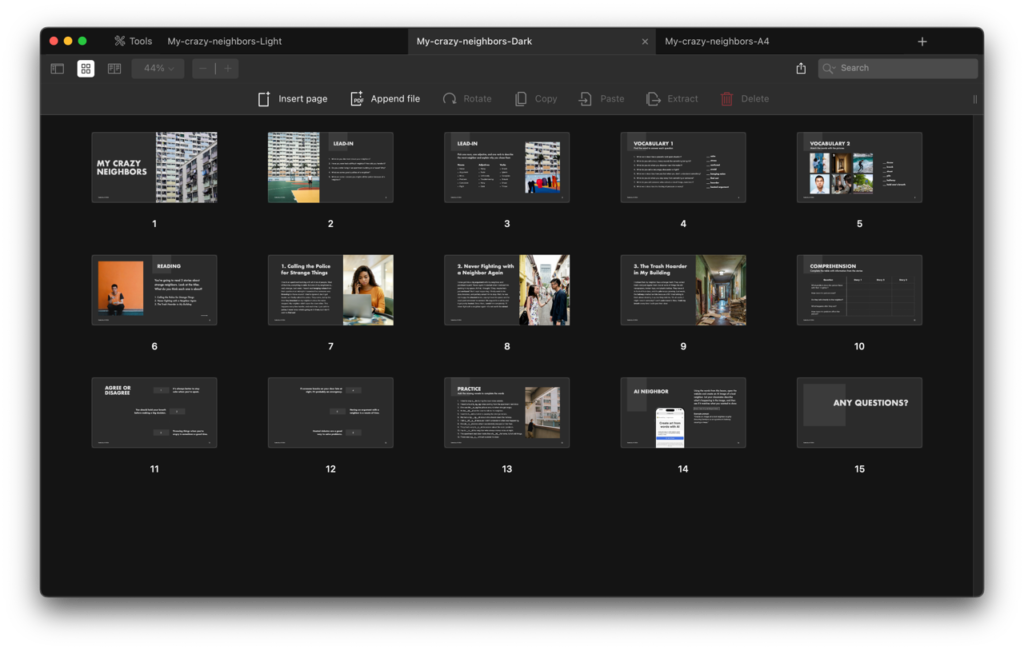
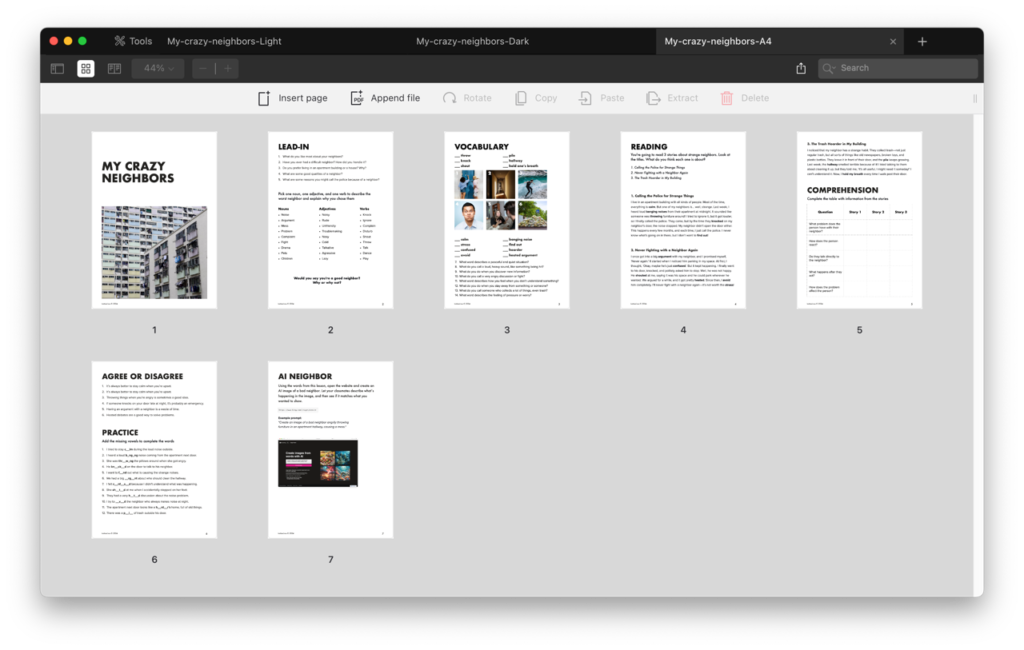
Start with the lead-in questions. “Have you ever had a difficult neighbor?” is the one that opens the floodgates. Let students share for a few minutes, then move to the word-picking activity. Students choose one noun, one adjective, and one verb from three lists to describe the worst possible neighbor and explain their combination. “Noisy, mess, shout” and “nosy, complaint, disturb” come up a lot. This gets the target vocabulary area into their heads before the formal introduction.
Cover the two vocabulary sections next. The first set uses questions to guide students to the right word: “What do you call someone who collects a lot of things, even trash?” leads to “hoarder.” “What word describes how you feel when you don’t understand something?” leads to “confused.” The second set matches six more words to pictures: throw, knock, shout, pile, hallway, and hold one’s breath. Make sure students understand “hold one’s breath” as something you do when walking past a bad smell, not just underwater. Then show the three story titles and ask students to predict what each one is about before they read.
The three stories are short and readable at B1. Story one is about mysterious midnight banging noises. Story two is a parking space argument that got ugly. Story three is about a neighbor who hoards trash in the hallway. Have students read all three, then fill in the comprehension table that compares the stories across five questions: what’s the problem, how does the person react, do they talk to the neighbor, what happens, and how does it affect them. This table format works well because it makes students look at all three stories side by side rather than treating them separately.
The agree or disagree statements are a nice breather after the reading. “Throwing things when you’re angry is sometimes a good idea” and “Heated debates are a good way to solve problems” usually get strong reactions. Then move to the vowel-fill exercise. Students complete twelve words with missing vowels in context sentences. This is a different kind of spelling challenge that keeps them thinking about letter patterns. End with the AI image activity. Students use the lesson vocabulary to write a prompt for an AI image generator, creating a picture of a bad neighbor. They show their image to classmates, who describe what they see. It’s creative, uses the target language, and always produces results worth laughing about.
