
Mini Philosophy in Daily Life

This C1 lesson uses philosophy to spark real debate and critical thinking. Students listen to short clips about Socratic conversations, separating art from the artist, and moral behavior without consequences. The activities push advanced learners to question their beliefs and argue with clarity.
Lesson overview
- Practice dissecting complex ethical arguments using vocabulary like “indelible stain” and “moral fiber”
- Listen to three philosophy mini-lectures and respond to thought-provoking follow-up questions
- Debate statements like “The more you know, the harder it is to live ethically”
- Learn advanced collocations and fix common grammar mistakes in philosophical contexts
| Level | Vocabulary | Listening Time | Lesson Time |
| C1 / Advanced | 15 words | 4 min | 60 min |
Vocabulary
- probe
- dissect
- implication
- externalize
- think anew
- stain
- exploitation
- revelation
- detach
- indelible
- litmus test
- moral fiber
- social conformity
- omniscient god
- 24/7 surveillance
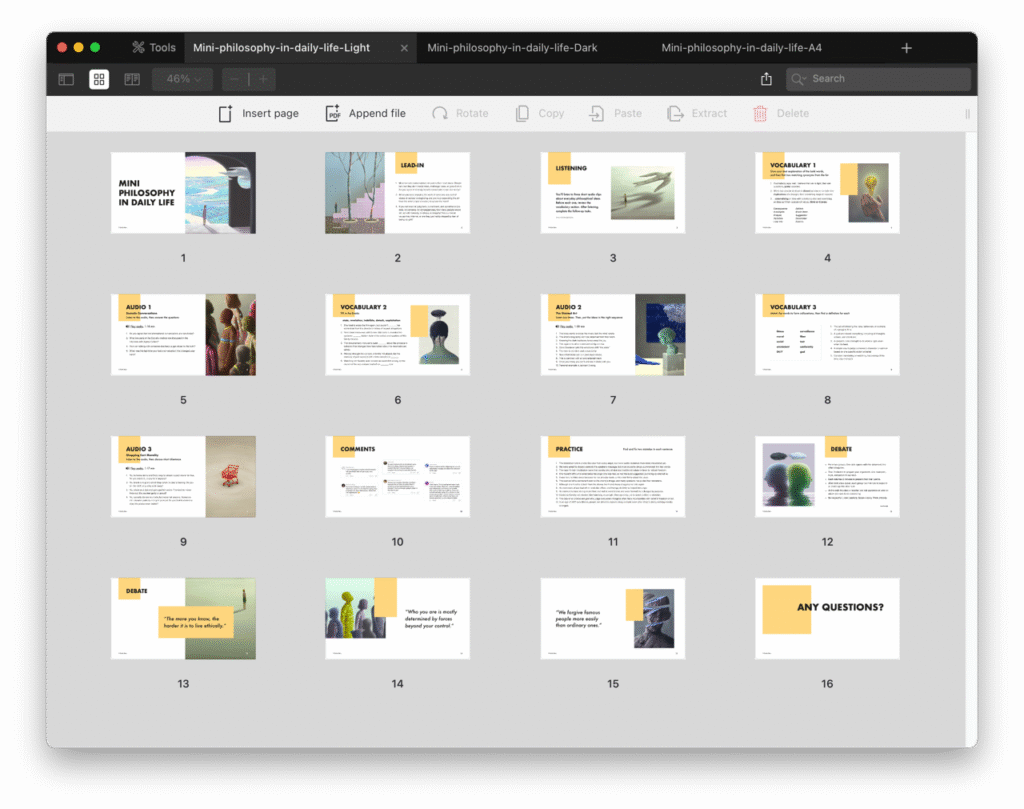
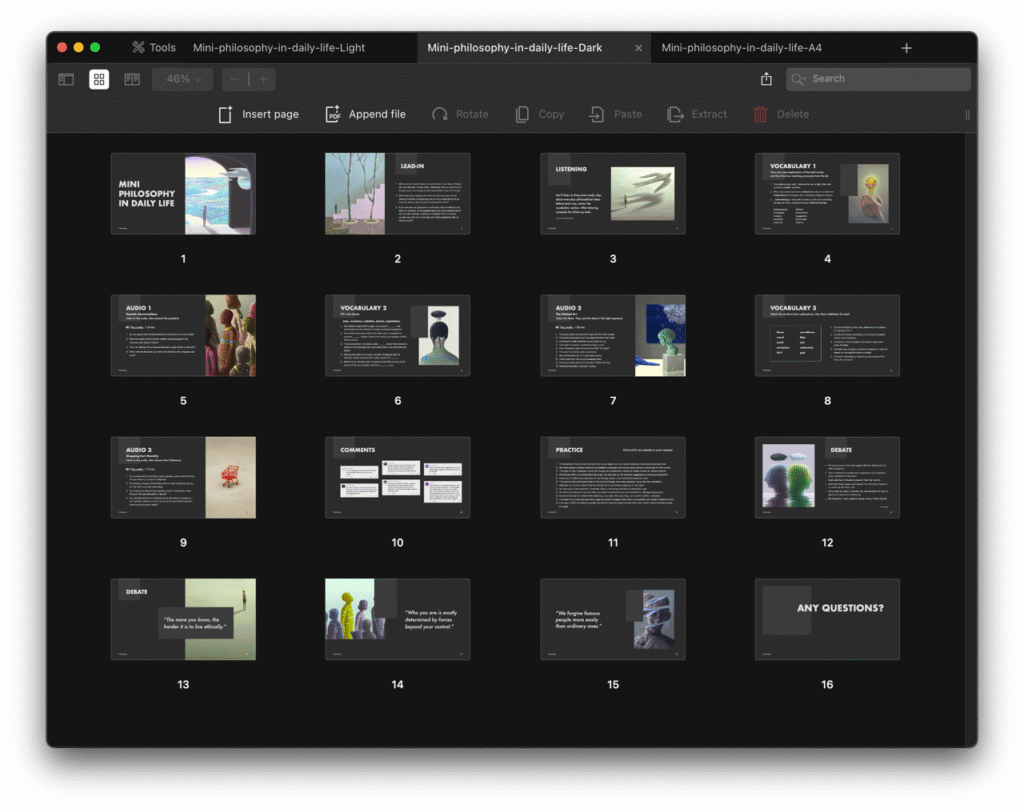
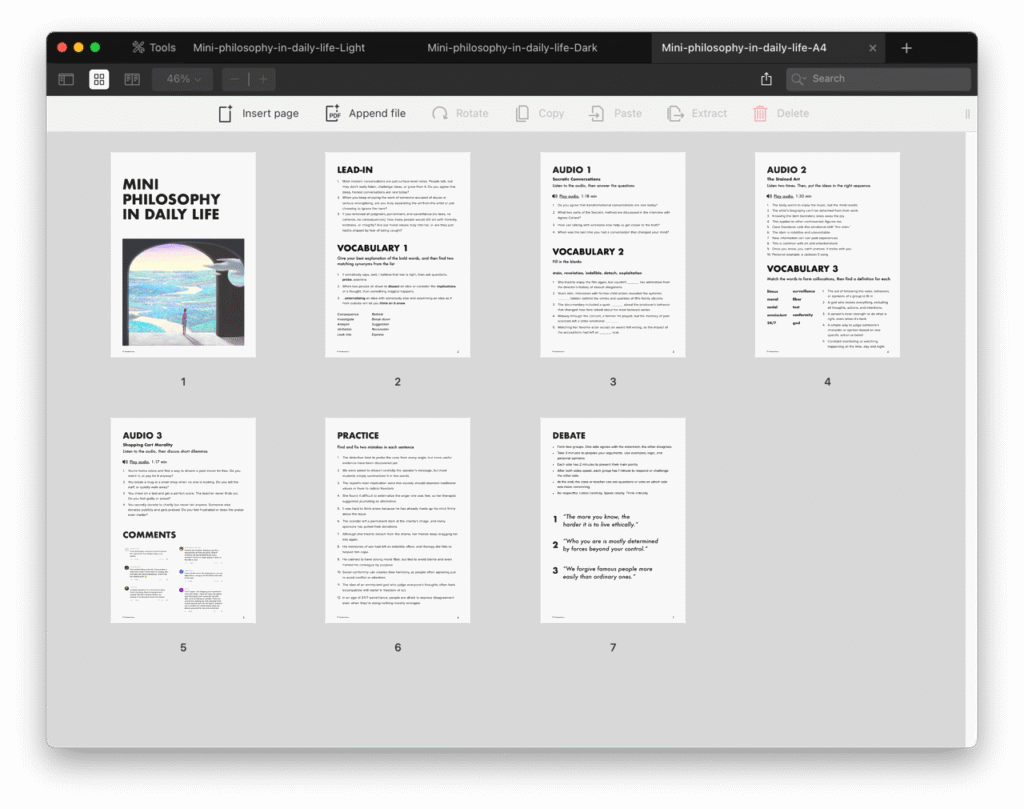
Contents
- Lead-in
- Vocabulary 1
- Audio 1, Socratic Conversations
- Vocabulary 2
- Audio 2, The Stained Art
- Vocabulary 3
- Audio 3, Shopping Cart Morality
- Comments
- Practice
- Debate
Start with the lead-in questions. These are intentionally challenging and a bit uncomfortable. Give students two minutes to think alone before opening discussion. Don’t rush this part. The goal is to get them genuinely thinking, not just producing polite answers.
Move into the listening cycle. Each audio clip is short but dense with ideas. Have students review the vocabulary first, then listen twice. The first listen is for gist, the second for details. After Audio 1 on Socratic method, ask students to name a time they actually changed their mind in conversation. Most will struggle to remember one, which proves the point. Audio 2 on “the stained art” works well if you let students share examples from their own culture. Audio 3 sets up the debate nicely because it introduces the shopping cart test and surveillance versus internal morality.
The practice section catches errors advanced students actually make. Things like “in few words” instead of “in a few words” or “by purpose” instead of “on purpose.” Go through a few together, then let them work in pairs. This is lower energy but necessary before the debates.
End with one or both debates. Split the room physically if you can. Give prep time. Encourage students to use the lesson vocabulary. Don’t let it turn into a chat. Push them to support claims with reasoning. If one side dominates, jump in and play devil’s advocate for the weaker side. The post-debate reflection matters too. Ask who changed their mind or heard something that surprised them.
