
Metric or Imperial?
This C1 lesson uses a hilarious sketch about General Washington to explore why the imperial system is so confusing. Students categorize units of measurement, act out a scripted conversation about pounds, gallons, and Fahrenheit, and learn idioms like “by a mile” and “in a heartbeat.” The comedy angle makes what could be a dry topic genuinely enjoyable, and the measurement-related idioms give students vocabulary they can use well beyond this lesson.
Lesson overview
- Categorize twenty units of measurement into weight, volume, distance, and temperature groups
- Watch and perform a comedy sketch about Washington inventing America’s measurement system
- Learn seven idioms connected to measurement and distance like “a drop in the ocean” and “in the ballpark”
- Research an old or outdated unit of measurement from your country and present it to the class
| Level | Vocabulary | Video Length | Lesson Time |
| C1 / Advanced | 7 idioms | 4:51 min | 60-80 min |
Vocabulary
- A drop in the ocean
- Mile high club
- By a mile
- Give it a shot
- A mile a minute
- In the ballpark
- In a heartbeat
Contents
- Lead-in
- Short reading
- Units of measurement
- Answer key
- Practice
- Video
- Reading
- Comprehension
- Idioms
- Practice
- Speaking
- Extra video
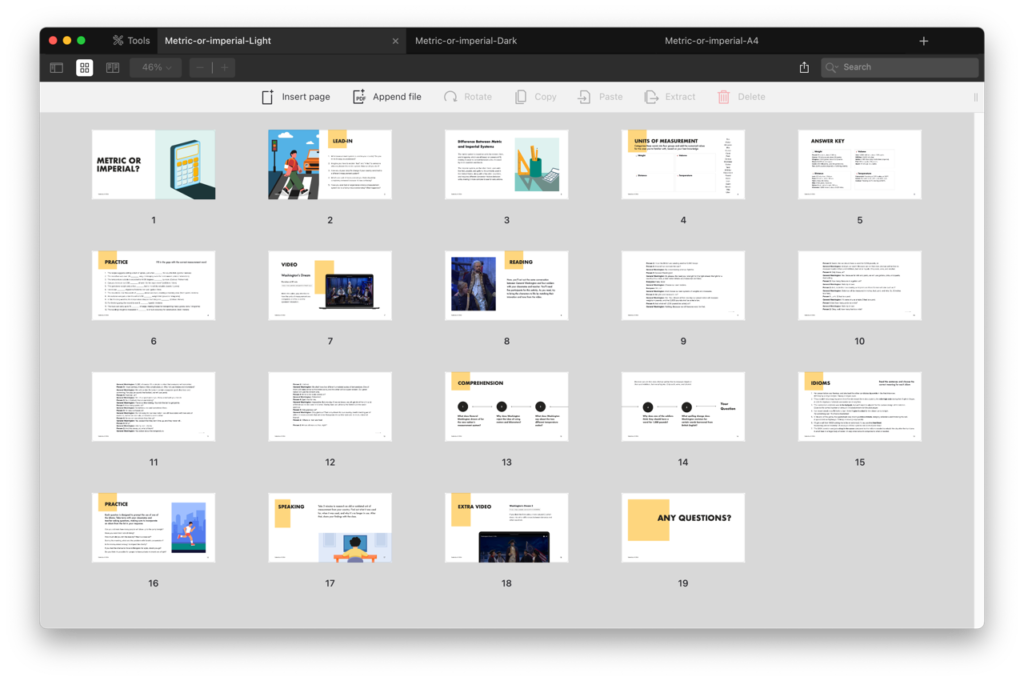
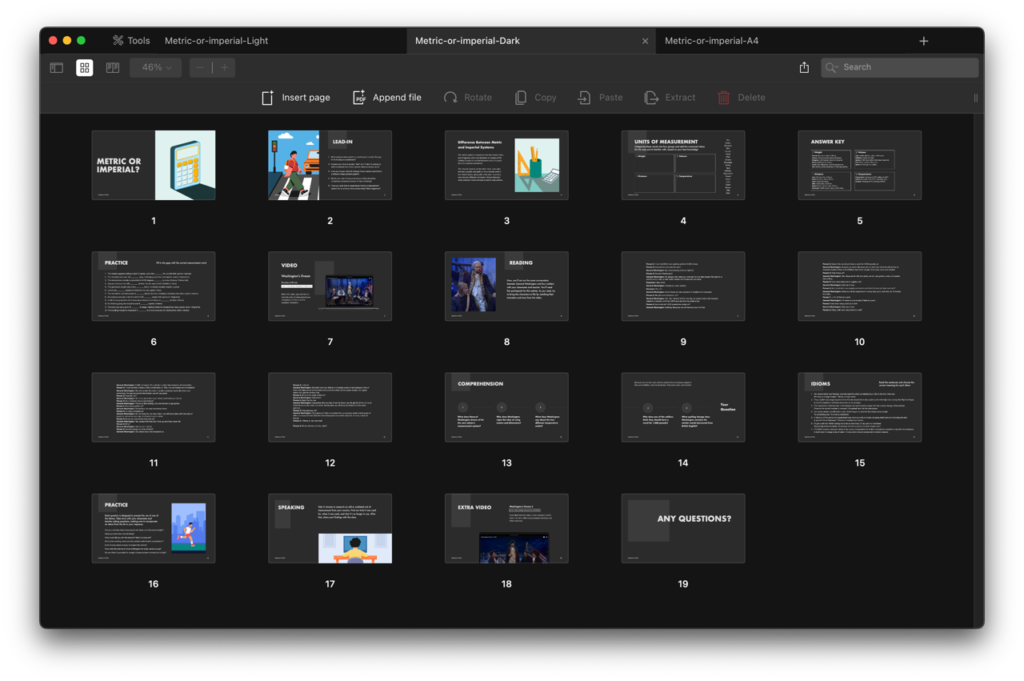
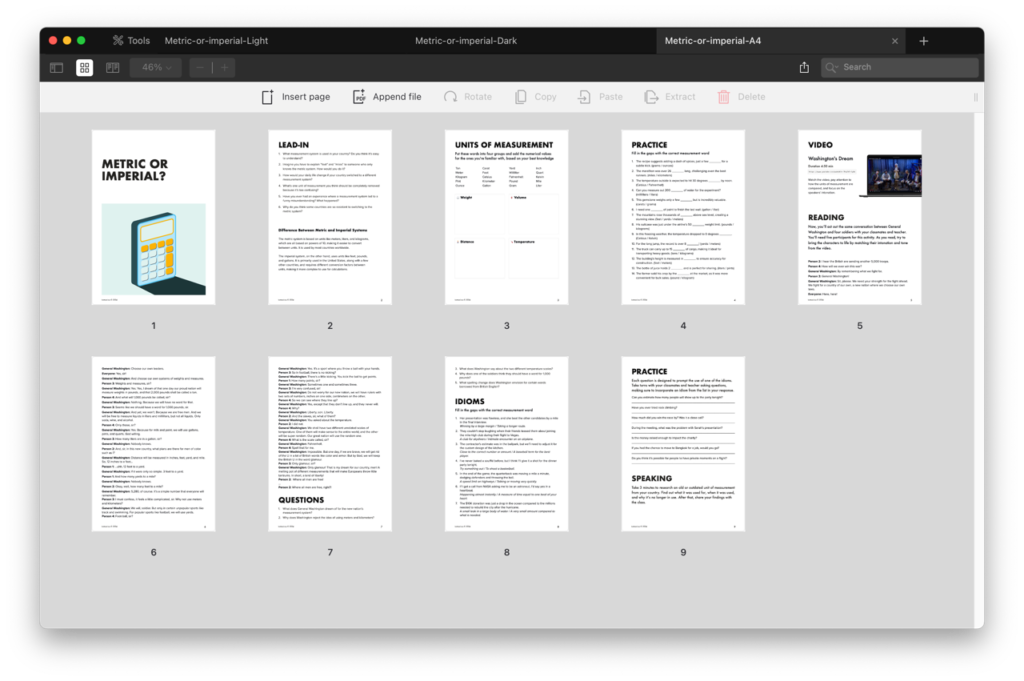
The lead-in questions work well because everyone has an opinion about measurement systems. “What’s one unit you think should be removed because it’s too confusing?” usually produces strong answers, especially from students who’ve tried to cook with cups and ounces. After the discussion, read through the short explanation comparing metric and imperial systems. Then move into the categorization activity. Students sort twenty measurement words into four groups: weight, volume, distance, and temperature. They also add numerical values where they can. Most C1 students know kilograms and kilometers but struggle with quarts, pints, and carats. Check answers with the key on the next slide and spend time on the conversions that surprised them.
The gap-fill practice on slide seven reinforces the vocabulary before the video. Students choose the correct unit for twelve sentences about recipes, marathons, gemstones, and construction. After checking answers, play the Washington’s Dream video. It’s nearly five minutes of deadpan comedy about the absurdity of the imperial system. Watch it once for enjoyment, then set up the role-play. Five students take the parts of Washington and four soldiers and read through the script together. Encourage them to match the intonation and delivery from the video. This activity takes some time but it’s worth it because students practice pronunciation, rhythm, and comedic timing while reviewing every measurement term from the lesson.
After the performance, go through the five comprehension questions about the sketch. These check whether students understood the humor, not just the facts. “Why does Washington reject meters and kilometers?” requires them to explain the joke about only using metric for unpopular sports. Then introduce the seven idioms: “by a mile,” “mile-high club,” “in the ballpark,” “give it a shot,” “a mile a minute,” “in a heartbeat,” and “a drop in the ocean.” Students read sentences and choose the correct meaning for each idiom. Go through answers together and ask for additional example sentences.
The idiom practice activity has students answer questions using the target idioms in their responses. Questions like “Can you estimate how many people will show up?” prompt “in the ballpark,” while “How much did you win by?” prompts “by a mile.” End with the research speaking task. Students spend three minutes looking up an old or outdated unit of measurement from their country, then present what they found. This always produces interesting results, from Russian versts to Spanish varas. The second Washington video on the final slide makes a good bonus or homework assignment.
