
Meet The Humanoid Robot
This A2 lesson introduces students to humanoid robots through a video about the Unitree G1. They learn to describe what robots can and can’t do, practice reading about robot abilities, and talk about how robots might help at home. It’s a topic that grabs attention right away because the video is genuinely impressive.
Lesson overview
- Practice using “can” and “can’t” to describe what robots are able to do
- Watch a video of the Unitree G1 humanoid robot and take notes on its abilities
- Read a short text about the G1 robot and complete gap-fill and true or false exercises
- Role-play describing a robot’s features and asking questions about what it can do
| Level | Vocabulary | Video Duration | Lesson Time |
| A2 / Pre-Intermediate | 9 words | 1:43 min | 60 min |
Vocabulary
- Say hello
- Run
- Keep balance
- Fight
- Crush nuts
- Open bottles
- Cook
- Use a hammer
- Fix things
Contents
- Lead-in
- Video
- Summary
- Reading
- True or false
- Discussion
- Role-play
- Homework
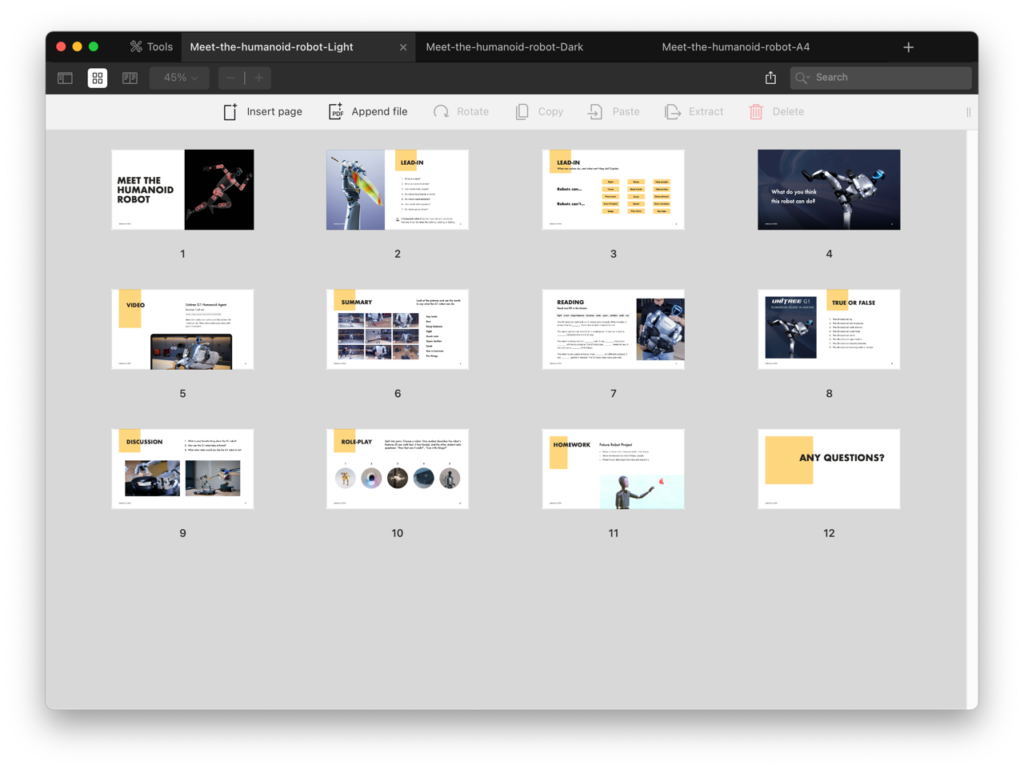
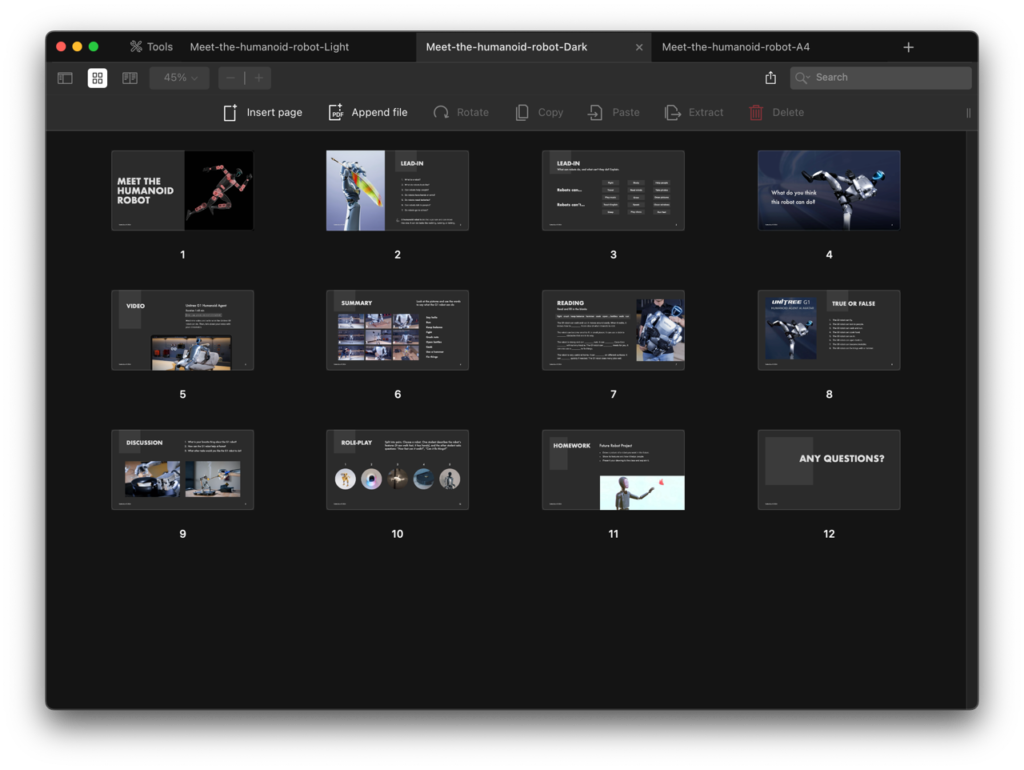
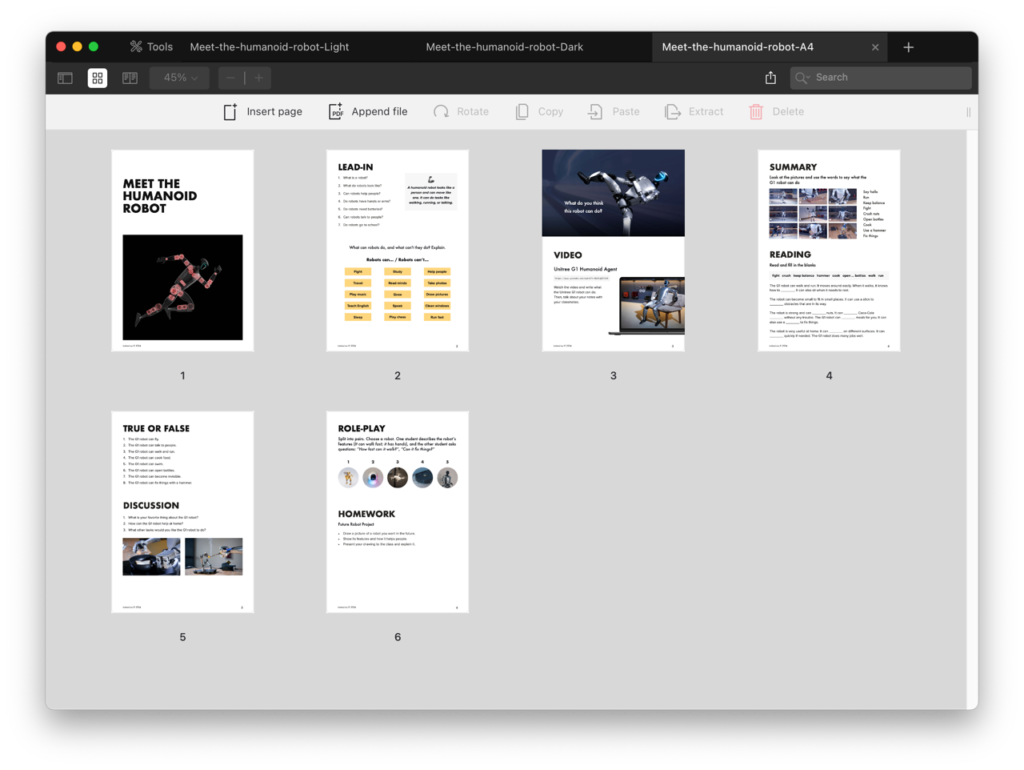
Begin with the seven lead-in questions about robots. These are simple and work well at A2 level. Questions like “What do robots look like?” and “Can robots talk to people?” get students sharing what they already know. Then do the sorting activity where students put fourteen abilities into “robots can” and “robots can’t” categories. Some of these are obvious, like “play chess” and “run fast,” but others like “teach English” and “read minds” will split opinions. Let students disagree and explain their reasoning because that’s where the real speaking practice happens.
Show the picture of the G1 robot before the video and ask students to guess what it can do. Then play the video. At under two minutes, it’s short enough to watch twice. After the first viewing, students write down what they noticed. After the second, they compare notes in pairs. The summary slide with nine pictures helps students organize what they saw. Have them use the provided words to make sentences like “The G1 robot can crush nuts” and “The G1 robot can keep balance.”
The reading exercise reinforces everything from the video. Students fill in nine blanks with words from a word bank. The vocabulary is concrete and physical, like “hammer,” “crush,” “fight,” and “keep balance,” so A2 students can handle it without too much trouble. After the gap-fill, do the true or false activity. Some statements are clearly wrong, like “The G1 robot can fly,” which students enjoy correcting. The three discussion questions that follow are short but open enough to produce real answers about what students like about the robot and what else they’d want it to do.
End with the role-play activity. Students work in pairs, choose one of five robot images, and take turns describing and asking about it. One student says things like “It can walk fast” or “It has hands,” and the other asks follow-up questions like “How fast can it walk?” This gives students controlled speaking practice with “can” in a fun context. The homework task asks students to draw their own future robot, label its features, and present it to the class next time. A2 students usually enjoy this because the drawing takes the pressure off and they can focus on simple descriptions.
