
Matcha: What’s Happening?

This B2 lesson covers the global matcha trend and why production can’t keep up with demand. Students read an article about matcha shortages, learn vocabulary like “craftsmanship,” “aesthetics,” and “ceremony,” then discuss cultural appropriation and social media influence. Activities include true/false predictions, comprehension questions, and vocabulary practice.
Lesson overview
- Practice vocabulary related to production and cultural products including demand, shortage, craftsmanship, and aesthetics
- Read an article explaining why matcha production struggles to meet worldwide demand from social media trends
- Discuss whether influencers should promote traditional items without understanding their cultural significance
- Learn matcha preparation vocabulary like whisk, bamboo scoop, and foam, then watch a short preparation video
| Level | Vocabulary | Reading Time | Lesson Time |
| B2 / Upper-Intermediate | 17 words | 556 words / 4 min | 60 min |

Vocabulary
- Shortage
- Grinding
- Consume
- Ceremony
- Demand
- Aesthetics
- Keep up
- Overwhelming
- Pride
- Craftsmanship
- Bamboo scoop
- Whisk
- Strainer
- Tea bowl
- Matcha tin
- Powder
- Foam
Contents
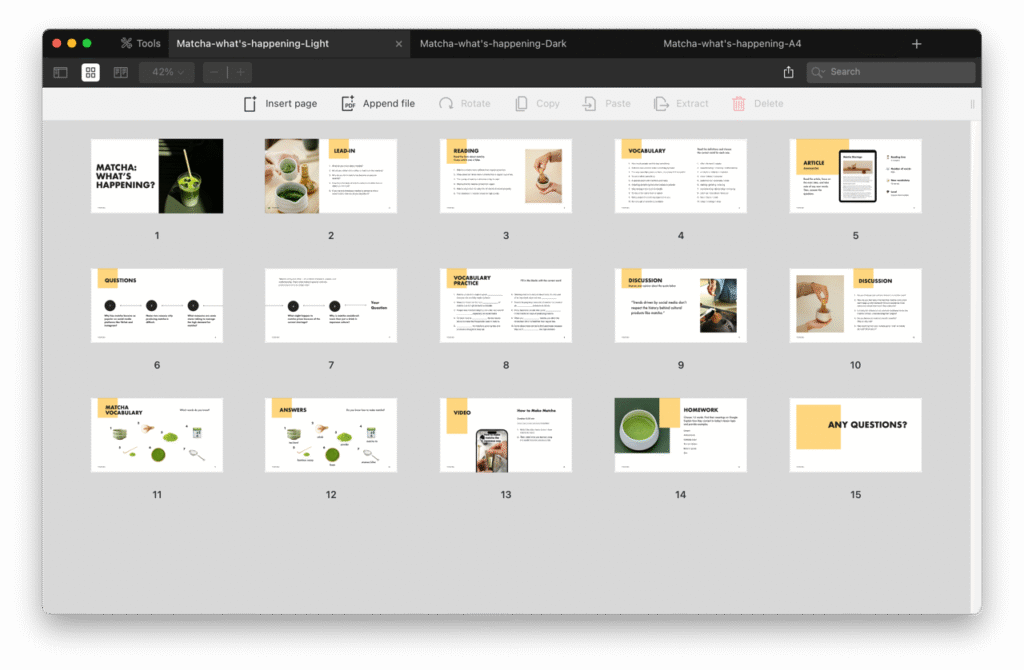
- Lead-in
- Reading
- Vocabulary
- Article
- Questions
- Vocabulary practice
- Discussion
- Matcha vocabulary
- Video
- Homework
Start with the lead-in questions. Question 3 about why matcha became popular sets up the lesson theme nicely. Students probably know it’s trendy but may not know the production side. Then do the true/false guessing activity. Students predict which fact is false before reading. This primes them for the content and makes reading more active.
Move to vocabulary definitions. Students match definitions to words from the article. Check answers quickly, then have students read the article. It’s about four minutes long and covers the shortage, cultural significance, and production challenges. After reading, students answer the five comprehension questions. Question 5 asks why matcha is more than just a drink, which connects to the cultural discussion later.
The vocabulary practice reinforces the ten key words in context. Students fill in blanks. Walk around and check their work. Then move to the discussion activities. The quote about social media trends not respecting cultural history usually generates strong opinions. Some students will defend accessibility and sharing culture, others will argue about appropriation and respect. Let the debate happen but keep it focused on reasoning and examples.
The second discussion section has five questions. Question 3 about influencers promoting traditional items without understanding origins connects directly to the article. Question 5 about viral items from their own culture personalizes it. Students often have examples like food, festivals, or fashion that became trendy abroad. The matcha vocabulary section shows seven items used in preparation. Students identify what they know, then check answers. This sets up the short video on how to make matcha. After watching twice, students retell the process using the vocabulary. Pair this activity if you have time.
End by assigning the homework. Students pick one or two words, research them, and explain how they connect to the lesson. This extends learning beyond class and adds depth to the matcha topic.
