
Looking Closer at Art
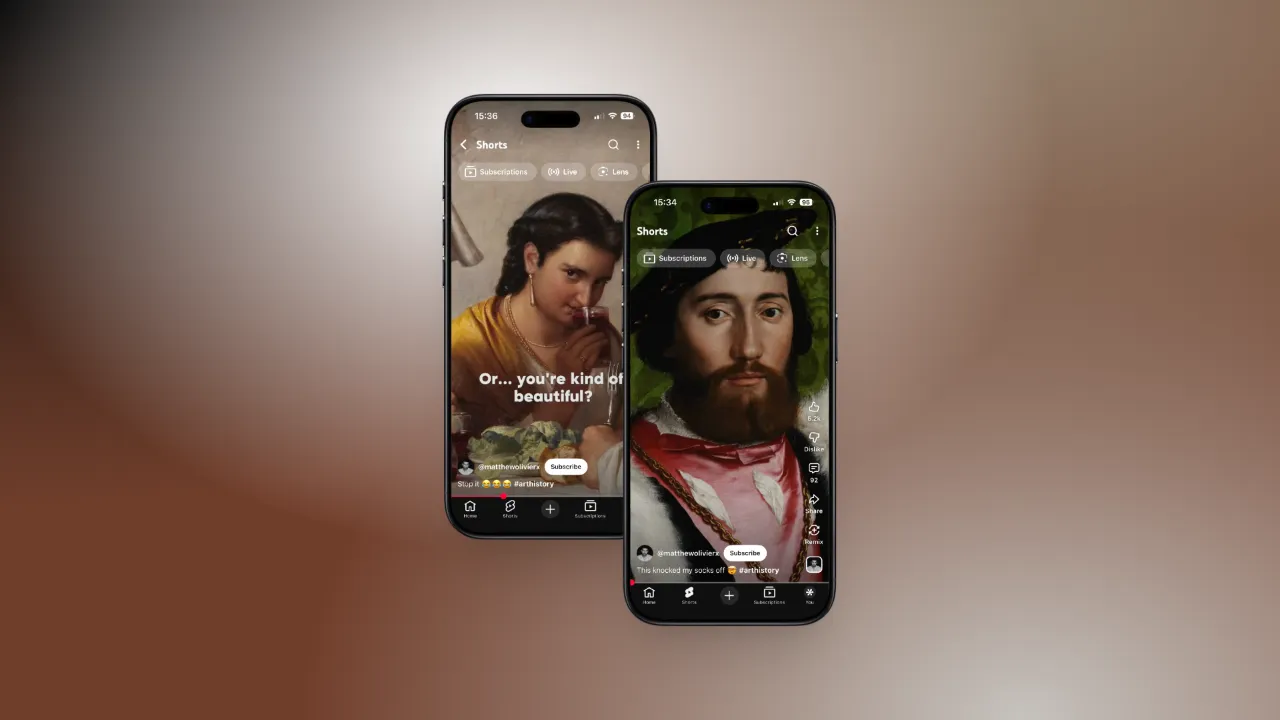
This C1 lesson explores classical painting through short video analysis and art interpretation. Students examine “In a Roman Osteria” and “The Ambassadors” while developing advanced descriptive vocabulary and visual literacy skills.
Lesson overview
- Practice analyzing artistic techniques, symbolism, and hidden meanings in paintings
- Learn specialized vocabulary for describing composition, perspective, and visual effects
- Develop critical thinking skills through detailed observation of classical artworks
- Discuss how artists communicate messages through deliberate visual choices
| Level | Vocabulary | Video Length | Lesson Time |
| C1 / Advanced | 16 words | 2:13, 2:55 min | 60-90 min |
Vocabulary
- breaking the fourth wall
- startling
- human-esque
- far cry
- precision
- potent
- garment
- cameo
- meticulous
- eye-soothing
- intricacy
- blob
- optical trick
- counterpart
- tucked away
- utmost secrecy
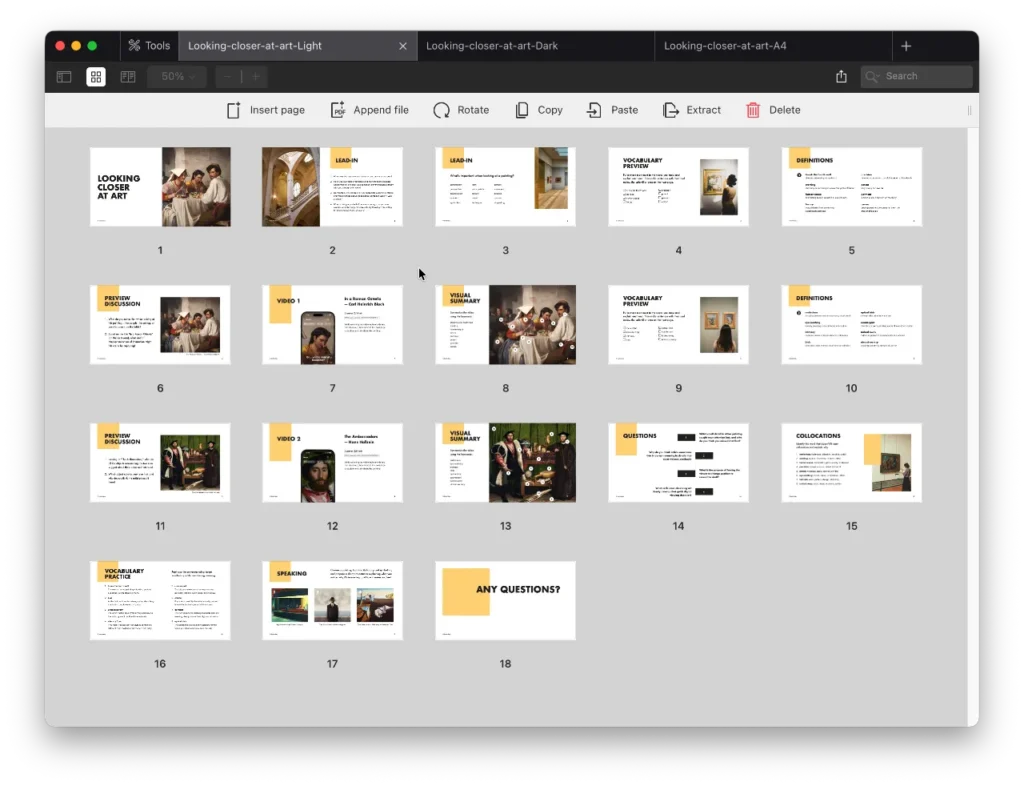
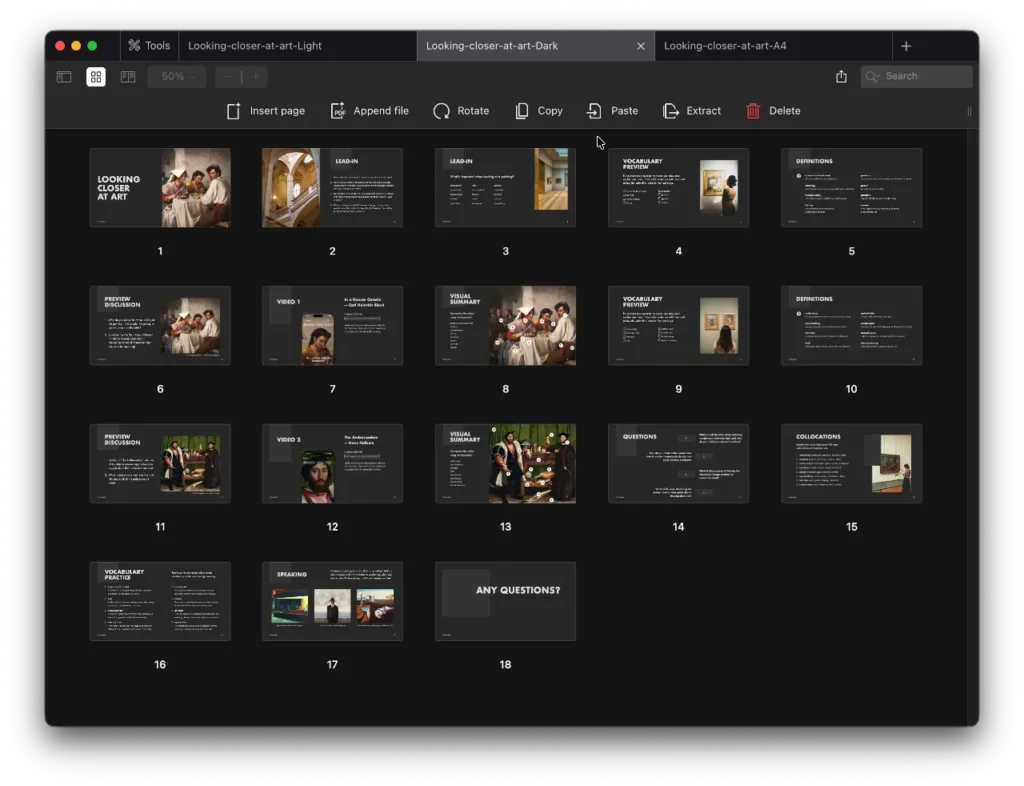
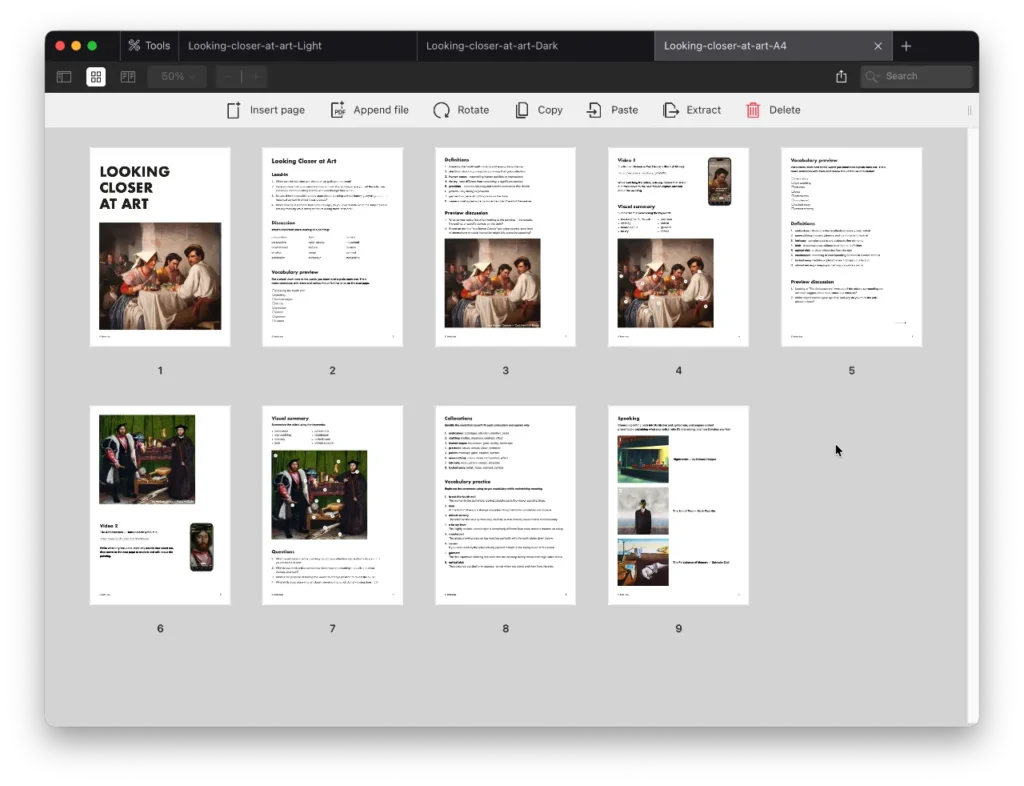
Contents
- Lead-in
- Vocabulary preview
- Definitions
- Video preview
- Video 1
- Visual summary
- Vocabulary preview
- Definitions
- Video preview
- Video 2
- Visual summary
- Questions
- Collocations
- Speaking
Start by asking students about their recent museum visits and what catches their eye in paintings. This gets them thinking about their own reactions to art before you introduce any technical terms. Then pre-teach the first vocabulary set (break the fourth wall, startling, human-esque, far cry, precision, potent, garment, cameo) using the preview activity where students mark what they already know and check definitions.
Play the first video on “In a Roman Osteria” and have students jot down details that stand out. Then move to the visual summary slide, where they describe the numbered elements using the target vocabulary. This puts the new words to work right away. The painting’s direct gaze and realistic details give students something concrete to point to when talking about “breaking the fourth wall” or “precision.”
Do the same with the second vocabulary set (meticulous, eye-soothing, intricacy, blob, optical trick, counterpart, tucked away, utmost secrecy) before the “Ambassadors” video. The anamorphic skull is great for talking about optical tricks and hidden symbolism. Use the visual summary again to have students describe what they see, from the ambassadors’ elaborate clothes to that strange distorted shape at the bottom.
After both videos, shift to discussion questions that push students to think harder. Why do artists hide meanings in their work? What can you learn from looking closely at something that you’d miss scrolling past it? The collocations exercise pairs words naturally (meticulous technique, startling discovery, potent symbol), and the vocabulary practice asks students to rephrase sentences using new terms. End with the speaking activity: students pick a painting, research it, and present what they find, using the same analytical approach they’ve been practicing.
