
Life in the Darkest Place
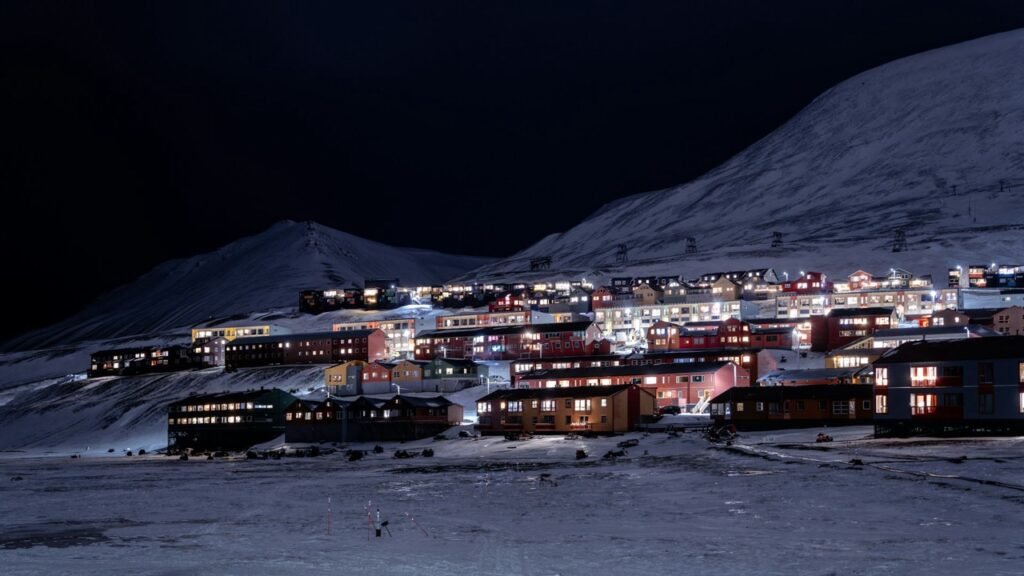
This B1 lesson is about life during the polar night, when the sun doesn’t rise for weeks or even months. Students watch two short videos, learn vocabulary like “endure,” “slumber,” and “go with the flow,” and discuss what it would be like to live in total darkness. It’s a great pick for winter classes or any group that enjoys geography and nature topics.
Lesson overview
- Learn eight vocabulary words related to darkness, cold weather, and polar regions
- Watch two short videos about daily life during the polar night
- Practice using new vocabulary through matching, gap fills, and picture activities
- Discuss personal reactions to extreme darkness through “would you rather” questions
| Level | Vocabulary | Video Length | Lesson Time |
| B1 / Intermediate | 13 words | 0:54, 0:38 min | 60 min |
Vocabulary
- North Pole
- Slumber
- Embrace
- Cozy
- Endure
- Sleepiness
- Struggle
- Go with the flow
- Tilt of the earth
- Northern lights
- Underneath the stars
- Light pollution
- Galaxy
Contents
- Lead-in
- Brainstorm
- Vocabulary Match
- Vocabulary Practice
- Vocabulary
- Video 1
- Questions
- Video 2
- Comprehension
- Questions
- Would you rather
- Speaking
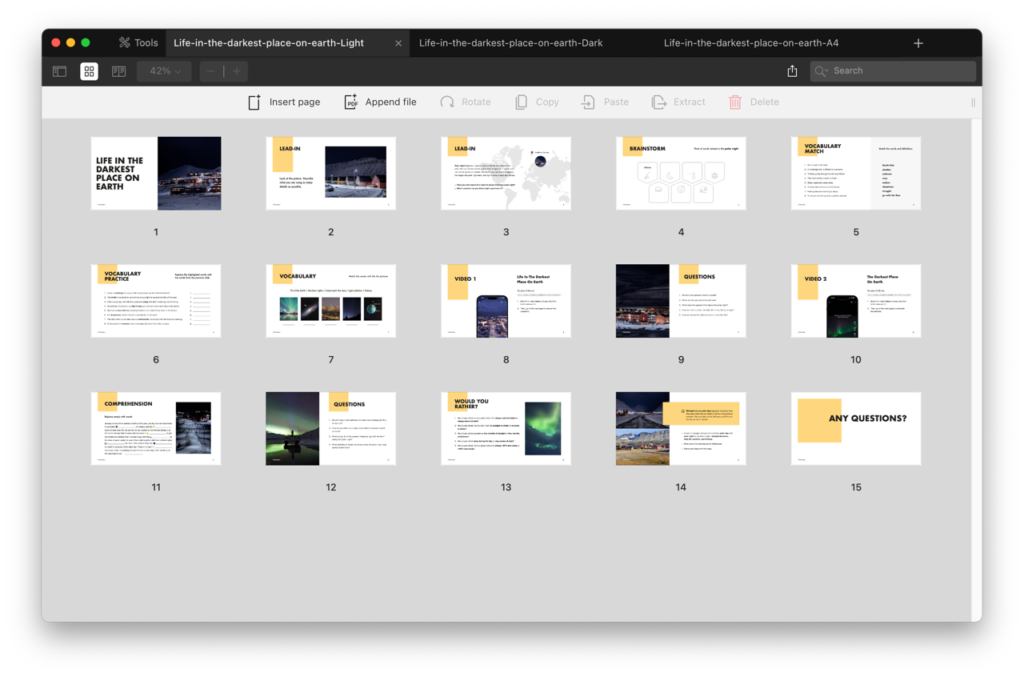
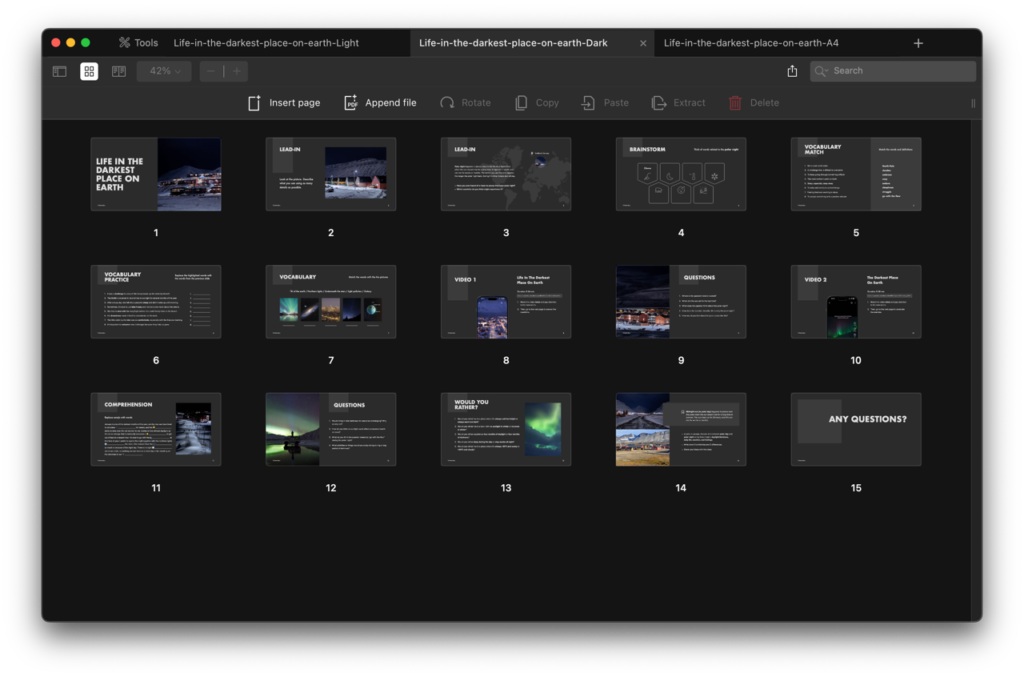
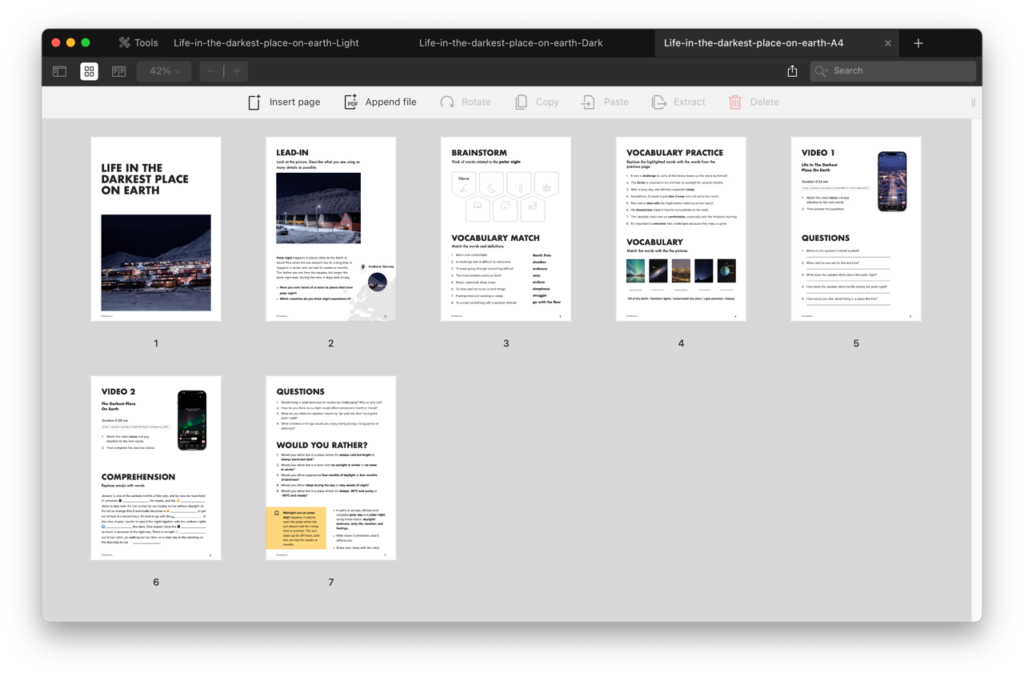
Open with the lead-in on slide 2. Students describe what they see in the picture, which gets them using descriptive language right away. Then slide 3 gives a short explanation of what the polar night actually is. Most B1 students have heard of it but don’t know the details, so this is a good moment to check understanding before asking which countries experience it. The brainstorming activity on slide 4 asks students to come up with words connected to the polar night. Let them work in pairs for a couple of minutes, then collect ideas on the board.
Move into the vocabulary section on slides 5 through 7. There are eight words to cover, with a matching exercise and a replacement activity. The replacement task on slide 6 is especially useful because students have to read full sentences and swap in the new words, which takes more thought than simple matching. Slide 7 adds a picture-matching task with terms like “northern lights” and “light pollution” that come up in the videos.
Play the first video on slide 8. It’s under a minute, so you can play it twice without losing time. Have students answer the five questions on slide 9 in pairs before checking together. The second video on slide 10 is also short. The comprehension task on slide 11 asks students to replace emojis with the correct words from the video. This is a fun format that keeps attention up.
Finish with the discussion and speaking activities on slides 12 through 14. The “would you rather” questions on slide 13 work well because every option is a bit extreme, which pushes students to explain their reasoning. The final pair activity compares polar night with polar day, and students list five similarities and five differences. This wraps things up nicely and gives everyone a chance to reuse the lesson vocabulary in a natural way.
