
Jewelry

This B1 lesson teaches students how to talk about jewelry through three personal stories from India, France, and Mexico. Students learn vocabulary like necklace, pendant, gemstone, and vintage, then listen to people describe meaningful pieces they own. Activities include matching definitions, answering comprehension questions, and presenting jewelry traditions from their own country.
Lesson overview
- Learn jewelry vocabulary including gemstone, bracelet, band, beads, and pendant with picture matching
- Practice words for describing style and value like handmade, vintage, unique, and store-bought
- Listen to three short stories about a gold necklace from India, a vintage ring from France, and a silver bracelet from Mexico
- Give a short talk about jewelry traditions in your country including materials, occasions, and cultural meaning
| Level | Vocabulary | Audio Length | Lesson Time |
| B1 / Intermediate | 14 words | 0:44, 0:35, 0:56 min | 60 min |
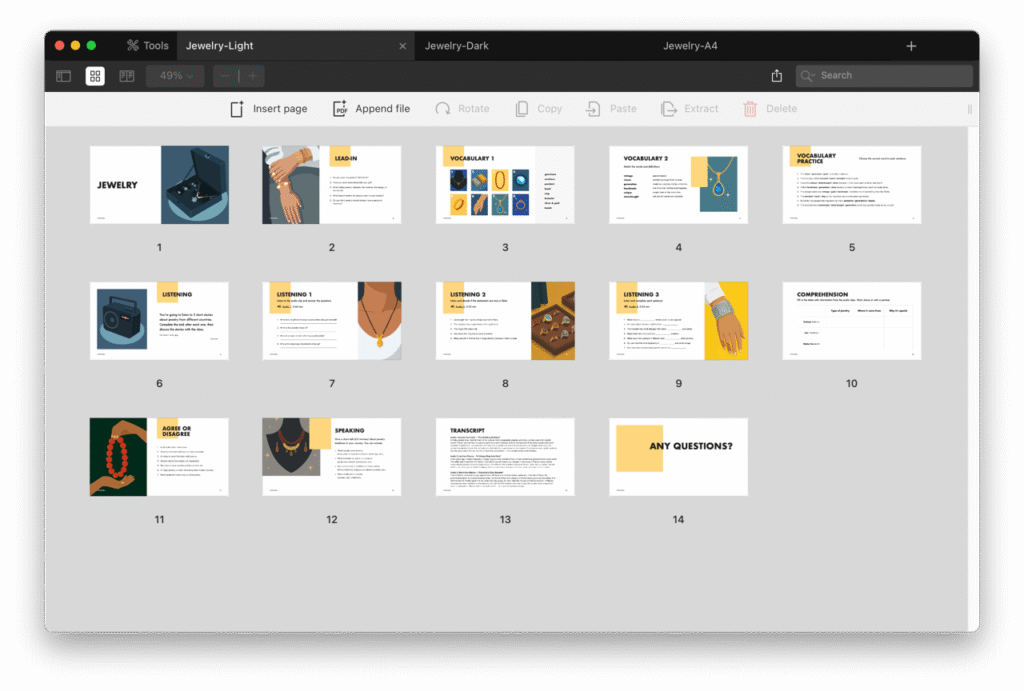
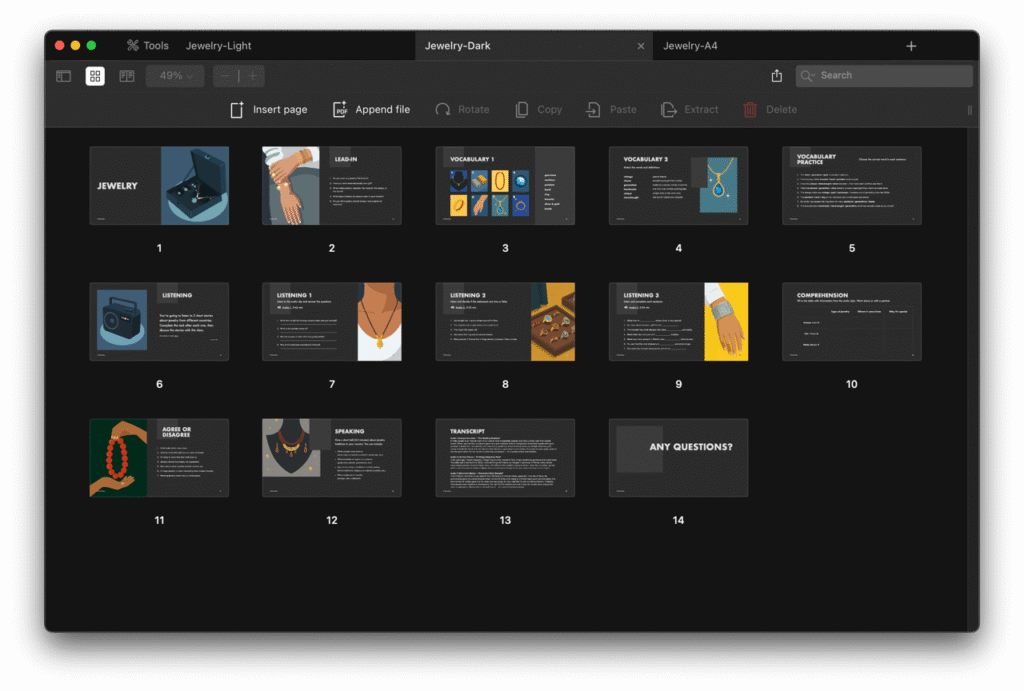
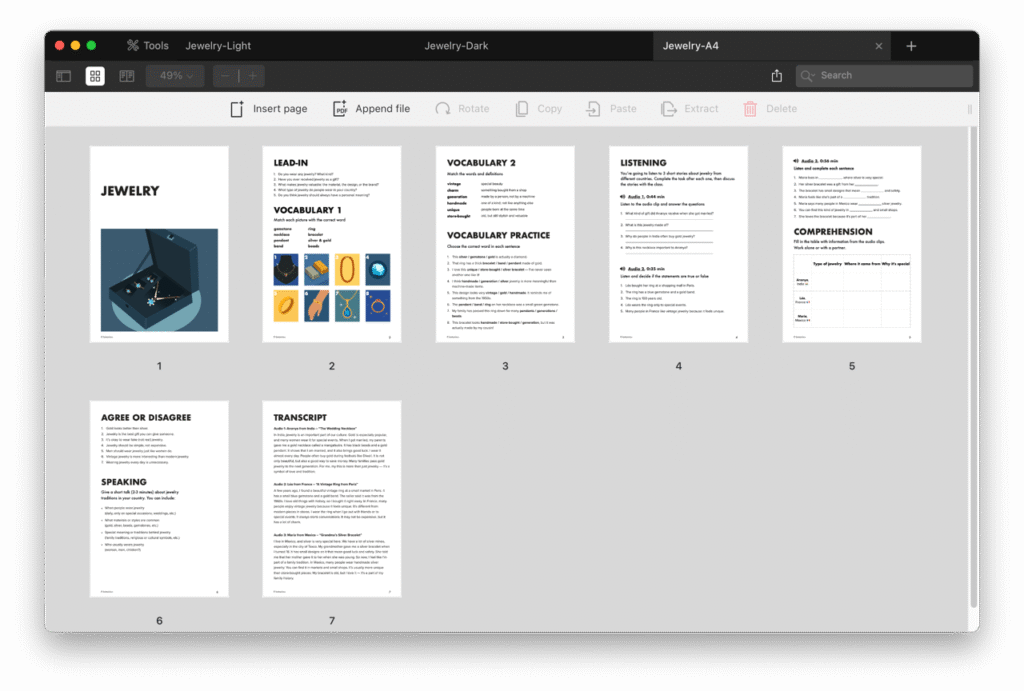
Vocabulary
- gemstone
- pendant
- necklace
- band
- ring
- bracelet
- silver & gold
- beads
- vintage
- charm
- generation
- handmade
- unique
- store-bought
Contents
- Lead-in
- Vocabulary 1
- Vocabulary 2
- Vocabulary practice
- Listening
Audio 1 – “The Wedding Necklace”
Audio 2 – “A Vintage Ring from Paris”
Audio 3 – “Grandma’s Silver Bracelet” - Comprehension
- Agree or disagree
- Speaking
Start with the lead-in questions. These are personal but not too difficult for B1. Question 3 about what makes jewelry valuable often gets students thinking about sentimental versus monetary worth, which sets up the listening stories nicely. Then do the vocabulary matching. The first section has eight items with pictures: gemstone, necklace, pendant, band, ring, bracelet, silver and gold, and beads. Students match words to images. Check answers and drill pronunciation, especially “jewelry” which students often mispronounce.
The second vocabulary section has students match six words to definitions: vintage, charm, generation, handmade, unique, and store-bought. After matching, do the practice exercise where students choose the correct word in eight sentences. This reinforces the vocabulary before listening. Now move to the three audio clips. Each one is under a minute. Audio 1 is Ananya from India talking about her gold wedding necklace. Students answer four questions about the gift, the material, why Indians buy gold, and why it’s important to her.
Audio 2 is Léa from France describing a vintage ring she found at a Paris market. Students mark five statements true or false. Audio 3 is Maria from Mexico talking about her grandmother’s silver bracelet. Students complete seven sentences with missing information. After all three clips, students fill in the comparison table showing type of jewelry, where it came from, and why it’s special for each person. This helps them see patterns across the three stories.
The agree or disagree section has seven statements about jewelry. Students discuss these in pairs. Expect different opinions, especially on statements 3 about fake jewelry and 5 about men wearing jewelry. These often depend on cultural background. End with the speaking task. Students prepare a two to three minute talk about jewelry traditions in their country using the guiding questions. Give them five minutes to prepare notes, then have students present to the class or in small groups. Encourage them to use vocabulary from the lesson.
