
It Was Great Until It Wasn’t
This B1 lesson is built around a short comedy video about a man whose job is to make good things worse. He calls himself an Enshittificator. The video follows him through a typical working day: filling websites with scam ads, sending updates that slow your phone down, locking family photos behind a paywall, and ending with a car where even the brakes cost extra. It is funny, but students recognize every single example from their own lives. The lesson covers 12 vocabulary words connected to technology and online services, and opens into discussion about why so many products keep getting worse.
Lesson overview
- Discuss why companies sometimes make their products worse on purpose
- Learn 12 vocabulary words connected to tech, money, and online services
- Watch a short comedy video and answer comprehension questions
- Practice vocabulary through matching, sentence completion, and pair discussion
| Level | Vocabulary | Video Length | Lesson Time |
| B1 / Intermediate | 12 words | 3:59 min | 60 min |
Vocabulary
- cost efficient
- scale up
- solution
- fall right in my lap
- pop up
- scam
- deceased
- useless
- alternative
- dependent
- crush
- afford
Contents
- Lead-in
- Stats
- Vocabulary
- Definitions
- Preview discussion
- Video
- Questions
- Summary
- Comments
- Your comment
- Discussion
- Practice
- Word pair sentences
- Then vs now
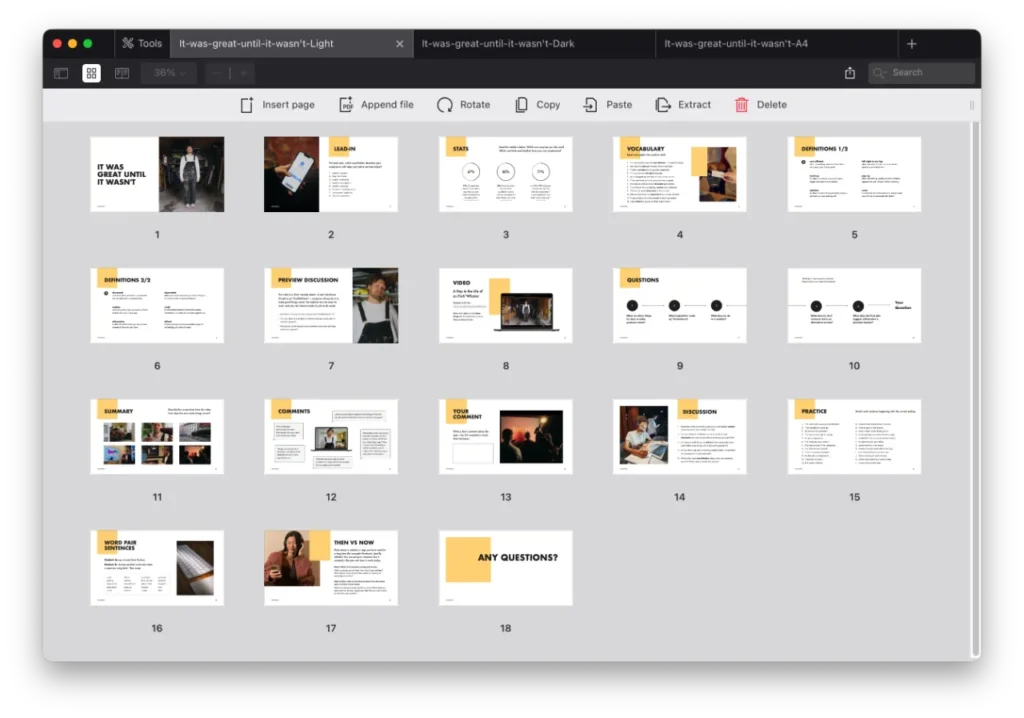
Start with the word pairs on slide 1. Give students 2 minutes to go through each pair and mark which word describes their experience better. This works well as a quiet individual task first, then a quick share with a partner. It gets the room talking before you’ve even introduced the topic.
Move to the stats on slide 2. Read them together and ask which one surprises students most. The 71% trust figure tends to land well with adults. Give students a minute to react before you move on.
Slides 3 to 5 cover vocabulary. The sentences on slide 3 are good for quick checking. Students read each sentence and explain the word in bold in their own words. This works better than just reading definitions cold. Then use slides 4 and 5 to confirm meanings and clarify anything students struggled with. Keep definitions short and don’t over-explain at this stage.
Slide 6 is the preview discussion before the video. Give students a minute to read the short description of the video and discuss the three questions with a partner. The question about why companies make services worse on purpose usually gets strong opinions from adult learners, so it’s worth letting it run a little longer if the group is engaged.
Play the video on slide 7. It runs just under 4 minutes. Ask students to note three things the character does to make products worse. The comprehension questions on slides 8 and 9 can be done in pairs after a first watch, then checked as a class. Students often want to watch certain parts again, which is fine.
Slide 10 uses screenshots from the video to review the main points. Students describe what they see and connect each image to a tactic. This works as a light speaking activity before the discussion.
Slides 11 and 12 move into the comments section. Students read five real comments from under the video, then write their own. Encourage them to use 2 to 3 vocabulary words naturally. Sharing comments aloud is optional but usually goes well if the group is comfortable.
Slides 13 to 15 cover discussion and practice. The discussion questions on slide 13 are the most personal and tend to produce the best conversation. The matching activity on slide 14 works well as a written task students can self-check. Slide 15 is a word pair game for pairs or small groups and is a good way to round off vocabulary practice.
Close with the Then vs Now activity on slide 16. Students pick one platform and compare past to present. Give them 3 to 4 minutes to write before sharing. Past tense use comes naturally here because the task is personal and concrete.
