
Is Vaping Dangerous?
This C1 lesson tackles vaping and smoking through science-based content and opinion-driven discussion. Students learn medical and technical vocabulary like “combustion,” “pro-inflammatory,” and “ravage” while debating health, addiction, and personal freedom. It works especially well with older teens and adults who have strong views on the topic.
Lesson overview
- Learn eight medical and technical terms related to vaping and smoking
- Analyze a video comparing the health effects of vaping versus cigarettes
- Debate public health questions around addiction, youth vaping, and regulation
- Practice using target vocabulary in creative and discussion-based activities
| Level | Vocabulary | Video Length | Lesson Time |
| C1 / Advanced | 8 words | 5:45 min | 60 min |
Vocabulary
- coil
- puff
- craving
- ravage
- debris
- pro-inflammatory
- combustion
- tar
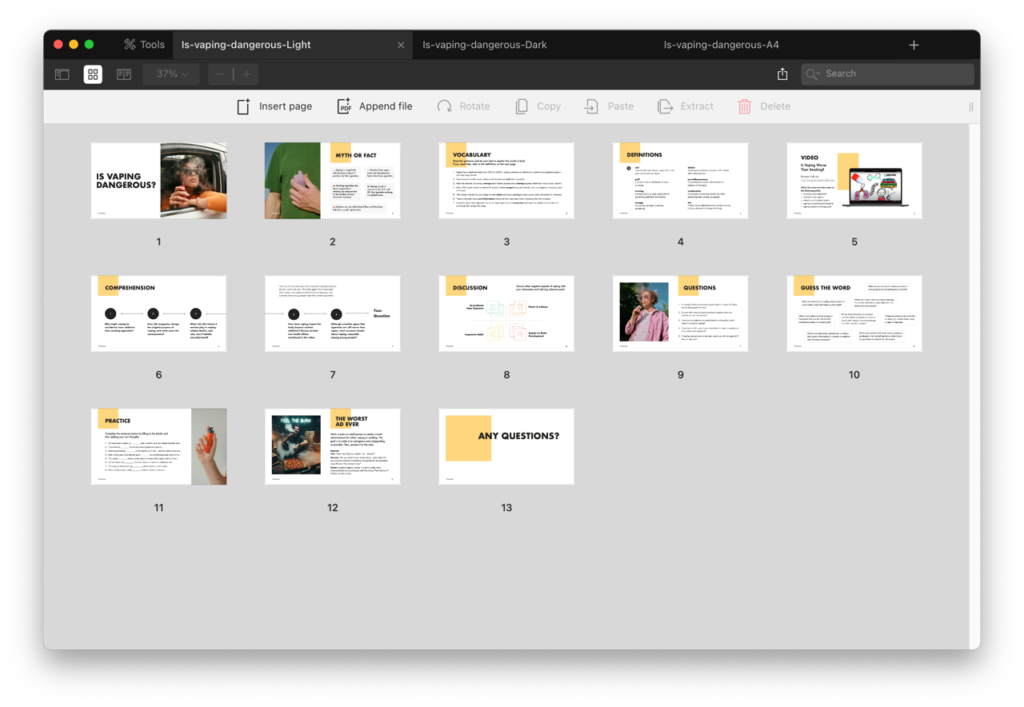
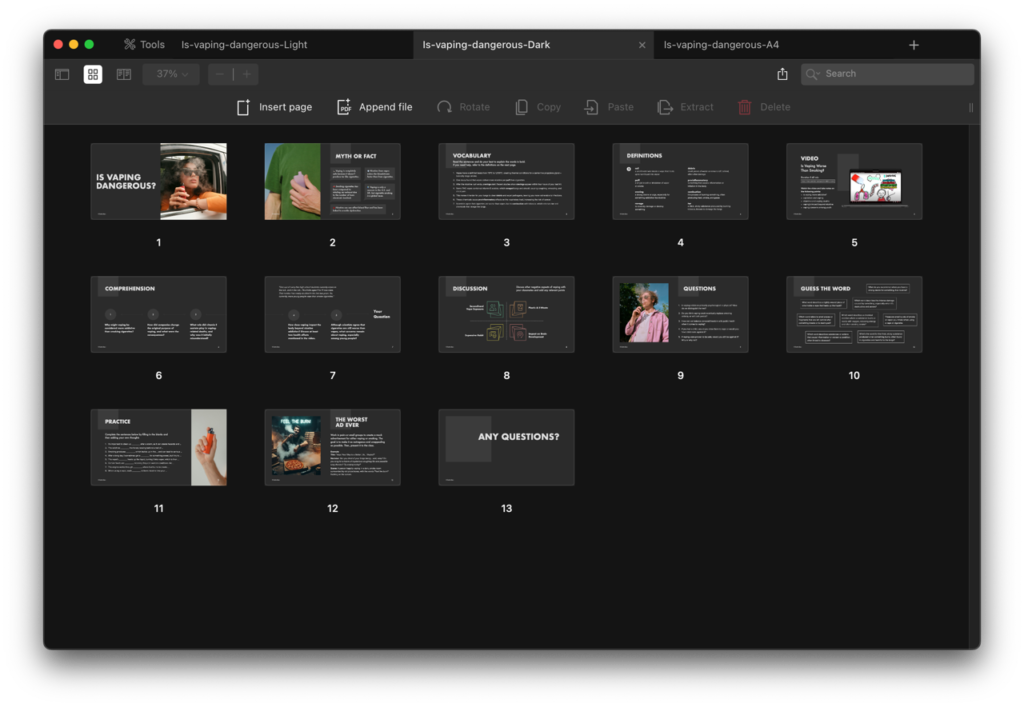
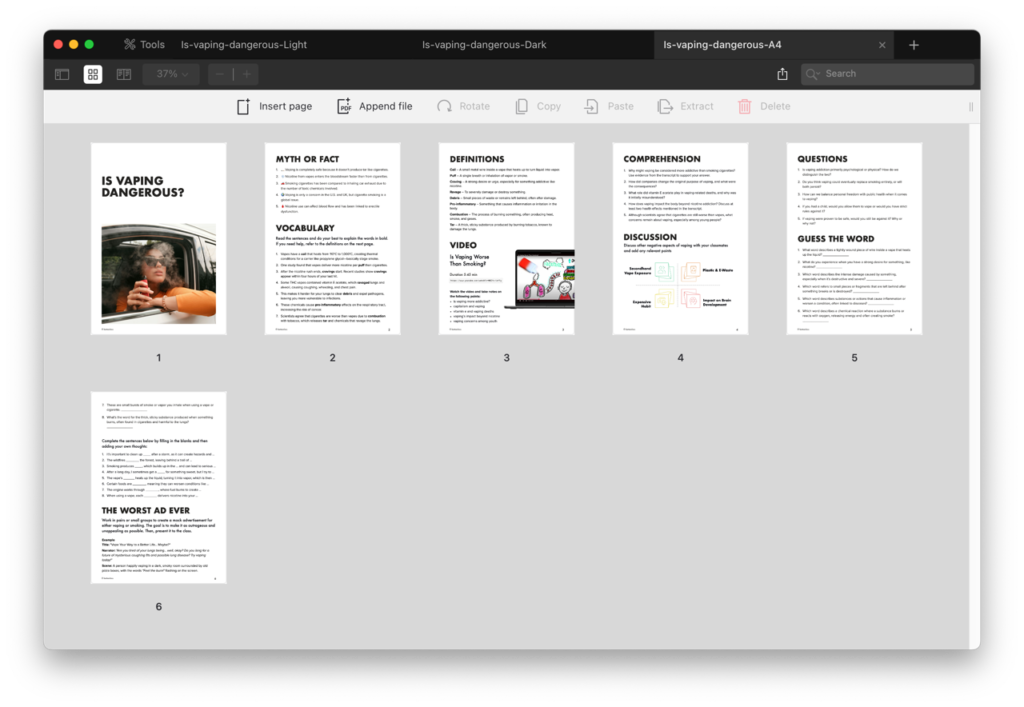
Contents
- Myth or fact
- Vocabulary
- Definitions
- Video
- Comprehension
- Discussion
- Questions
- Practice 1
- Practice 2
- Worst ad ever
Open with the myth or fact activity. This gets students talking right away and shows you what they already know about vaping. Some statements are designed to surprise, like the one about nicotine and blood flow, so let the conversation run a bit before confirming answers. At C1 level, students usually have opinions ready to go, but they might lack the specific vocabulary to express them precisely. That is where the next section comes in.
The vocabulary block introduces eight words that students will need throughout the lesson. Have them read the sentences first and try to guess meanings from context before looking at the definitions. Words like “pro-inflammatory” and “combustion” are technical but useful beyond this lesson. “Ravage” and “craving” are worth spending an extra minute on since students will use them in the discussion and practice activities later. Quick concept-check questions work well here. Ask something like “What else can ravage a place besides chemicals?” to stretch their thinking.
The video is the main input. At nearly six minutes, it covers a lot of ground, so give students the note-taking prompts before pressing play. After the first watch, let pairs compare notes before moving to the comprehension questions. Questions four and five ask students to connect what they heard to bigger issues around youth vaping and long-term health risks. These naturally lead into the group discussion about e-waste, brain development, and secondhand exposure. Do not rush this part. C1 students often have the most to say when a topic touches on ethics and personal choice.
Wrap up with the creative activities. The “Worst Ad Ever” task is a highlight for most groups. Give pairs five minutes to plan their mock advertisement, then have each group present. It lets students use the vocabulary in a playful context, and it usually ends the lesson on a high note. If you are short on time, skip the gap-fill practice and go straight to the ad activity instead.
