
Is Traditional Office Culture Dead?
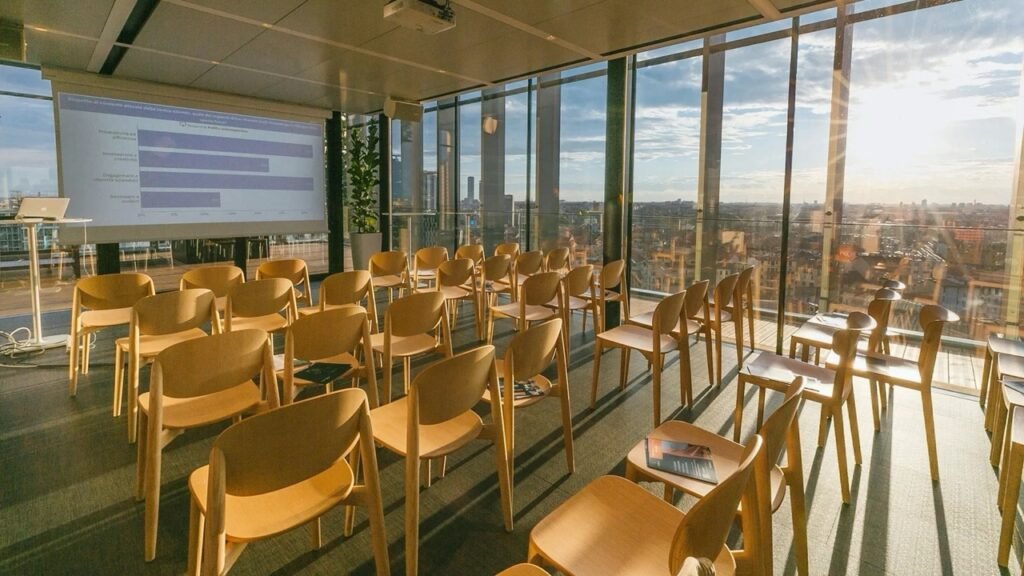
This lesson examines how C1 advanced students view the transformation of workplace culture after the pandemic disrupted traditional office expectations. Students analyze shifting priorities as employees now value autonomy and concrete benefits over superficial perks like ping-pong tables and free snacks. Through article analysis, vocabulary development, and cross-cultural comparison activities, learners explore how younger generations demand flexibility, equitable compensation, and meaningful work-life balance rather than settling for token gestures that once defined office culture.
Lesson overview
- Analyze how pandemic work-from-home experiences changed employee expectations
- Evaluate the shift from symbolic office perks to tangible benefits
- Compare cultural attitudes toward remote work policies and work-life balance
- Develop sophisticated vocabulary for discussing workplace culture and employee priorities
| Level | Vocabulary | Reading Time | Lesson Time |
| C1 / Advanced | 12 words | 5 min / 874 words | 60-80 min |
Vocabulary
- abandoned
- lure
- swathe
- trust-fall
- equitable pay
- settle for less
- resurgence
- superfluous
- infamous
- tangible
- monetary
- advocate for
- perk
- benefit
- incentive
- reward
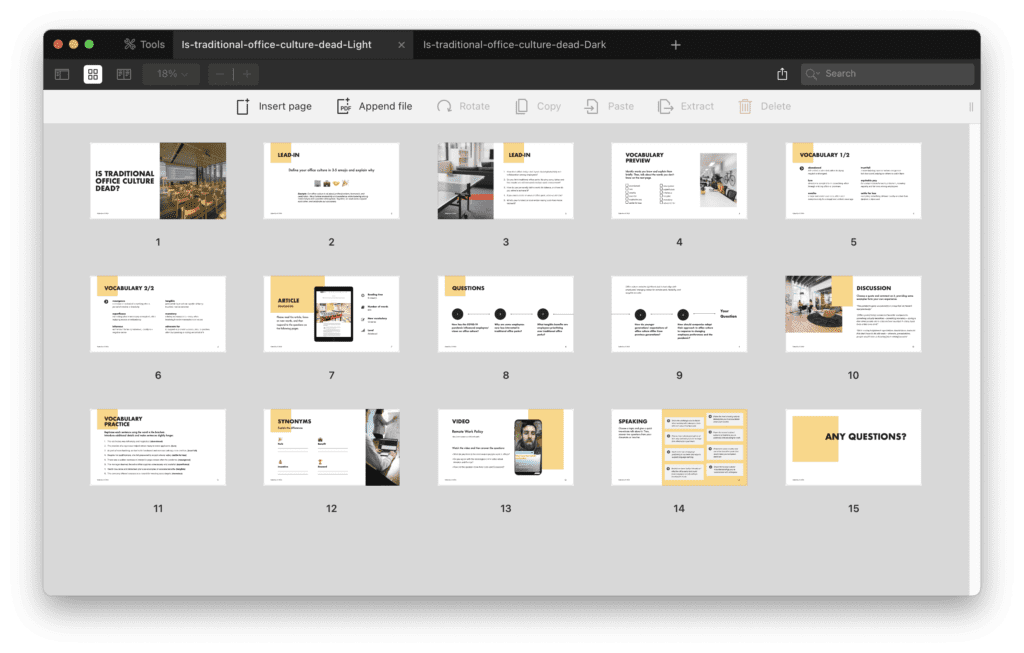
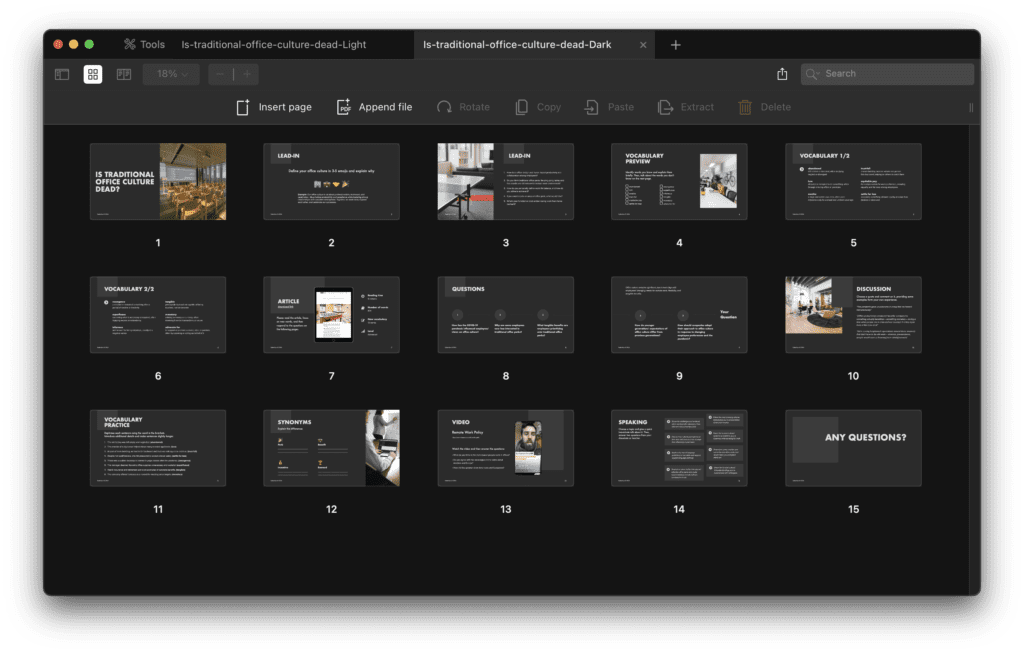
Contents
- Lead-in 1
- Lead-in 2
- Vocabulary preview
- Vocabulary
- Article
- Comprehension questions
- Discussion
- Vocabulary practice
- Synonyms
- Short video
- Speaking
Start with the emoji activity on page 2 where students describe their office culture using three to five icons. This gets everyone talking before heavier terminology comes in. Students often choose similar emojis but explain them differently based on their experiences, which shows how workplace culture means different things to different people.
The discussion questions on page 3 work well as think-pair-share. Give students two minutes to think alone, three minutes to discuss with a partner, then bring the class together. This helps students organize their thoughts before speaking to the larger group.
The vocabulary preview on pages 4-6 introduces twelve words needed for the reading. Have students check off words they know on page 4, then teach the rest through the definitions on pages 5-6. Terms like “abandoned,” “lure,” “resurgence,” and “equitable pay” come up throughout the article and later discussions, so students need to understand them before reading.
The article on page 7 runs 874 words and takes about five minutes to read. Students should read once for the general idea, then again while noting how vocabulary words function in context. The comprehension questions on pages 8-9 check understanding and push students to pull together information from different sections.
Page 10 has three quotes from the article for deeper analysis. Assign each quote to a different group and have them connect the ideas to their own workplace experiences. This grounds abstract concepts like autonomy and heightened expectations in real situations students have encountered.
The vocabulary practice on page 11 reinforces the twelve words through sentence transformation. Students rephrase given sentences using specific vocabulary while adding detail.
The synonyms activity on page 12 distinguishes between “perk,” “benefit,” “incentive,” and “reward.” These words often get used interchangeably but carry different connotations. Have students give workplace examples for each term to clarify the differences.
Watch the humorous Instagram video on page 13 comparing American and European remote work attitudes. The exaggerated stereotypes provide some humor while raising real questions about cultural differences in work-life balance. Students discuss whether these stereotypes reflect reality or just reinforce generalizations.
Close with the speaking task on page 14 where students choose a workplace culture topic for a two-minute presentation. Listeners prepare two follow-up questions.
