
Is the 5-day Workweek Outdated?
This B2 lesson asks whether the traditional 5-day workweek still makes sense. Students look at where work-life balance policies came from and debate alternatives like the 4-day workweek. The lesson uses video content and real examples to get students thinking critically about workplace culture and employee wellbeing.
Lesson overview
- Explore the historical development of the modern workweek structure
- Practice workplace vocabulary related to burnout, productivity, and work schedules
- Discuss arguments for and against alternative work arrangements
- Develop persuasive writing skills through a business proposal task
| Level | Vocabulary | Lesson Time |
| B2 / Upper-Intermediate | 12 words | 60 min |
Vocabulary
- Skyrocket
- Thrive
- Brutal
- Unsustainable
- Indispensable
- Right around the corner
- In the midst of
- Burnout
- Shrink
- Concentrate
- Asynchronous
- Cumulative effect
Contents
- Lead-in 1
- Lead-in 2
- Synonyms
- Video
- Video summary
- Quotes
- Vocabulary practice
- Debate
- Writing
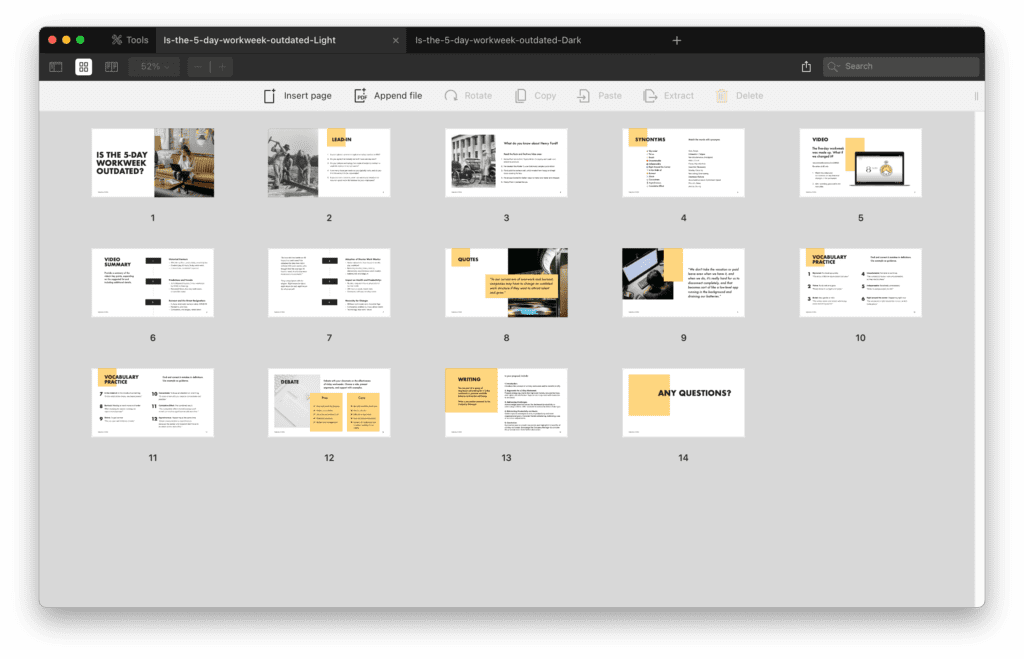
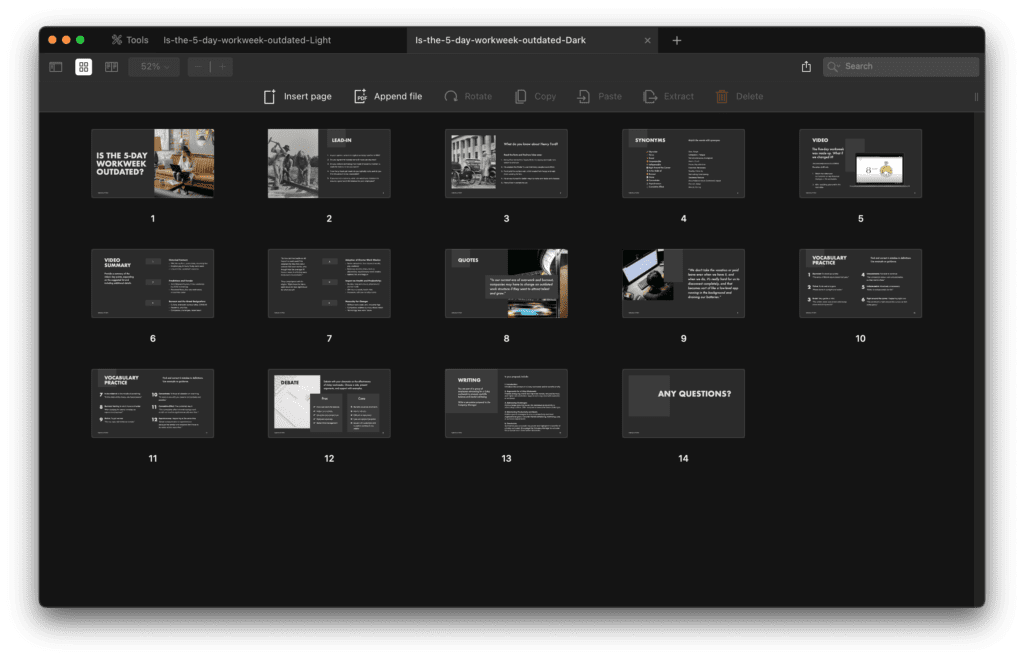
Start with the lead-in questions on page 2 about work schedules. These work well in pairs before opening up to the whole class. Students often have opinions about Henry Ford and the Industrial Revolution, so let those conversations run.
Move to the Henry Ford activity on page 3. This true-false task takes about 5 minutes. The false statements are numbers 1 and 5. Ford founded Ford Motor Company, not Toyota, and he didn’t invent the car itself.
Before the video, pre-teach vocabulary on page 4 through the synonym matching. These words come up throughout the video, so students need them ready. The video runs 4:40. Play it once without stopping. Students take notes using the framework on pages 6-7.
After the video, use the summary framework to check comprehension. Students work in small groups to expand the bullet points into full sentences. This helps B2 learners manage complex ideas about economics and social change. The vocabulary practice on pages 10-11 reinforces key terms. There are six errors total to find and correct.
The debate on page 12 is the main speaking activity. Assign sides or let students choose based on their actual opinions. Give them 10 minutes to prepare arguments using the provided points. Each side presents for 3-4 minutes, then open it up for rebuttals.
Wrap up with the writing task on page 13. Works well as homework or timed in-class writing. The proposal format gives students a practical business English structure they can use elsewhere. If you’re short on time, skip this and end with a reflection discussion about their own ideal work schedule.
