
Intro to Formula 1

This B2 lesson introduces students to Formula 1 racing through video clips, vocabulary, and a beginner’s guide. They learn terms like pole position, pit stop, slipstream, and G-force, then watch a short video explaining how race weekends work. Activities include describing race moments, writing commentary or race reports, and discussing whether drivers are athletes.
Lesson overview
- Learn essential F1 vocabulary including Grand Prix, qualifying, starting grid, and checkered flag
- Watch a beginner’s guide video explaining practice sessions, qualifying rounds, and race day structure
- Practice using racing terms in context through gap-fill exercises and sentence completion
- Write a short race report, track commentary, or driver diary entry using target vocabulary
| Level | Vocabulary | Video Length | Lesson Time |
| B2 / Upper-Intermediate | 18 words | 4:41 min | 60-90 min |


Vocabulary
- Formula One (F1)
- Grand Prix
- Team
- Practice
- Qualifying
- Race Day
- Starting Grid
- Pole Position
- Checkered Flag
- Pit Stop
- Slipstream
- Overtake
- G-Force
- Podium
- Team Principal
- Race Director
- Formation Lap
- Red Flag
- Yellow Flag
- Track Limits
Contents
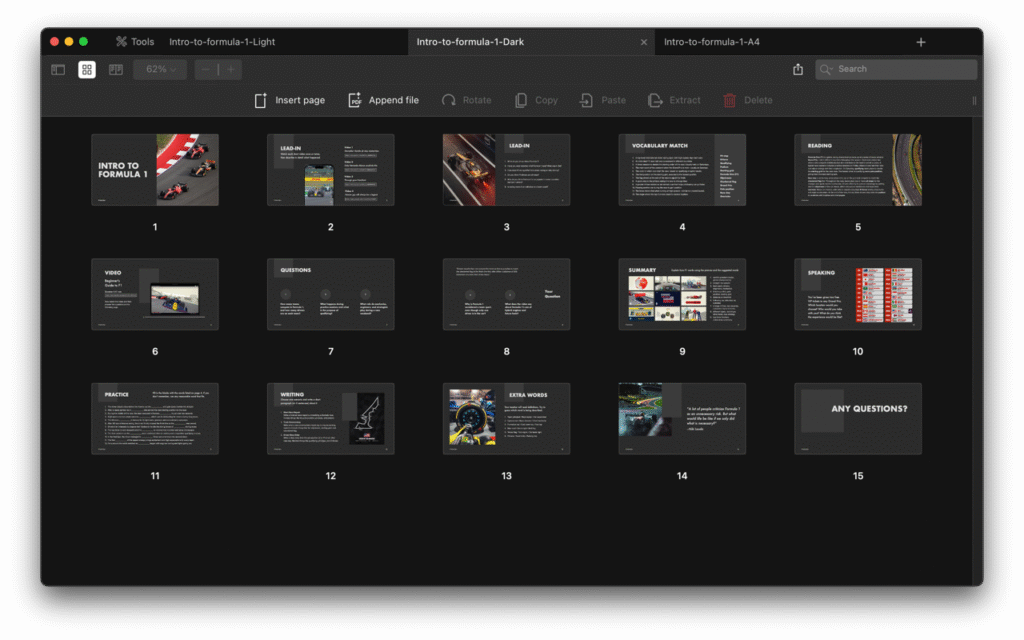
- Lead-in (4 short videos)
- Lead-in questions
- Vocabulary match
- Reading
- Video
- Comprehension
- Summary
- Speaking
- Practice
- Writing
- Extra words
- Quote
Start with the four short video clips. Play each one once or twice and have students describe what happened. The clips show pit stops, overtaking, and race moments, so students get visual context before learning vocabulary. Then move to the lead-in questions. Question 4 about whether F1 drivers are athletes usually generates debate. Some students say yes because of physical demands, others say no because they sit in a car. Let the discussion happen briefly.
Move to vocabulary matching. Students match twelve F1 terms to definitions. Check answers together and drill pronunciation on tricky words like “slipstream” and “checkered flag.” Then have students read the short text explaining how a race weekend works. This gives them the big picture before watching the video. The video is about four and a half minutes and covers teams, practice sessions, qualifying, race strategy, and hybrid engines. After watching, students answer five comprehension questions. Question 3 about the role of mechanics and engineers connects to question 6 from the lead-in about whether racing is individual or team sport.
The summary section has nine images with keyword prompts. Students use the prompts to explain how F1 works in their own words. This pushes them to reconstruct information rather than just repeat it. Walk around and listen as pairs work through the images. The speaking task about choosing a Grand Prix location works well after all the input. Students pick which race they’d attend, who they’d bring, and what the experience would be like. This personalizes the content and gets students using vocabulary naturally.
The practice gap-fill has twelve sentences using the vocabulary from page 4. Students fill in blanks, and if they forgot a word, they can use any reasonable term that fits. This reduces pressure and keeps focus on meaning. The writing task offers three scenarios: race report, track commentary, or driver diary. Students pick one and write four to five sentences. Give them five minutes to write, then have volunteers share. The extra words section works as a fun closer if you have time. You read definitions and students guess which F1 term you’re describing.
