
Interior Design Tips

This B2 lesson covers interior design vocabulary and practical decorating tips. Students learn words like “proportional,” “cohesive,” and “cost-effective” while watching a short video and discussing their own style preferences. It works well for students who enjoy talking about homes and personal spaces.
Lesson overview
- Learn twelve interior design vocabulary words through matching and context activities
- Watch a short video about five practical home decorating tips
- Practice listening skills by filling in blanks from the video transcript
- Discuss design preferences and recommend decor for classmates
| Level | Vocabulary | Video Length | Lesson Time |
| B2 / Upper-Intermediate | 12 words | 1:24 min | 60 min |
Vocabulary
- Mid-Century Modern
- Art-deco
- Bohemian
- Industrial
- Japandi
- Maximalist
- Design from blank canvas
- Proportional
- Layout
- Cost-effective
- Affordable
- Cozy vibe
- Thoughtfully curated
- High-end
- Tacky
- Cohesive
- Consistent
- Something speaks to you
Contents
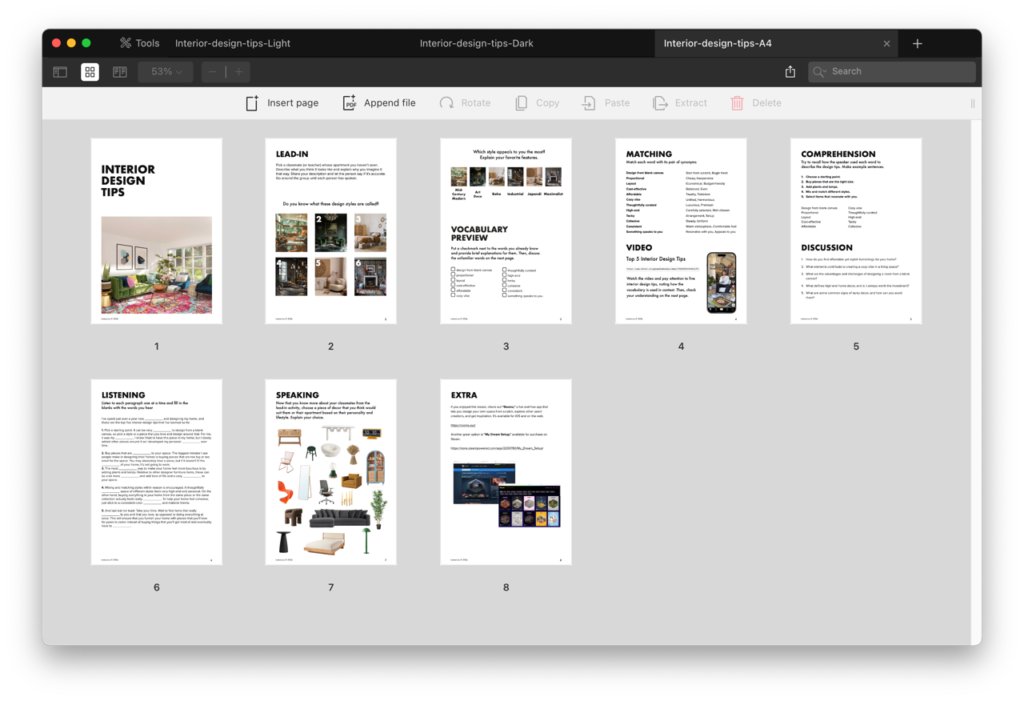
- Lead-in
- Interior design styles
- Vocabulary preview
- Matching
- Video
- Comprehension
- Listening
- Discussion
- Speaking
- Extra
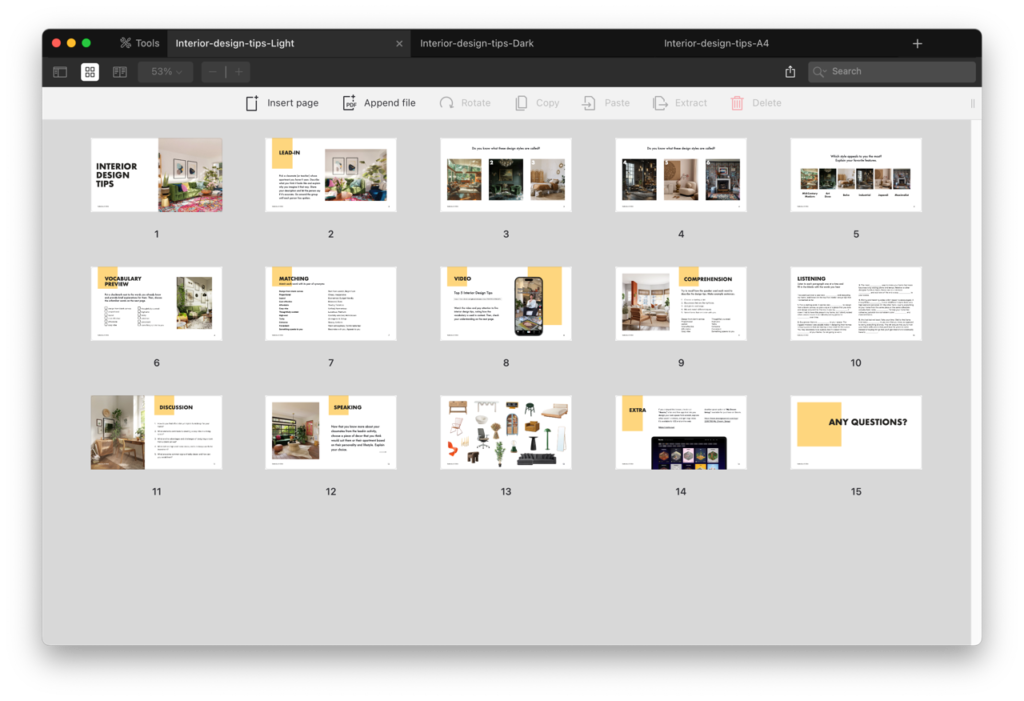
The lead-in is a fun icebreaker. Students pick a classmate and describe what they imagine that person’s apartment looks like. This gets them using descriptive language right away and usually produces some laughs when the person says how accurate or wrong the guess was. After that, show the six design style images and see if students can name them. Most B2 students will recognize a few styles like industrial or boho, but terms like Japandi or mid-century modern might be new. Let them discuss which style they prefer and why.
Move into the vocabulary preview next. There are twelve words and phrases that come up in the video, so give students a minute to check off the ones they already know and explain them briefly. Then do the synonym matching activity to cover the rest. Words like “tacky,” “cohesive,” and “thoughtfully curated” are worth extra attention because students often mix them up or use them in the wrong context. Have them say each word out loud and try it in a quick sentence before moving on.
Play the video once for general understanding, then go through the five design tips on the comprehension slide. Ask students to recall how the speaker used each vocabulary word. After that, play the video again for the gap-fill listening exercise. Pause after each paragraph so students have time to write their answers. Check answers together and replay any tricky sections. This activity ties the vocabulary directly to real usage, which helps it stick.
Wrap up with the discussion questions about affordable decorating, cozy spaces, and what makes something look tacky. These questions push students to use the new vocabulary in their own opinions. The final speaking activity brings everything full circle. Students pick a piece of decor they think would suit a classmate based on what they learned in the lead-in. It’s personal and gets students talking naturally about style and personality.
