
Inspiring Japan
This lesson takes B2 upper intermediate students on a journey through Japan’s culture, discovering why one traveler loves the country so deeply that he decides to stop visiting and move there permanently. Students explore Japanese loanwords that have entered English, iconic cultural symbols like sushi and cherry blossoms, and the everyday details that make Japan unique.
Lesson overview
- Discover Japanese loanwords that English speakers use daily
- Learn vocabulary for discussing travel destinations and cultural inspiration
- Watch a video about why Japan captivates foreign visitors
- Practice expressing feelings about places, cultures, and personal connections
| Level | Vocabulary | Video | Lesson Time |
| B2 / Upper-Intermediate | 8 words | 2:36 min | 60 min |
Vocabulary
- urban areas
- mass transit
- abundance
- curiosity
- to be inspired
- destination
- jingles
- back and forth
Contents
- Lead-in
- Loanwords
- Discussion
- Reading
- Vocabulary Match
- Video
- Questions
- Vocabulary Practice
- Questions
- Name 3
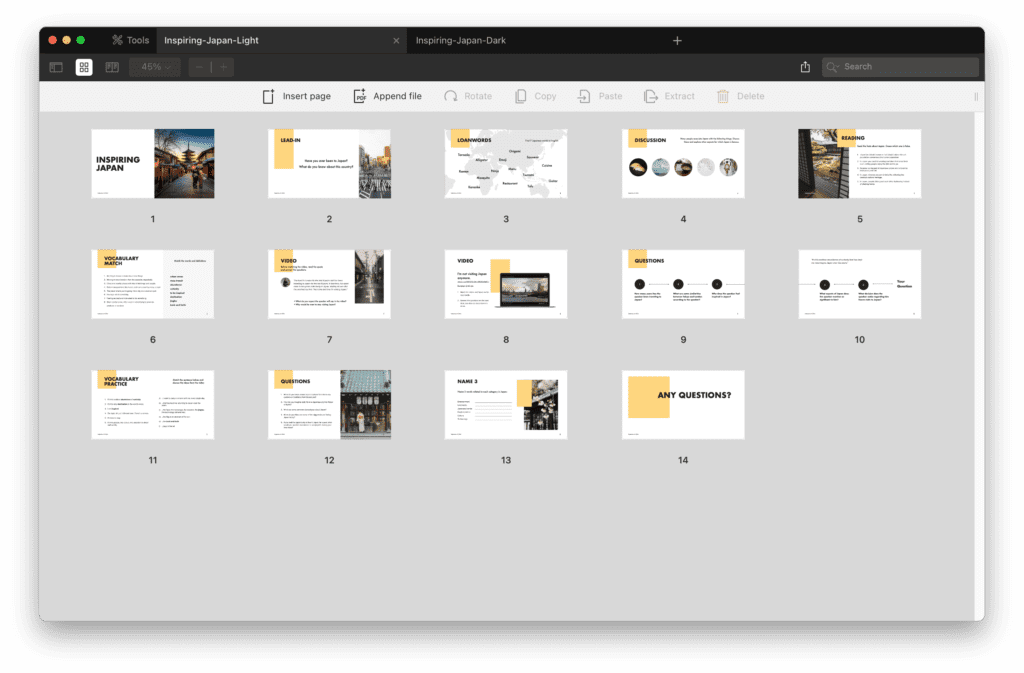
Start with the two questions on page 2 about whether students have visited Japan and what they know about it. The loanwords activity on page 3 surprises most students when they find out words like “karaoke,” “emoji,” and “tsunami” came from Japanese. Have them spot the seven Japanese words hidden among other foreign loanwords.
Page 4 shows five iconic Japanese images for discussion. Students describe what they see and share what else Japan is famous for.
The true/false reading on page 5 presents five facts where students guess which one is false. The answer is number 4 about kimonos being part of daily life. Most Japanese people wear Western clothing daily and save kimonos for special occasions.
Pre-teach the vocabulary on page 6 before the video. Words like “abundance,” “curiosity,” and “destination” come up throughout the speaker’s explanation of why Japan inspires him. The video setup on page 7 creates suspense by showing his quote about this being his last visit before revealing he’s moving there for good.
After watching the video on page 8, students answer comprehension questions on pages 9-10 and match sentence halves on page 11 using quotes from the video. The discussion questions on page 12 connect the video to students’ own experiences with places they find inspiring.
Close with the Name 3 activity on page 13 where students brainstorm three words for each Japan-related category. This pulls together the vocabulary and cultural knowledge from the lesson.
