
Inside a Train Ride
This B2 lesson takes students through German train culture and travel vocabulary. They learn train-related words like “conductor,” “legroom,” and “cardinal sin,” watch a video about German train etiquette and delays, then discuss transportation habits in different countries. The lesson covers both practical vocabulary and cultural behaviors around punctuality and politeness.
Lesson overview
- Learn vocabulary for train stations, carriages, tickets, and passenger behavior
- Watch a video exploring German train culture, delays, and unwritten rules
- Practice expressions like “time to kill,” “quintessential,” and “cardinal sin”
- Compare train experiences across countries and present on famous rail journeys
| Level | Vocabulary | Video Length | Lesson Time |
| B2 / Upper-Intermediate | 21 words | 5:16 min | 60 min |
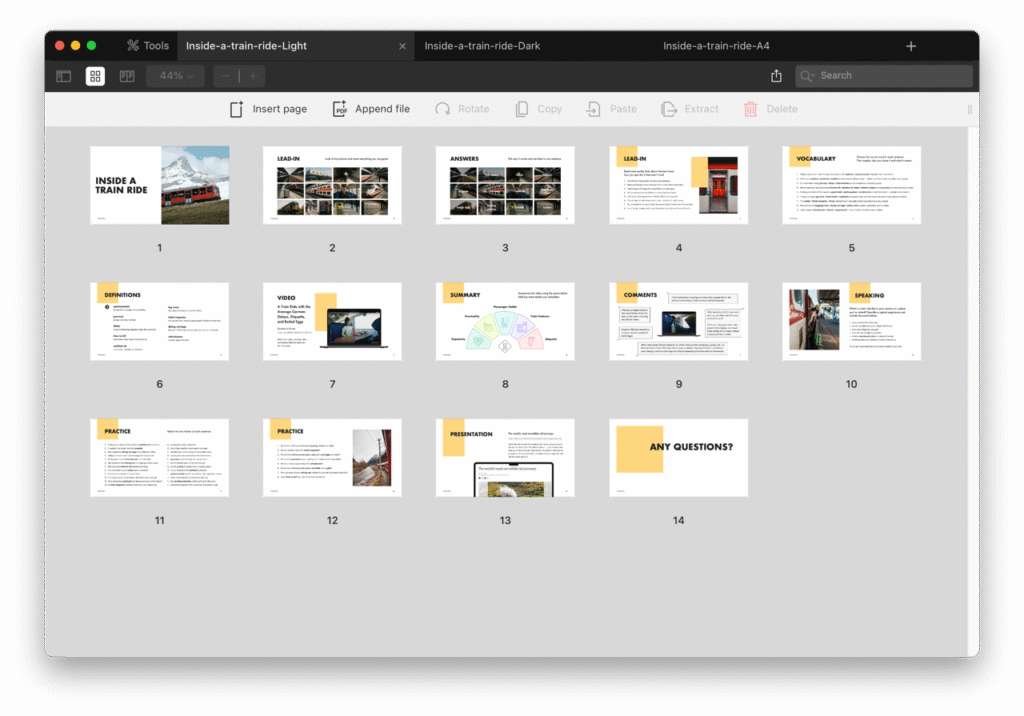
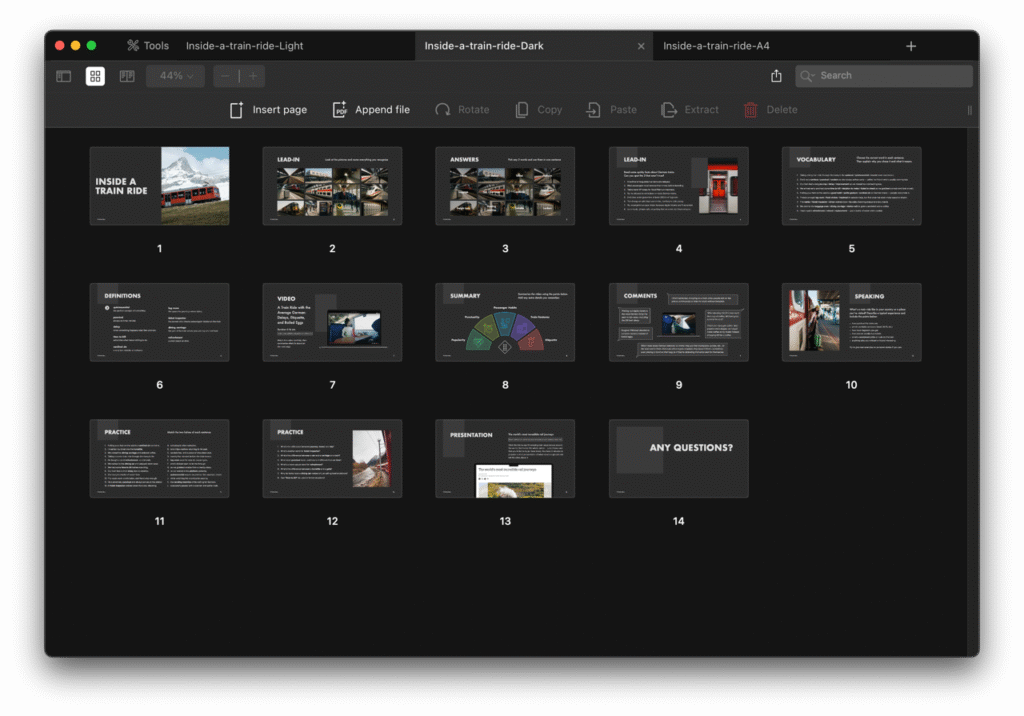
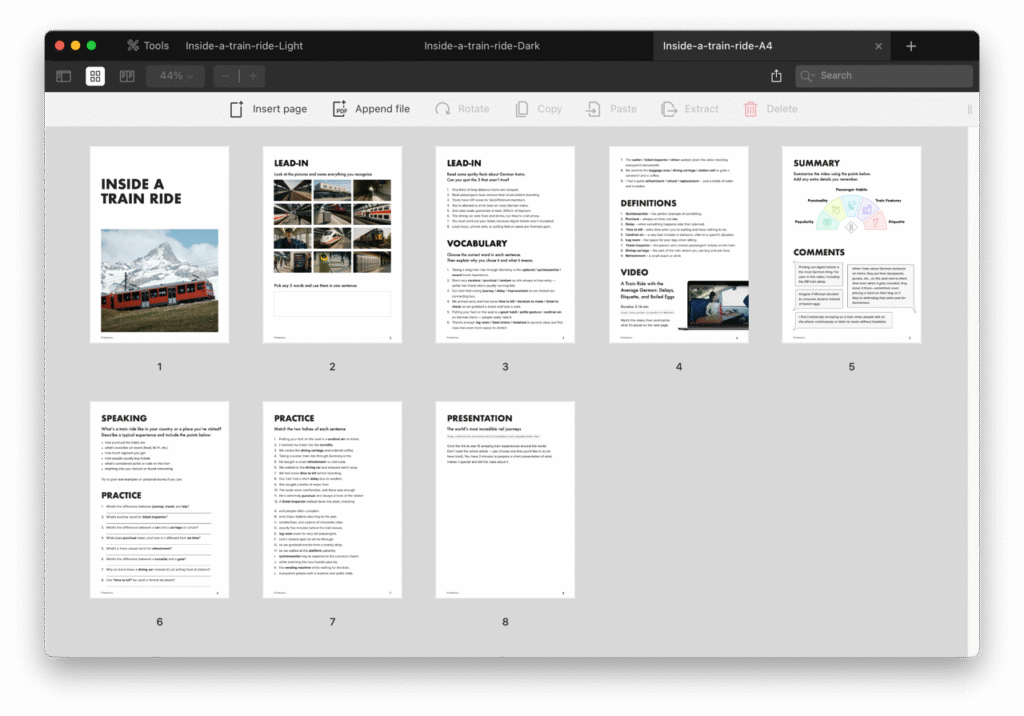
Vocabulary
- quintessential
- punctual
- delay
- time to kill
- cardinal sin
- leg room
- ticket inspector
- dining carriage
- refreshment
- tracks
- station
- platform
- tunnel
- luggage
- carriage / car
- conductor
- high-speed train
- freight train
- lockers
- vending machine
- turnstile
Contents
- Lead-in 1
- Lead-in 2
- Vocabulary
- Definitions
- Video
- Summary
- Comments
- Speaking
- Practice 1
- Practice 2
- Presentation
Start with the picture recognition activity. Students name train-related items like platform, turnstile, and freight train. After checking answers, they pick three words and use them in one sentence, which forces them to think about how the vocabulary connects. The quirky facts activity has eight statements about German trains, and students identify the three false ones. This preview introduces key concepts like delays and etiquette before the video.
The vocabulary exercise uses multiple choice in context. Students choose the correct word and explain their choice, which checks understanding beyond just recognition. Words like “quintessential” and “cardinal sin” add sophistication to their descriptions of travel experiences. Go through the definitions after they’ve attempted the sentences.
The video is about five minutes and covers several aspects of German train travel. The speaker discusses delays, what passengers do, and social rules. After watching, students summarize using five categories: passenger habits, train features, etiquette, punctuality, and popularity. This structure helps them organize information instead of just listing random details they remember.
The comments section shows different passenger perspectives. One person complains about phone noise, another admits to being cheap about coffee, and someone mentions the backpack-on-seat behavior. Students read these and share their reactions. The speaking task asks them to describe trains in their own country using the same categories from the summary. Encourage real stories because those are more engaging than generic descriptions.
The matching practice reviews vocabulary in longer sentences. Students connect halves to make logical statements, which reinforces meaning and typical collocations. The practice questions about word differences push deeper understanding. Asking “What’s the difference between journey, travel, and trip?” or “What’s another word for ticket inspector?” gets students thinking about nuance and synonyms.
The presentation task uses a CNN article about incredible train journeys. Students pick one journey that interests them, take three minutes to prepare, and present to the class. This works well as a closer because it shifts from Germany-specific content to global rail travel while still using the lesson vocabulary.
