
Influencers
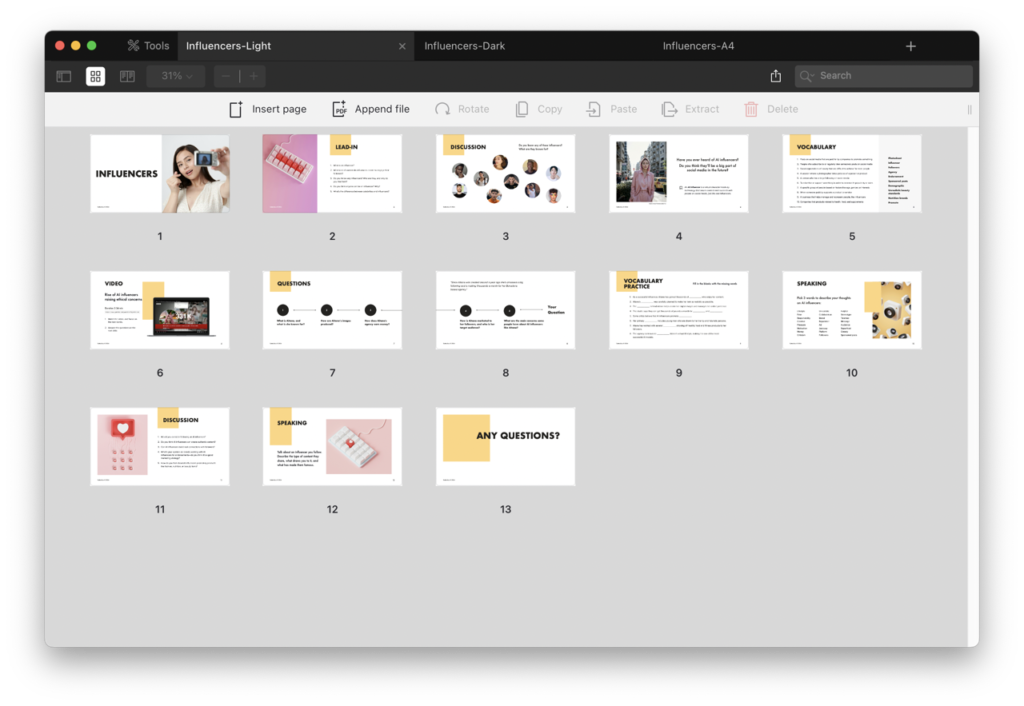
This B2 lesson explores the world of influencers, including AI-generated ones that don’t actually exist. Students watch a video about Aitana, a virtual influencer making thousands for her Barcelona agency, and learn vocabulary like “endorsement,” “demographic,” and “sponsored posts.” The AI influencer angle adds a twist that gets even students who don’t care about social media talking.
Lesson overview
- Learn ten vocabulary words about social media marketing, sponsorship, and influencer culture
- Watch a video about AI influencer Aitana and discuss the ethical concerns she raises
- Practice using target vocabulary in gap-fill sentences about virtual influencers
- Debate whether AI influencers can build real connections or just promote unrealistic standards
| Level | Vocabulary | Video Length | Lesson Time |
| B2 / Upper-Intermediate | 10 words | 2:34 min | 60 min |
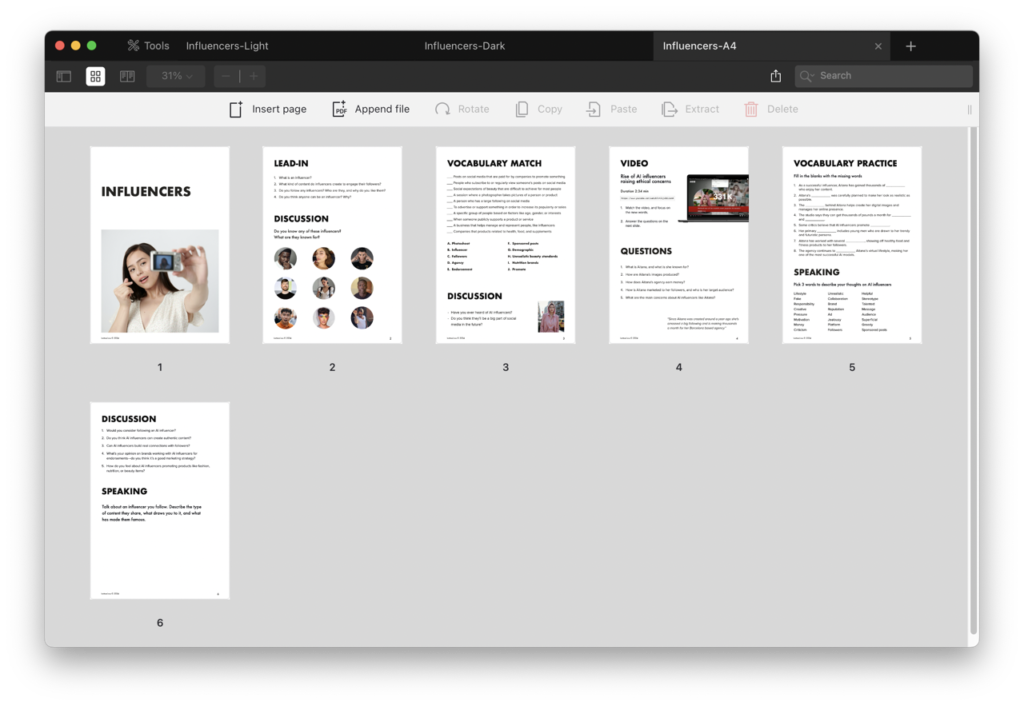
Vocabulary
- Photoshoot
- Influencer
- Followers
- Agency
- Endorsement
- Sponsored posts
- Demographic
- Unrealistic beauty standards
- Nutrition brands
- Promote
Contents
- Lead-in
- Discussion
- Vocabulary
- Video
- Questions
- Vocabulary practice
- Speaking
- Discussion
- Speaking
Open with the lead-in questions. “What’s the difference between celebrities and influencers?” is a good one to spend time on because the line is blurry and students often disagree. Show the photos of real influencers and see who students recognize. Then introduce the AI influencer concept with the slide about virtual characters on social media. Most students will be surprised this exists, which builds curiosity for the video. Ask if they think AI influencers will become a big part of social media in the future. Opinions usually split right down the middle.
Cover the ten vocabulary words through the definition matching exercise. “Sponsored posts,” “followers,” and “promote” will be familiar to most B2 students. “Endorsement,” “demographic,” and “unrealistic beauty standards” might need more work. For “demographic,” use a concrete example: “Aitana’s target demographic is young men interested in fitness and fashion.” For “endorsement,” try “When a brand pays someone to say their product is good, that’s an endorsement.” Once the vocabulary is solid, play the video about Aitana.
At two and a half minutes, the video covers how Aitana was created, how her images are produced, and how her agency earns money. Watch it once for general understanding, then answer the five comprehension questions. The questions move from factual to opinion-based, ending with concerns about AI influencers. Play the video a second time if students need help with the detail questions. The gap-fill exercise on slide nine reinforces the vocabulary in sentences specifically about Aitana. Students fill in words like “followers,” “photoshoot,” “agency,” “sponsored posts,” “endorsements,” “unrealistic beauty standards,” “demographic,” “nutrition brands,” and “promote.”
The word-picking speaking activity is a nice change of pace. Students choose three words from a list of twenty-four to describe their thoughts on AI influencers. Words range from positive (“creative,” “talented,” “helpful”) to negative (“fake,” “superficial,” “greedy”). Students explain their choices, which naturally leads into the discussion questions. “Can AI influencers build real connections?” and “Would you follow one?” push students to think about authenticity and what makes someone worth listening to. End with the final speaking task where students describe a real influencer they follow. They talk about the content, what draws them to it, and what made that person famous. This grounds the lesson back in personal experience after the AI discussion.
