
How to Watch TV Shows Without Subtitles

This lesson helps B2 students improve English listening skills by watching TV shows without subtitles. Students learn practical strategies for understanding spoken dialogue in realistic contexts. The activities build confidence in processing natural speech at normal speeds.
Lesson overview
- Practice listening comprehension strategies for television dialogue and natural speech
- Learn techniques to catch meaning without reading subtitle text
- Develop skills for understanding idioms, slang, and fast-paced conversations
- Build confidence watching English content independently without translation support
| Level | Vocabulary | Lesson Time |
| B2 / Upper-Intermediate | 8 words | 60-80 min |

Vocabulary
- Expose
- Distinct
- Crucial
- Reinforce
- Engage
- Reductions
- Transcribe
- Identify
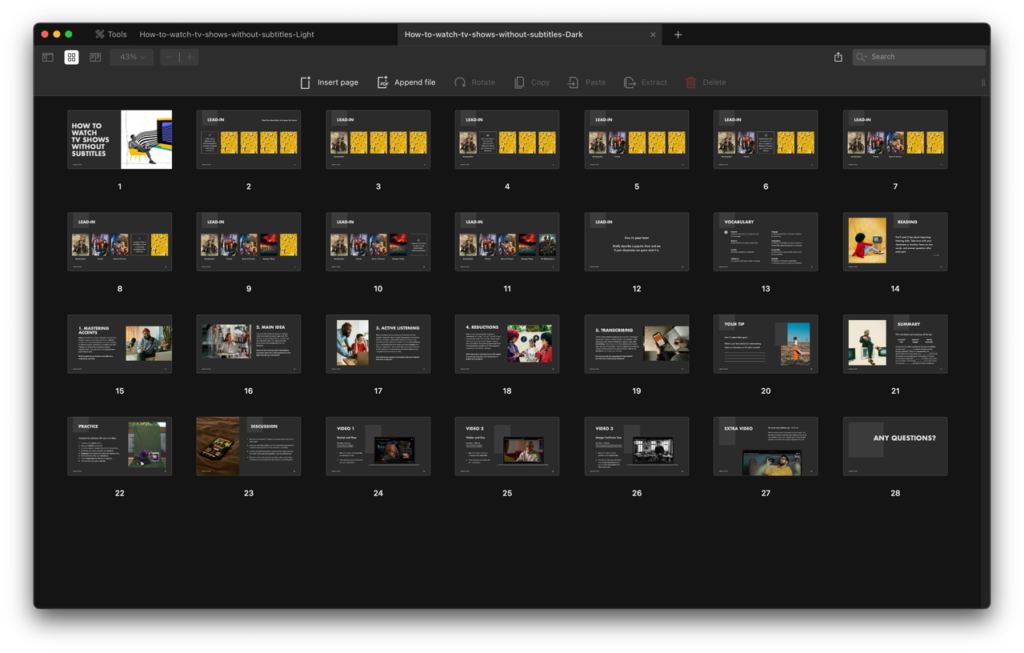
Contents
- Lead-in
- Vocabulary
- Reading (5 paragraphs)
- Your tip
- Summary
- Practice
- Discussion
- Video 1
- Video 2
- Video 3
- Extra video
Start with a discussion about students’ current TV watching habits and their reliance on subtitles. Ask them to share which shows they watch and whether they use subtitles in their native language or English. This gives you a sense of where they’re starting from.
The main activity introduces specific listening strategies. Teach students to focus on context clues, body language, and tone rather than catching every single word. Watch short clips from popular TV shows three times with different tasks. First viewing with subtitles to confirm understanding, second without subtitles to practice the strategies, third to catch details they missed. Students can actually see their progress this way, which keeps them motivated.
Do vocabulary prediction exercises where students guess what characters might say based on the situation. Pause right before key dialogue and have them predict the language. This gets them actively tuning into natural speech patterns instead of passively watching. Pick shows with clear visuals and strong context clues for B2 learners. Sitcoms work well because the setup usually telegraphs what’s coming.
For homework, have students choose a show to watch independently. Give them a simple reflection task where they note three things they understood without subtitles and one thing they found challenging. This keeps them accountable. It also helps them see watching TV shows as real language practice, not just something they do to relax.
