
How to Stop Buying Stuff

This B2 lesson teaches practical strategies for managing spending habits and avoiding impulse purchases. Students explore vocabulary related to consumer behavior, personal finance, and mindful shopping while discussing realistic approaches to reducing unnecessary purchases.
Lesson overview
- Practice analyzing personal spending patterns and consumer behaviors
- Learn vocabulary for discussing impulse buying and financial decision-making strategies
- Develop critical thinking about advertising influence and budget management techniques
- Discuss practical solutions for controlling purchasing urges and finding alternatives
| Level | Vocabulary | Lesson Time |
| B2 / Upper-Intermediate | 12 words | 60-80 min |

Vocabulary
- impulse buying
- buyer’s remorse
- sleep on it
- maintenance cost
- temptation
- pervasive
- purchasing urge
- firsthand experience
- fill the void
- initial cost
- genuinely enjoy
- affordable option
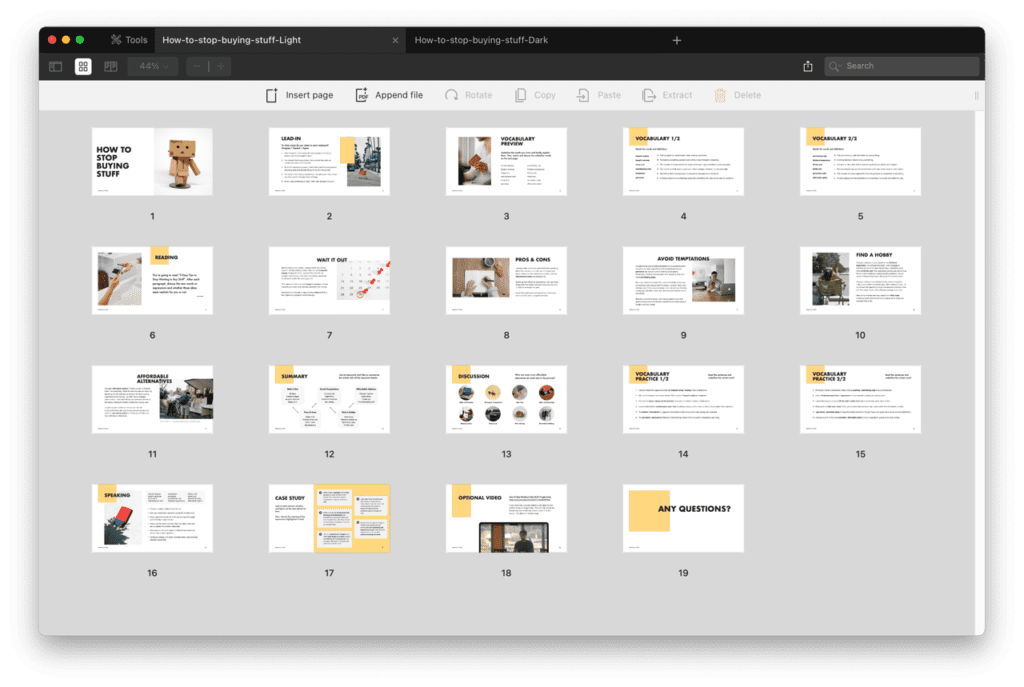
Contents
- Lead-in
- Vocabulary preview
- Vocabulary match
- Reading 1
- Reading 2
- Reading 3
- Reading 4
- Reading 5
- Summary
- Discussion
- Vocabulary practice
- Speaking
- Case study
- Optional video
Start with the lead-in activity on page 2 where students rate their agreement with five statements about shopping habits. Give them a couple of minutes to think individually before discussing in pairs. This gets them reflecting on their own spending patterns before diving in.
Move to vocabulary preview on pages 3-5. Have students underline words they already know and briefly explain them to a partner before matching unfamiliar terms with definitions. The vocabulary is split across two matching exercises, so complete both before checking answers together. These terms come up throughout the lesson, so take time here.
The reading on pages 6-11 presents five strategies for reducing spending: waiting periods, making pros and cons lists, unsubscribing from marketing, finding hobbies, and seeking cheaper alternatives. Read each section separately and pause after each strategy for students to discuss new expressions and whether the advice seems realistic. This keeps engagement high and lets vocabulary recycle naturally.
Page 12 offers a summarizing activity using keywords from each section. Students reconstruct the main ideas without looking back at the text. Good comprehension check and speaking practice in one. Pages 14-15 include vocabulary exercises where students choose correct words in context.
The speaking activity on page 16 uses a rotation format. Students ask questions incorporating target vocabulary and give one-minute responses. The case study on page 17 presents five consumer profiles where students diagnose problems and suggest appropriate strategies from the lesson. This generates extended discussion about spending habits, advertising pressure, and budget strategies.
Wrap up by discussing which strategies students might actually try. Different approaches work better for different personality types or financial situations, so let students explain their reasoning.
