
How to Start Thinking in English

This B1 lesson teaches intermediate students how to start thinking in English instead of translating from their native language. The lesson covers three practical strategies: daily journaling, deliberate thinking practice, and stream of consciousness exercises. Students work through vocabulary activities, reading passages, and speaking tasks that help them think directly in English.
Lesson overview
- Practice daily English journaling to train your mind naturally
- Learn to use English thinking during everyday moments and activities
- Explore stream of consciousness techniques for spontaneous English expression
- Develop vocabulary related to mental processes and language learning strategies
| Level | Vocabulary | Lesson Time |
| B1 / Intermediate | 10 words | 60-70 min |
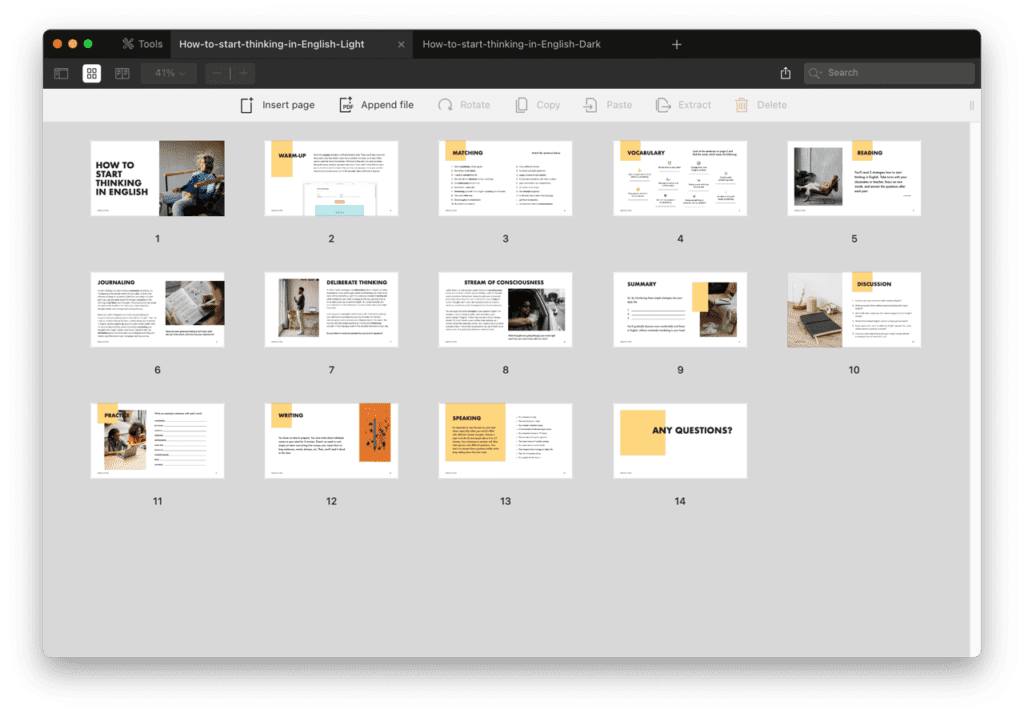
Vocabulary
- constantly
- jot down
- convert
- dedicate
- deliberately
- zone out
- immerse
- consciousness
- flow
- concept
Contents
- Warm-up
- Matching
- Definitions
- Reading 1
- Reading 2
- Reading 3
- Summary
- Discussion questions
- Vocabulary practice
- Writing
- Speaking
Start with the warm-up storytelling activity using the online word generator. Students see random words on screen and must incorporate them into a story within 90 seconds. They can skip words they don’t know. The goal here is fluency over accuracy.
Next, move to the matching exercise on page 2. Students connect sentence halves while learning key vocabulary like “jot down,” “dedicate,” and “immerse.” After matching, work through the vocabulary page together. The emoji hints help with retention. Watch pronunciation on trickier words like “consciousness” and “deliberately.”
The reading section is your main content block. Take turns reading the three strategy descriptions about journaling, deliberate thinking, and stream of consciousness. After each strategy section, pause for the discussion question. When covering stream of consciousness, model it yourself first because this concept often feels strange to students. Show them how thoughts naturally jump from topic to topic without trying to make logical sense.
Finish with the summary activity where students recall the three main strategies. Then choose 2-3 discussion questions based on class energy and time. The 3-minute writing exercise on page 11 is your homework assignment. Students practice stream of consciousness writing at home and share it in the next class.
