
How to Sound More Formal

This B2 lesson teaches students how to transform informal English into formal language through grammar patterns, vocabulary choices, and modal verbs. Students learn the differences between formal and informal communication, practice replacing phrasal verbs with single-word alternatives, and complete sentence transformation exercises. The lesson includes two role-play dialogues where students convert casual conversations into professional exchanges.
Lesson overview
- Learn grammar patterns and vocabulary differences between formal and informal English
- Practice using modal verbs to convey politeness and professionalism appropriately
- Master replacing phrasal verbs with formal single-word equivalents in sentences
- Transform informal dialogues into formal versions through guided role-play activities
| Level | Vocabulary | Lesson Time |
| B2 / Upper-Intermediate | 18 words | 60 min |
Vocabulary
- investigate
- arrive
- discover
- increase
- reject
- encounter
- proceed
- generate
- postpone
- inquire
- reserve
- apologize
- observe
- inform
- obtain
- assist
- provide
- utilize
Contents
- Lead-in
- Formal vs. Informal
- Grammar
- Vocabulary
- Modal verbs
- Phrasal verbs
- Practice 1
- Practice 2
- Practice 3
- Role Play
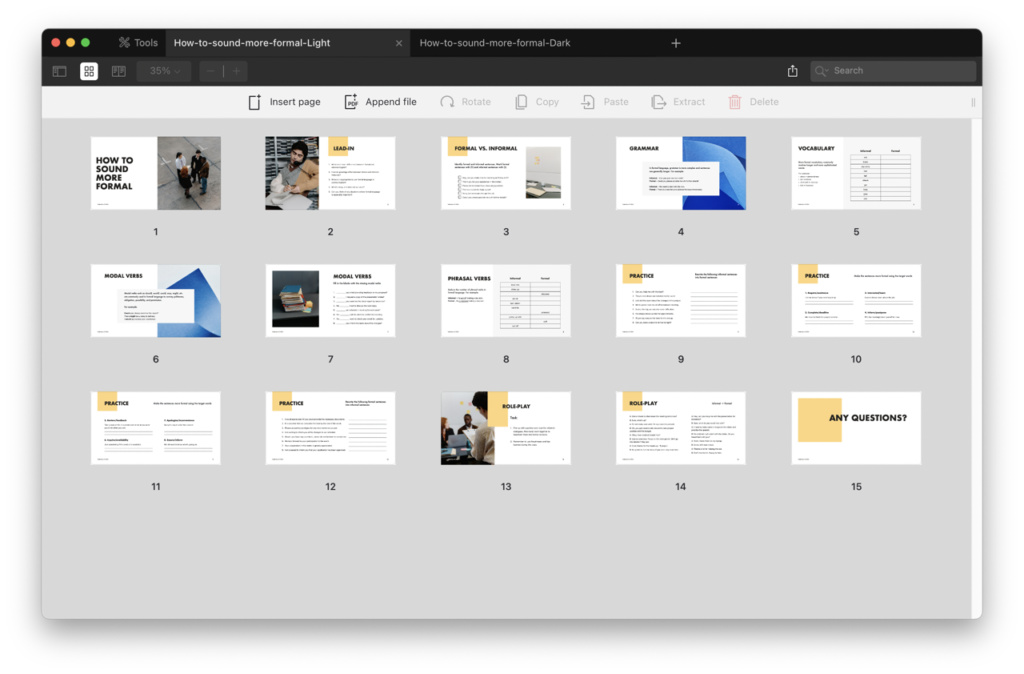
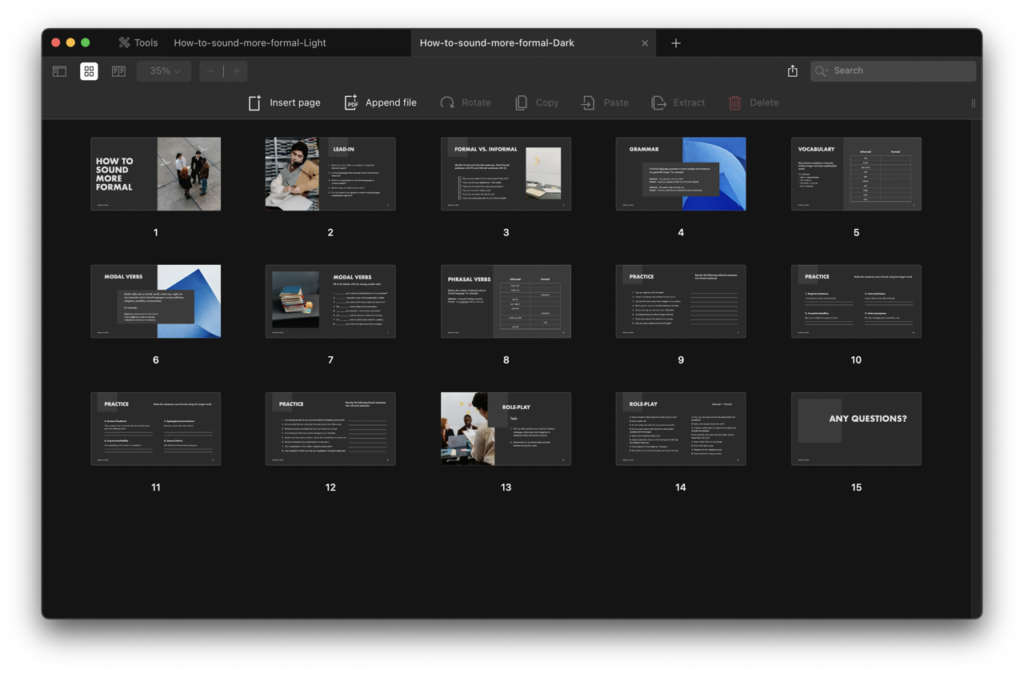
Start with the five lead-in questions on page 1 about formal versus informal English, greetings, appropriate situations, slang usage, and when formality matters. Page 2 has students mark sentences as formal (F) or informal (I).
Pages 3-5 introduce three key differences. Page 3 covers grammar complexity showing how “Can you give me more info?” becomes “Could you please provide me with further details?” Page 4 teaches vocabulary with a matching exercise connecting informal words like “ask” and “help” with formal equivalents like “request” and “assist.” Page 5 introduces modal verbs, then page 6 has gap-fill practice using could, would, should, may, and might. Students always struggle with “may” versus “might” here.
Pages 7-8 cover phrasal verbs. Students match informal phrasal verbs like “look into” and “call off” with formal alternatives like “investigate” and “cancel.” Page 8 has students rewrite eight informal sentences formally. Pages 9-10 give target words like “require” and “apologize” that students must use while making sentences more formal. Watch for students who just add “please” and think that makes it formal enough.
Page 11 flips it around. Students convert formal sentences back to informal, which they find easier and more fun. Pages 12-13 have two role-play dialogues where pairs transform casual office conversations into professional exchanges.
