
How to Pitch an Idea

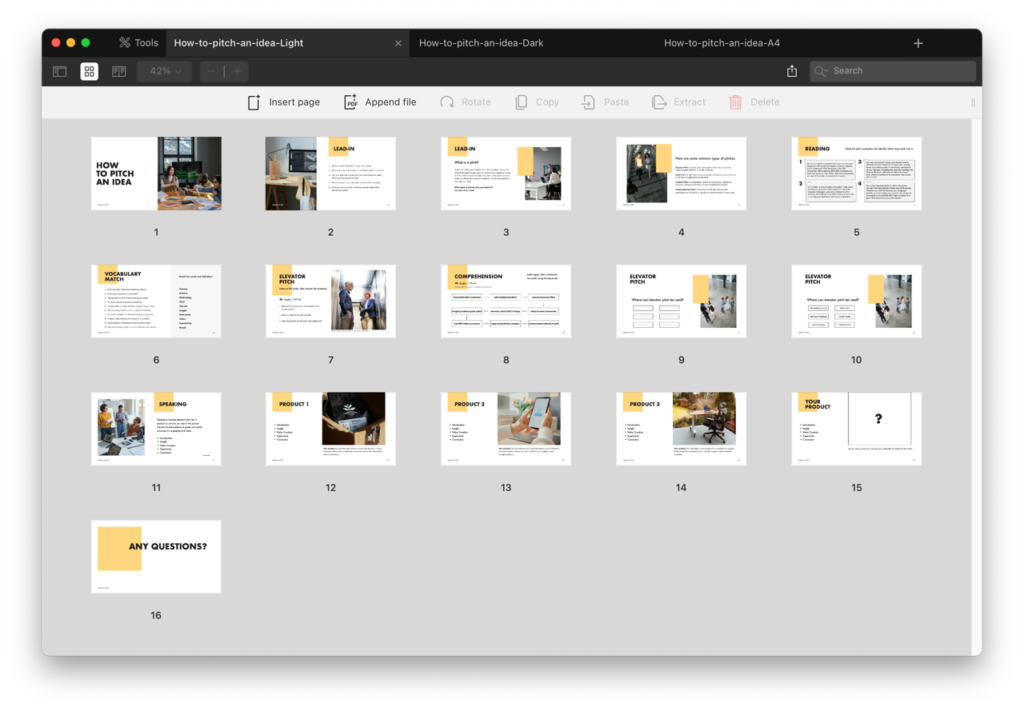
This B2 lesson teaches students how to build and deliver a clear elevator pitch. They learn the five-part pitch structure, study vocabulary like “pain point,” “value,” and “superiority,” and practice pitching real products to their classmates. It’s a useful business English skill that students can apply in job interviews, networking events, and meetings right away.
Lesson overview
- Learn ten business vocabulary words related to pitching, persuasion, and communication
- Read four pitch examples and identify whether each is an elevator, sales, investor, or product pitch
- Listen to an audio clip breaking down the three main parts of an elevator pitch
- Practice creating and delivering elevator pitches for three different products
| Level | Vocabulary | Listening Time | Lesson Time |
| B2 / Upper-Intermediate | 10 words | 1:36 min | 60 min |
Vocabulary
- Convey
- Essence
- Motivating
- Vital
- Concise
- Insight
- Pain point
- Value
- Superiority
- Recall
Contents
- Lead-in
- Reading
- Vocabulary match
- Listening
- Comprehension
- Speaking
- Product 1
- Product 2
- Product 3
- Your product
Start with the lead-in questions about what a pitch is and why it matters. Most B2 students have heard the word but struggle to explain exactly what makes a good pitch. After some initial sharing, read through the short definitions of four pitch types: elevator, sales, investor, and product. Then move to the reading activity where students look at four pitch examples and decide which type each one belongs to. The freelance designer platform is an investor pitch, Alex the social media consultant is an elevator pitch, the smartwatch is a product pitch, and the online learning platform is a sales pitch. Discuss why each one fits its category before moving on.
Cover the ten vocabulary words through the matching exercise. “Pain point,” “convey,” “essence,” and “superiority” are the ones that usually need the most work at B2. For “pain point,” use a clear example: “A pain point is a specific problem your customer has. If people hate waiting in long lines, that’s a pain point.” For “convey,” try “Your pitch needs to convey your idea in under a minute.” Once students feel comfortable with the words, play the audio clip about elevator pitches. It’s under two minutes and explains the three main parts: insight into the customer’s problem, the value your product creates, and why it’s better than the competition.
After the first listen, go through the three comprehension questions. Then play it a second time for the summary activity. Students use keyword clusters on the slide to rebuild the content in their own words. This is harder than it sounds because they need to connect ideas across all three pitch components. The slide about where elevator pitches are used is a quick discussion moment. Students brainstorm contexts like networking events, job interviews, and social media bios.
The main speaking practice takes up the second half of the lesson. Three products are presented with clear descriptions: a coffee subscription service, an AI shopping app, and an ergonomic office chair. For each one, students build a pitch following the five-part structure: introduction, insight, value creation, superiority, and conclusion. Have students prepare in pairs for a couple of minutes, then deliver their pitches to the class or another pair. Encourage them to keep it under sixty seconds. The final slide invites students to pitch their own product or service idea if they have one. This is where the lesson gets personal and you see who really internalized the structure. Give feedback on clarity, timing, and vocabulary use after each round.
