
How to Look Terrible in Your Clothes
This C1 lesson flips fashion advice on its head by teaching students how to look terrible in their clothes. They watch a sarcastic style video, learn vocabulary like “formfitting,” “ostentatious,” and “clash,” and debate hot takes about fashion, logos, and dressing well. The sarcastic angle makes it way more engaging than a straightforward fashion lesson.
Lesson overview
- Learn twelve fashion vocabulary words including “garment,” “aesthetic,” “tailor,” and “accessorize”
- Watch a video about eight ways to look bad in your clothes and retell the tips frame by frame
- Debate provocative fashion hot takes like “sweatpants outside the gym means you’ve given up”
- Build the worst possible outfit online and present why each piece is a style disaster
| Level | Vocabulary | Video Length | Lesson Time |
| C1 / Advanced | 12 words | 3:47 min | 60 min |
Vocabulary
- Formfitting
- Second skin
- Ostentatious
- Bold colors
- Striking patterns
- Clash
- Mannequin
- Aesthetic
- Tailor (verb)
- Garment
- Accessorize
- Opt for
Contents
- Lead-in 1
- Lead-in 2
- Vocabulary preview
- Vocabulary
- Video
- Summary
- Hot takes
- Vocabulary practice
- Style disaster
- Then & Now
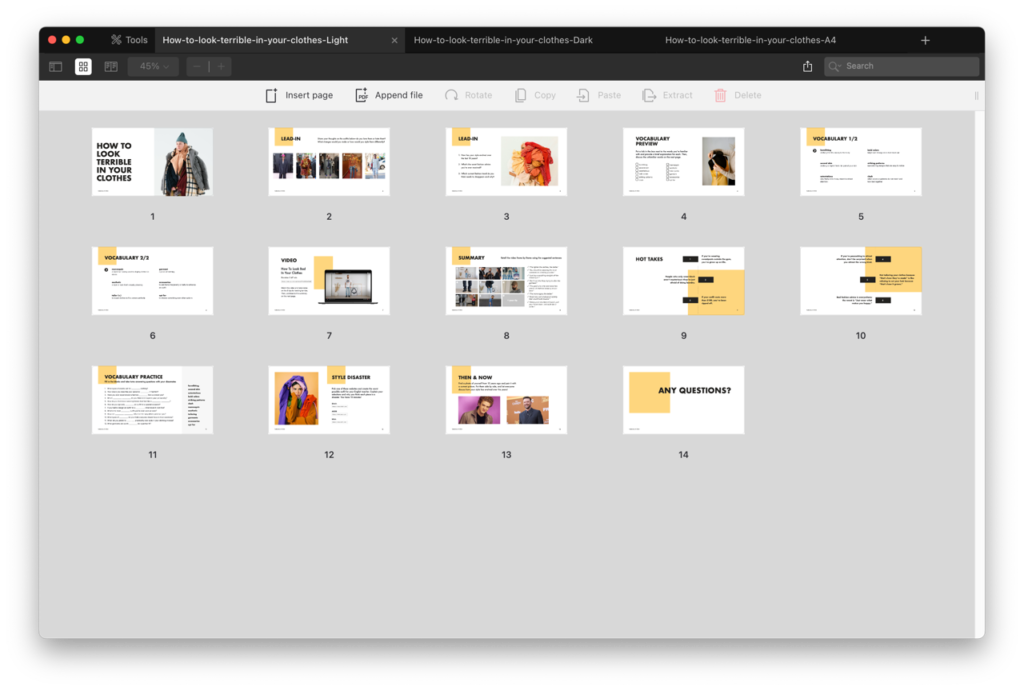
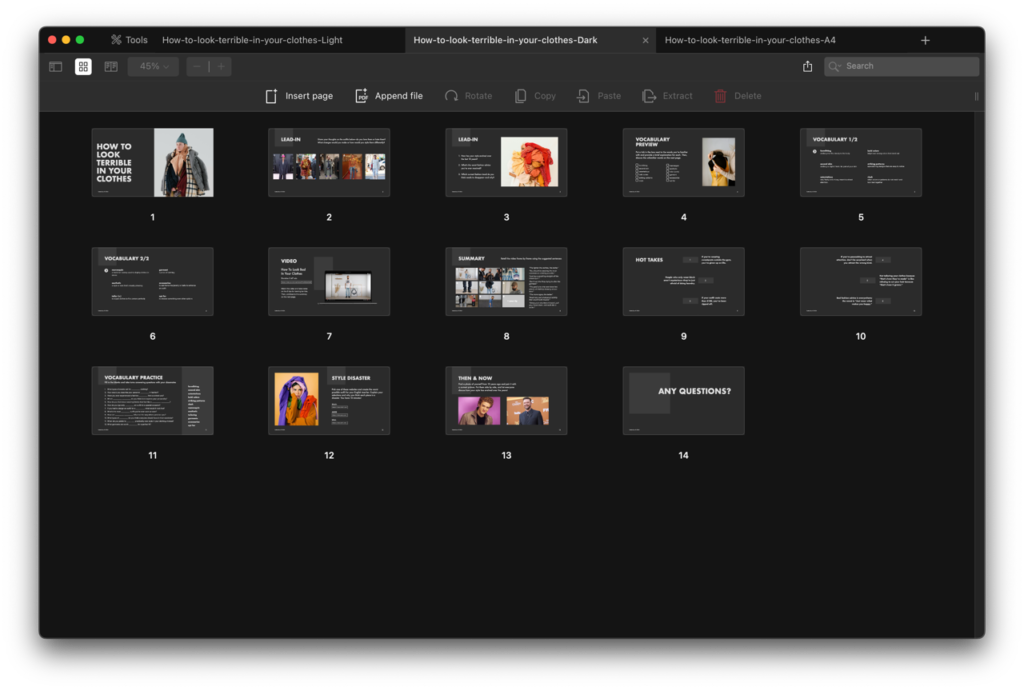
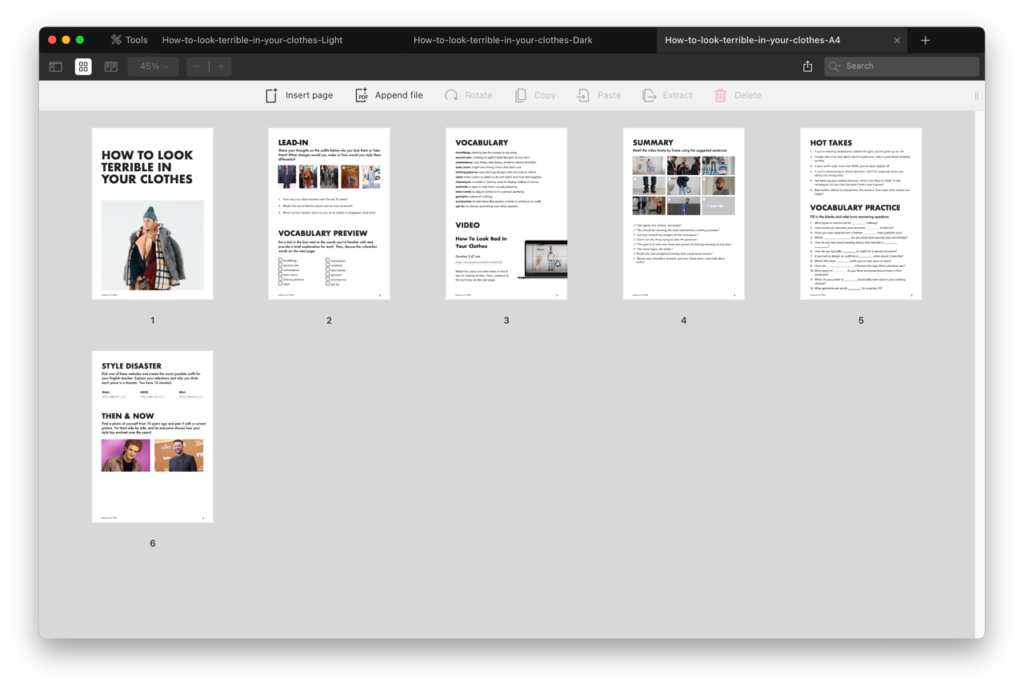
Start with the five outfit photos on the lead-in slide. Students say whether they love or hate each look and what they’d change. This gets opinions flowing immediately and gives you a sense of how much fashion vocabulary the class already has. Then move to the three discussion questions about personal style, bad fashion advice, and trends that should disappear. C1 students usually have strong opinions here, so let the conversation run before reining it in.
Cover the twelve vocabulary words across two slides. The first six deal with fit and appearance: “formfitting,” “second skin,” “ostentatious,” “bold colors,” “striking patterns,” and “clash.” The second six are more about the process of dressing: “mannequin,” “aesthetic,” “tailor,” “garment,” “accessorize,” and “opt for.” Give quick examples for each. Something like “If your shirt and pants clash, the colors fight each other and it looks wrong” or “Tailoring a jacket means getting it adjusted so it fits your body perfectly.” Check pronunciation on “ostentatious” and “aesthetic” since both cause trouble even at C1.
Play the video. At nearly four minutes, it’s packed with sarcastic advice delivered straight-faced. Students take notes on the eight tips for looking terrible. After watching, the summary slide shows nine frames from the video with a quote for each one. Students retell the content frame by frame using the provided sentences as starting points. This is a solid speaking exercise because they need to paraphrase and expand on each point. The ninth frame is blank for students to add their own tip, which usually produces some funny additions.
The hot takes section is where the lesson really comes alive. Six bold statements about fashion appear one at a time. Things like “People who only wear black are just afraid of doing laundry” and “Bad fashion advice is everywhere, the worst is just wear what makes you happy.” Students agree, disagree, or qualify each one. These spark genuine debate because the statements are designed to provoke. After the hot takes, the vocabulary practice has students fill in blanks and answer twelve questions using the target words. Then the style disaster activity sends students to Shein, ASOS, or Wish to assemble the ugliest possible outfit for their English teacher. They present their choices and explain why each piece is terrible. It’s loud, creative, and a great way to use the vocabulary one more time before the lesson ends. The “then and now” photo comparison works best as homework if students are comfortable sharing old pictures.
