
How to Give Up Coffee

This C1 lesson explores practical strategies for quitting coffee through an engaging personal narrative. Students will analyze withdrawal symptoms, discuss health impacts, and evaluate different methods for breaking caffeine habits. Through authentic reading material and vocabulary like “go cold turkey” and “withdrawal symptoms,” learners develop the language skills needed to discuss addiction, health choices, and lifestyle changes with nuance and sophistication.
Lesson overview
- Analyze methods for reducing caffeine consumption and breaking habits
- Practice advanced vocabulary related to addiction and health
- Discuss personal experiences with coffee and stimulant dependence
- Evaluate the cognitive and physical effects of caffeine
| Level | Vocabulary | Reading time | Lesson Time |
| C1 / Advanced | 16 words | 8 min | 60-70 min |
Vocabulary
- Cyclical
- Gourmet
- Embark on
- Swill
- Abruptly
- Concoctions
- Acidic
- Alternate
- Carcinogens
- Better off
- Withdrawal symptoms
- Go cold turkey
- Out of whack
- Get (something) over with
- Holistic
- Menial task
- Substitute
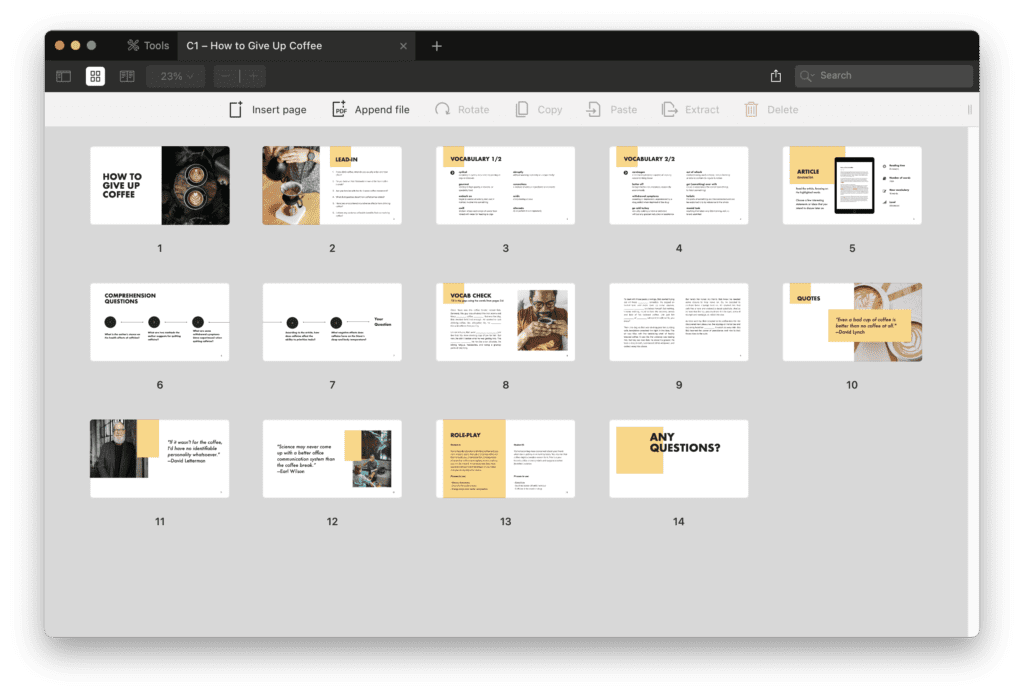
Contents
- Lead In
- Vocabulary 1
- Vocabulary 2
- Article reading
- Comprehension questions
- Vocabulary check
- Quotes
- Role-play
Kick things off by chatting with students about their coffee habits. No judgment here. It loosens everyone up and gets them sharing actual experiences. Talk about coffee culture, Starbucks, whether decaf really counts as caffeine-free, whatever comes up.
Before you jump into the article, go over the vocab on pages 3-4. Pay special attention to phrases like “go cold turkey” and “out of whack” since people use these all the time when talking about health stuff. See if students can guess what they mean from context first. It’s way better for building those guessing skills than just handing them definitions.
You can assign the article as homework or give them 10-12 minutes to read it in class. It’s almost 1,400 words, so they’ll need some uninterrupted quiet time to get through it. Tell them to mark anything they find interesting or want to talk about.
Once they’ve read it, work through the comprehension questions together. Take your time here. Advanced students need space to put together thoughtful answers about what the author actually thinks about caffeine and his tips for quitting. Make them back up their points with stuff from the text.
Pages 8-9 have this vocabulary activity with a story about Bob where students fill in the blanks. It’s kind of goofy but actually works better than just memorizing definitions.
The quotes section is great for getting arguments going. Throw out that David Lynch quote about bad coffee being better than no coffee and see what happens. It gets students practicing how to make and defend their points.
Wrap up with the role-play. One person’s worried about their friend’s coffee addiction, the other’s the addict. It pulls together all the vocab naturally and they get to practice being persuasive. Give them three minutes to prep, then let them go.
