
How to Beat Procrastination
This B2 lesson tackles procrastination through relatable scenarios and practical strategies. Students explore why they delay tasks and learn two effective techniques to overcome this common habit. The lesson combines video content, vocabulary building, and real-world problem-solving to help intermediate learners discuss time management challenges in English.
Lesson overview
- Practice discussing procrastination habits and personal experiences with delaying tasks
- Learn vocabulary related to productivity, time management, and behavioral psychology
- Develop comprehension skills through reading text and watching an educational video
- Explore practical anti-procrastination strategies through scenario-based speaking activities
| Level | Vocabulary | Video Length | Lesson Time |
| B2 / Upper-Intermediate | 12 words | 2:26 min | 60 min |
Vocabulary
- Put off
- Delay
- Perfectionism
- Sustainable
- Get distracted
- Consistent
- Show up
- Establish
- Avoid
- Cut down on
- Simplify
- Mind trick
Contents
- Lead-in
- Discussion
- Vocabulary preview
- Reading
- Video
- True or False
- Speaking
- Vocabulary practice
- Role play
- Quote
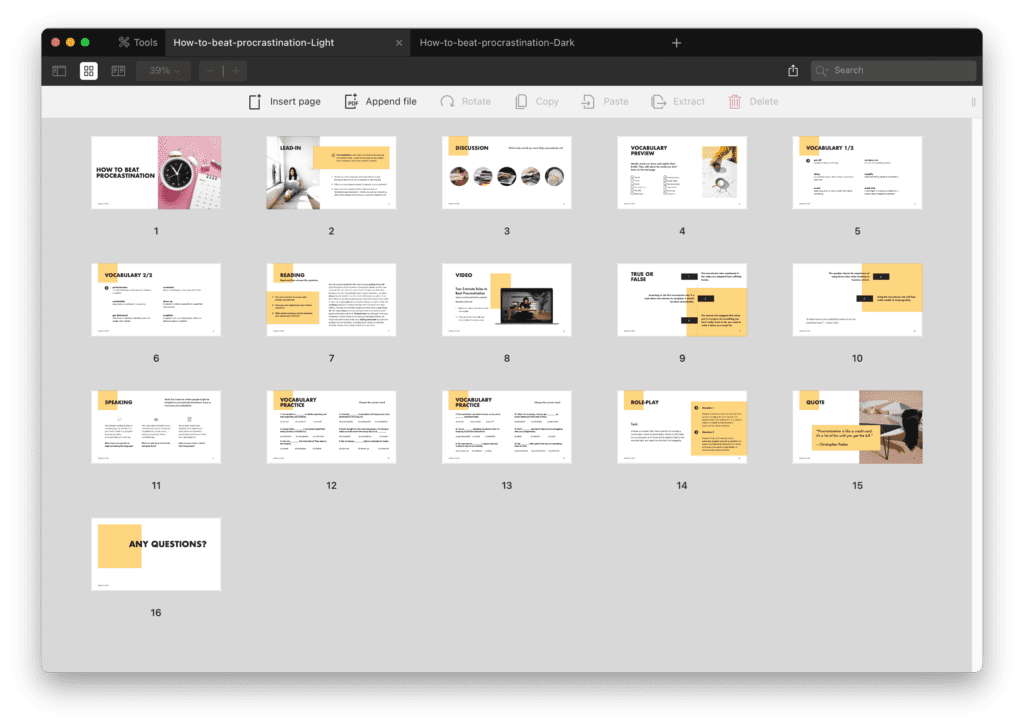
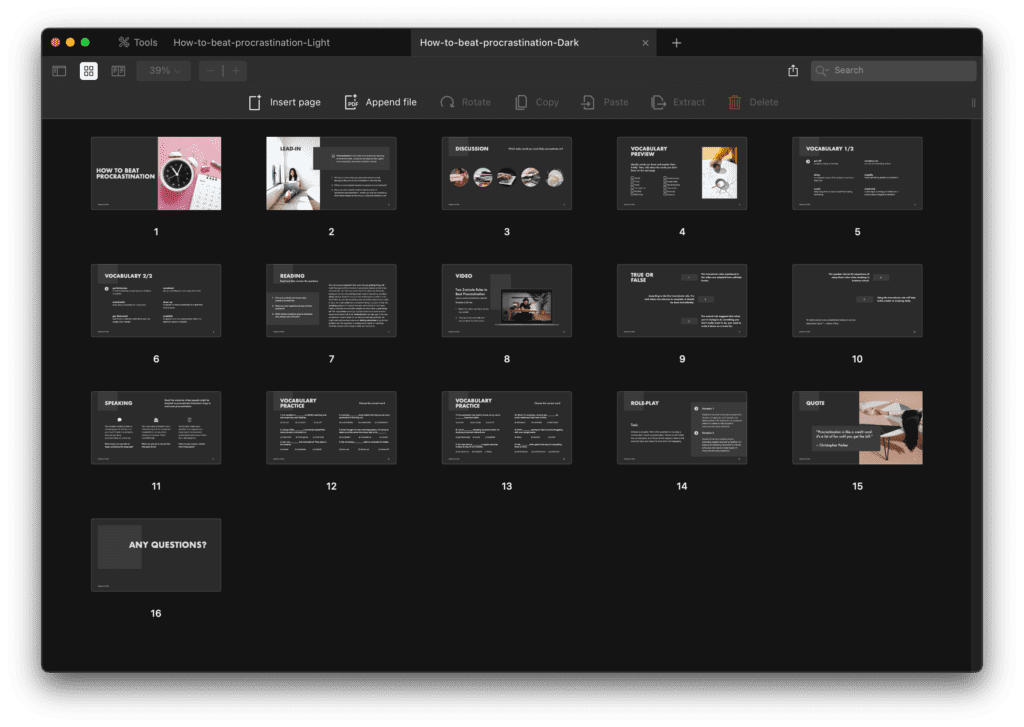
Start with the lead-in discussion on page 2. Students share personal procrastination stories, which gets everyone engaged right away. This warm-up takes about 10 minutes and helps you gauge their current vocabulary around productivity topics.
Move into the vocabulary preview on page 4. Have students work in pairs to identify words they already know before teaching unfamiliar terms on pages 5-6. This lets stronger students support peers while building everyone’s confidence. The reading activity on page 7 puts these words in context. Students underline six procrastination causes, then discuss whether they relate to any personally.
The video on page 8 is your centerpiece. Play it once for general understanding, then again for the true/false questions on pages 9-10. The two-minute rules presented become talking points for the rest of class. After checking comprehension, move to the speaking scenarios on page 11. Students brainstorm solutions for language learning, email management, and decluttering challenges. This takes the lesson from theory to practice.
Wrap up with the vocabulary exercises on pages 12-13. The role-play activity on page 14 works well as homework or next-class review. Throughout the lesson, encourage students to use target vocabulary naturally rather than forcing it into every sentence. Real conversations about overcoming procrastination give students practical speaking skills they can use outside class when discussing time management with colleagues or friends.
