
How Much Power Does Humanity Need?
This C1 lesson asks a big question: how much electricity does humanity actually need? Students learn the science behind power generation, from flipping a switch to nuclear fusion, and pick up twelve technical vocabulary words along the way. The video explains joules, watts, and why global electricity demand is set to change dramatically by 2050. It’s a meaty topic that mixes science with real policy debates about energy futures.
Lesson overview
- Learn twelve technical vocabulary words about electricity, power generation, and energy sources
- Guess the wattage of ten common household devices and compare with real numbers
- Watch a five-minute video about global electricity demand and take notes on key concepts
- Discuss the differences between fossil fuels, nuclear fission, nuclear fusion, and clean energy
| Level | Vocabulary | Video Duration | Lesson Time |
| C1 / Advanced | 12 words | 5:01 min | 60 min |
Vocabulary
- Flip a switch
- Furnace
- Turbine
- Generator
- Propagate
- Plugging in
- Grid
- Fossil fuels
- Clean energy
- Nuclear fission
- Nuclear fusion
- Intermittent energy sources
Contents
- Lead-in
- Power consumption
- Answers
- Vocabulary
- Video
- Practice
- Vocab in depth
- Discussion
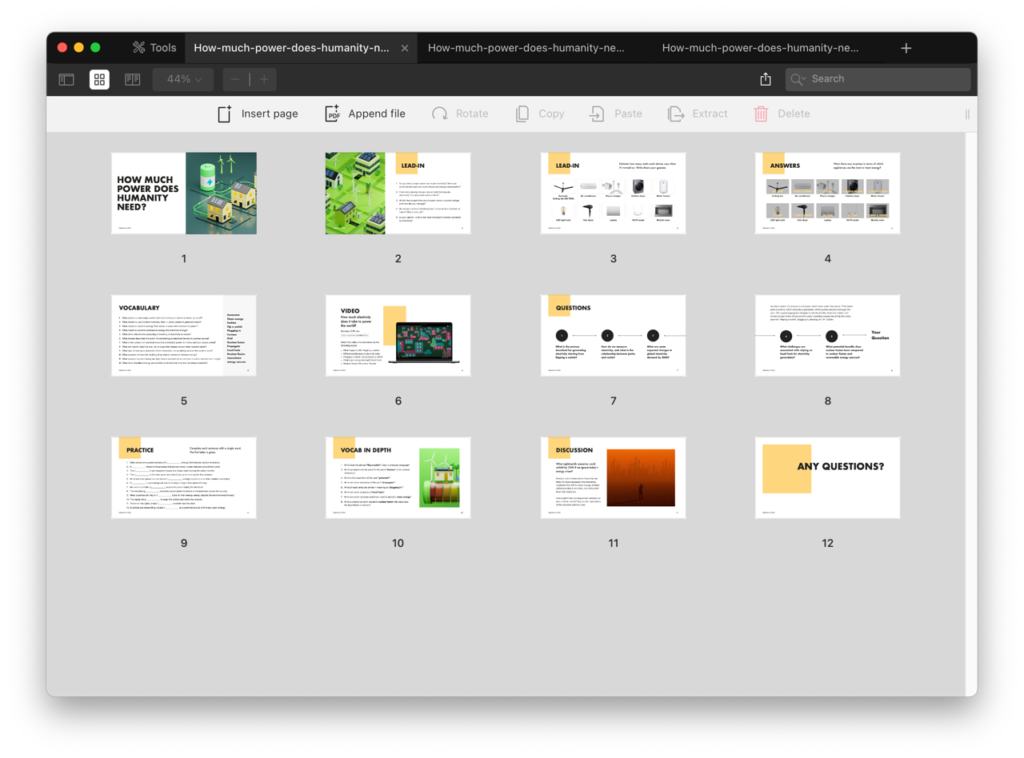
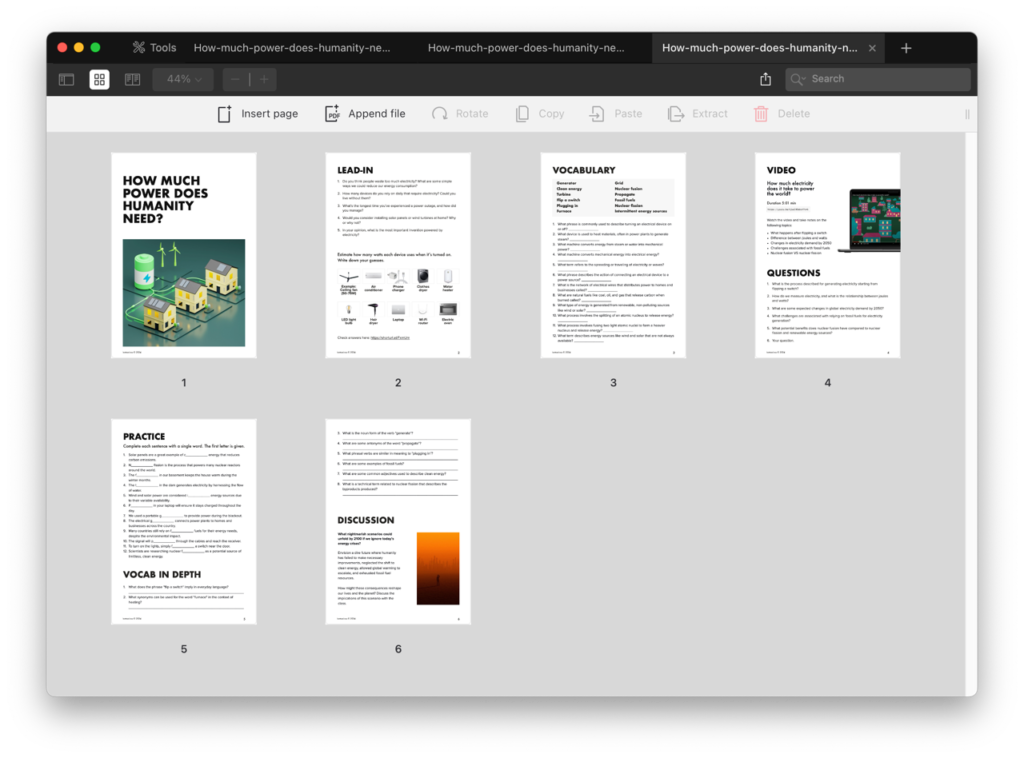
Start with the lead-in questions about energy habits and power outages. C1 students usually have detailed answers, especially about which devices they depend on and whether they could live without them. Then move to the wattage guessing game. Students estimate how many watts ten appliances use, from LED bulbs to electric ovens. This is surprisingly fun because most people have no idea that a hair dryer uses as much power as it does. Reveal the real numbers and let students react to the biggest surprises. A phone charger using only 5 to 10 watts versus a water heater pulling 4,500 watts usually gets a good response.
The twelve vocabulary words are technical but necessary for understanding the video. Work through them using the question-based format on the slide. Each question describes a concept and students match it to the correct term. “Turbine,” “generator,” “propagate,” and “grid” form a chain that explains how electricity reaches your home, so teach these together. “Nuclear fission” and “nuclear fusion” are easy to confuse, so make the distinction clear: fission splits atoms apart, fusion pushes them together. “Intermittent energy sources” is worth extra time because it’s the key argument against full reliance on wind and solar.
Play the video. At five minutes, it covers a lot of ground: what happens when you flip a switch, how we measure electricity, projected demand by 2050, problems with fossil fuels, and the promise of nuclear fusion. Students take notes on all five topics during the first viewing. Watch it a second time if the class needs it. Then go through the five comprehension questions. Questions four and five about fossil fuel challenges and nuclear fusion benefits push students into analytical territory, which is appropriate at C1. The quote from the video about flipping a switch and electrons traveling through wires is a nice anchor for discussion.
The vocabulary practice exercise has students complete twelve sentences where only the first letter is given. This is harder than a word bank because students have to recall the spelling on their own. After checking answers, the vocabulary in depth section explores word families, synonyms, and related terms. Questions like “What is the noun form of generate?” and “What are some antonyms of propagate?” build deeper word knowledge. End with the dystopian discussion scenario. Students imagine 2100 if humanity ignores today’s energy problems: no clean energy shift, fossil fuels exhausted, global warming unchecked. What does that world look like? This is a powerful closing activity because it forces students to connect everything they’ve learned to real consequences.
