
How Does the US Election Work?
This B2 lesson breaks down how the U.S. election system actually works. Students learn political vocabulary like “Electoral College,” “swing state,” and “nominee,” watch a short explainer video, and practice using the terms in context. It’s a timely topic that most students have heard about but few can explain in detail.
Lesson overview
- Learn ten political vocabulary words covering parties, voting systems, and government structure
- Watch a two-minute video explaining the U.S. election process and summarize key steps
- Complete true or false and gap-fill exercises to reinforce election terminology
- Role-play a mini election with candidates, presentations, and an Electoral College vote
| Level | Vocabulary | Video Length | Lesson Time |
| B2 / Upper-Intermediate | 10 words | 2:20 min | 60-80 min |
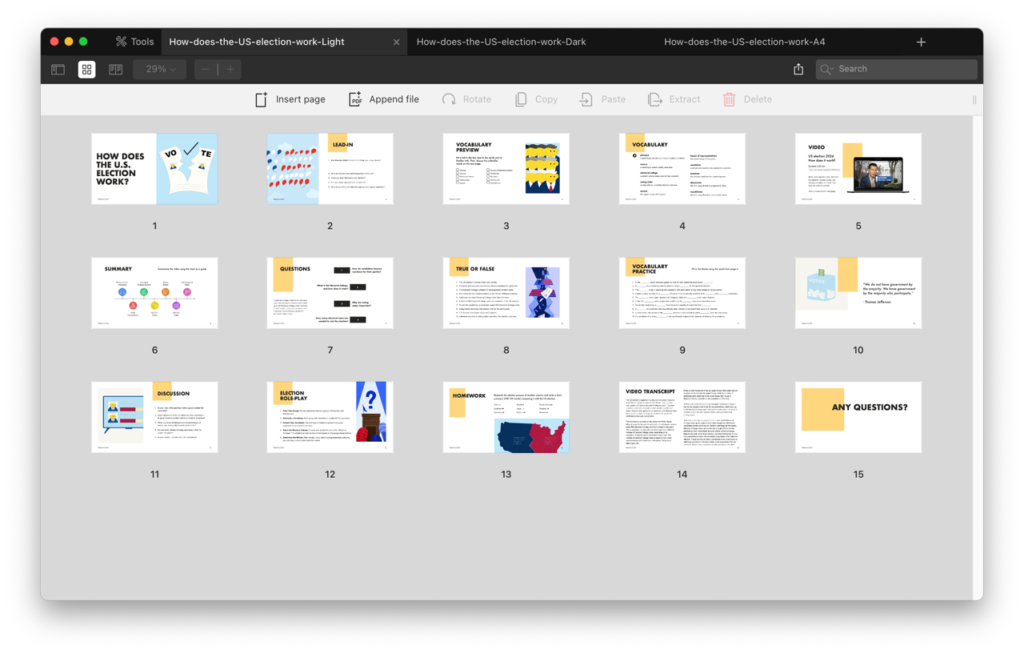
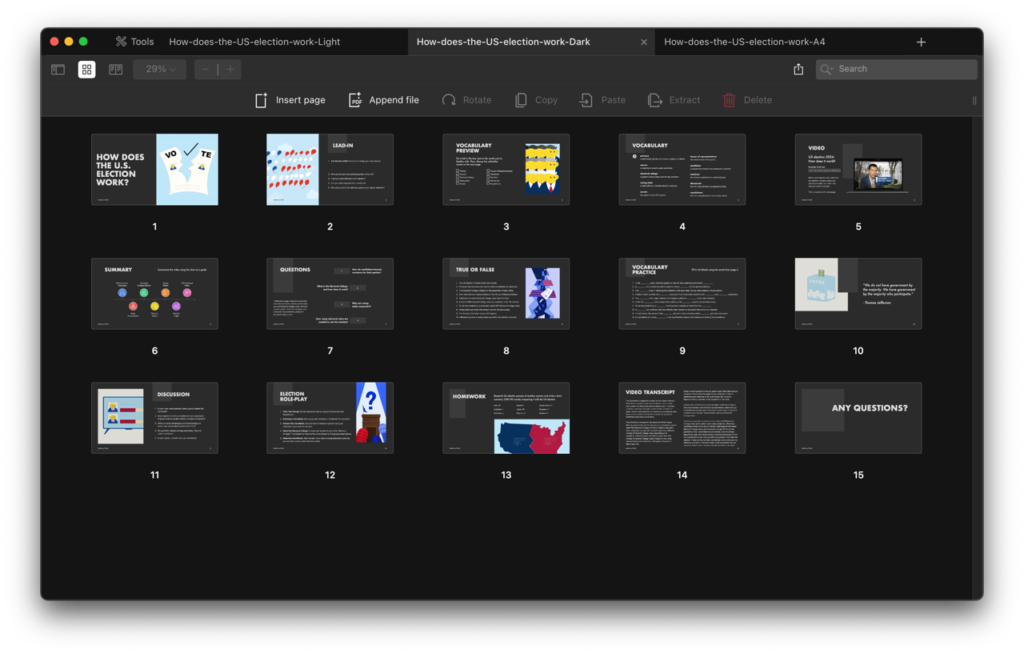
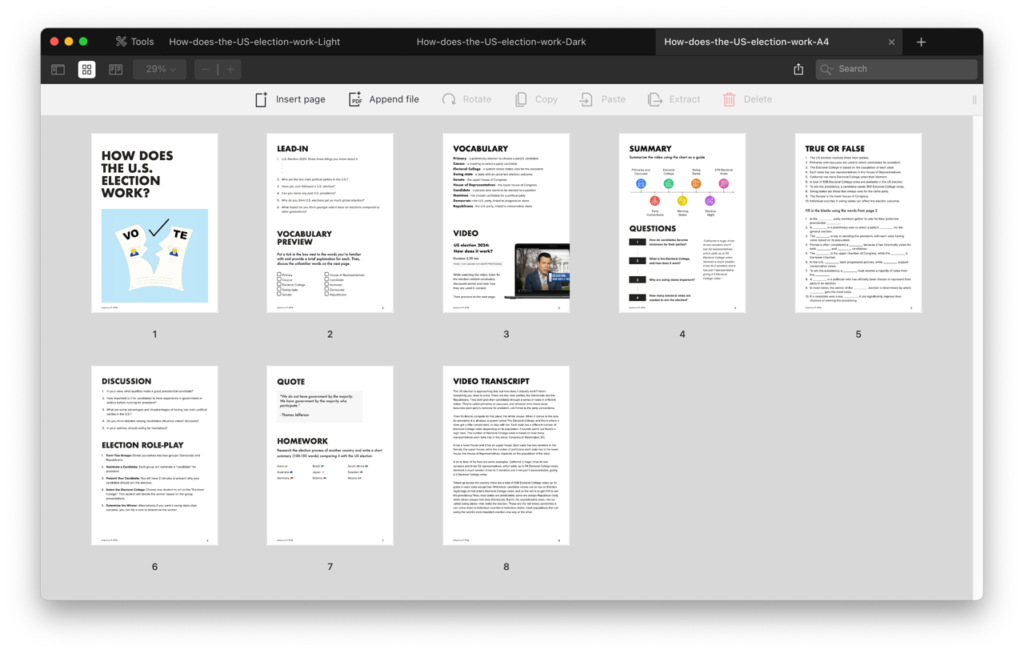
Vocabulary
- Primary
- Caucus
- Electoral College
- Swing state
- Senate
- House of Representatives
- Candidate
- Nominee
- Democrats
- Republicans
Contents
- Lead-in
- Vocabulary preview
- Vocabulary
- Video
- Summary
- Questions
- True or false
- Vocabulary practice
- Quote
- Discussion
- Election role-play
- Homework
Start with the lead-in where students share three things they know about U.S. elections. This quickly shows you how much background knowledge the class has. Some students will know a lot, others almost nothing, and that’s fine. The follow-up questions about political parties and past presidents keep things moving. Don’t spend too long here because the vocabulary section does the heavy lifting.
Cover the ten vocabulary words before the video. These are essential for understanding what they’re about to watch. “Primary,” “caucus,” and “Electoral College” are the hardest to grasp, so give concrete examples. Something like “California has 54 Electoral College votes because it has a huge population, while Vermont only has 3” works well because the video uses this exact comparison. “Swing state” usually clicks quickly when you explain that these states could go either way on election night. Run through the definitions, check pronunciation, and have students try using two or three words in their own sentences.
Play the video. At two minutes and twenty seconds, it covers a lot of ground fast. Watch it once for the general picture, then a second time so students can catch details. After watching, the summary activity asks students to retell the process using a visual chart that walks through primaries, party conventions, the Electoral College system, swing states, and election night. This is good speaking practice because students have to connect the steps in order. Then go through the comprehension questions and the true or false exercise. Statement four about representatives and statement nine about the Senate are the ones students most often get wrong, so check those carefully.
The gap-fill exercise on slide nine pulls everything together. Students use vocabulary from the lesson to complete ten sentences about the election process. After checking answers, read the Thomas Jefferson quote and ask students what they think it means. This leads naturally into the discussion questions about candidate qualities, mandatory voting, and whether debates change minds. End with the election role-play. Split the class into Democrats and Republicans, have each group nominate a candidate and present a two-minute pitch, then let the “Electoral College” student decide the winner. It’s loud and fun and gives students a reason to use every word they learned.
