
How CBD Oil Works

This C1 lesson breaks down how CBD oil works, what makes it different from THC, and why so many people are talking about it. Students read a detailed article, learn 12 topic-specific vocabulary items like “psychoactive,” “tincture,” and “gastrointestinal issues,” and practice using them in sentence transformations. It’s a good fit for advanced learners who enjoy discussing health trends and forming opinions on controversial topics.
Lesson overview
- Learn 12 vocabulary items related to CBD, cannabis, and health effects
- Read an article about how CBD works in the body and its potential side effects
- Practice sentence transformations using new vocabulary in medical and health contexts
- Research and compare CBD oil with another supplement like melatonin or turmeric
| Level | Vocabulary | Reading Time | Lesson Time |
| C1 / Advanced | 12 words | 1080 words / 5 min | 60-70 min |
Vocabulary
- cannabidiol
- trippy / trip out
- psychoactive compound
- impair judgment
- drowsiness
- topical
- jittery
- inflammation
- compound
- gastrointestinal issues
- ingest
- tincture
Contents
- Lead-in
- CBD vs THC
- Vocabulary preview
- Vocabulary
- Article
- Comprehension
- Questions
- Practice
- Research
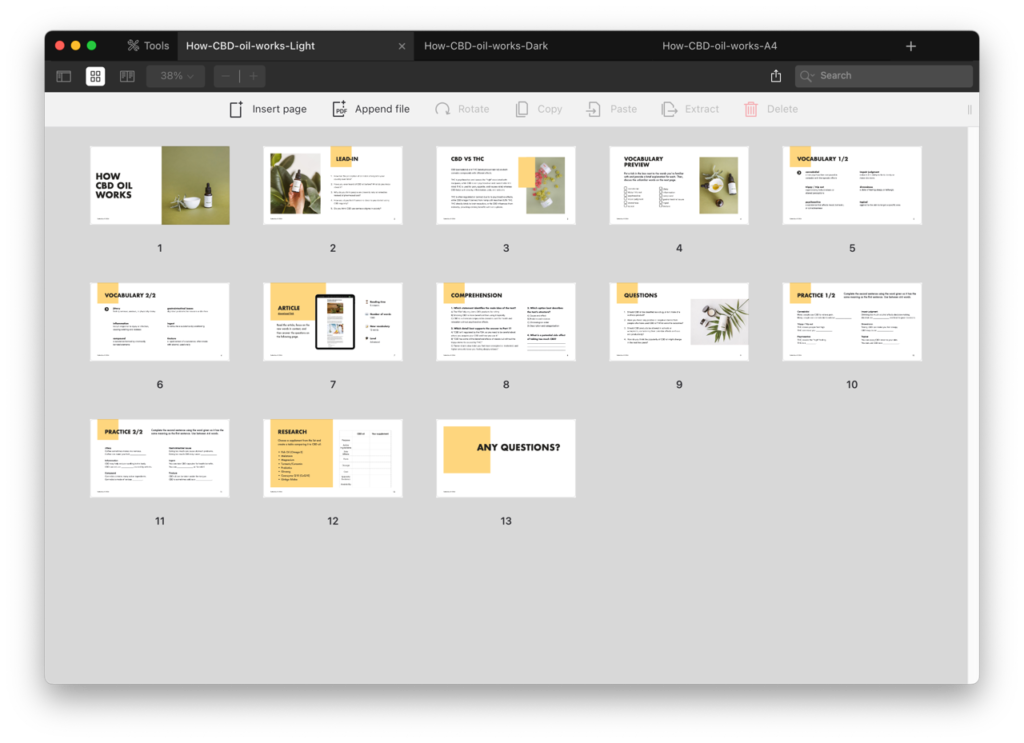
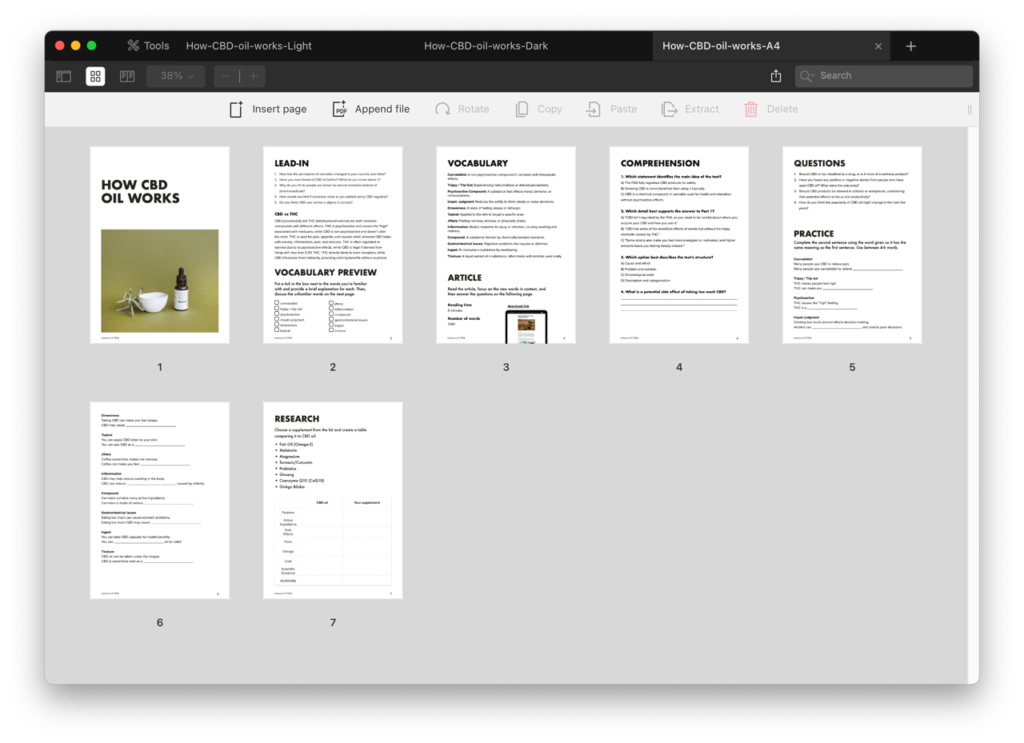
Open with the lead-in questions on slide 2. These touch on attitudes toward cannabis, natural remedies, and social stigma, so they tend to generate strong reactions from C1 students. Give pairs a few minutes to discuss, then ask for some responses from the group. If your class is comfortable with the topic, this can easily run ten minutes. The CBD vs THC comparison on slide 3 gives students a quick factual overview before they hit the main reading.
Go through the vocabulary preview next. Let students check off words they already know and explain them to a partner. At C1 level, some will already know “compound” and “inflammation” from general knowledge, but terms like “tincture,” “jittery,” and “gastrointestinal issues” are usually new. Walk through the definitions together and make sure everyone is solid before moving to the article. The reading is about 1,080 words, so give students five to seven minutes. It covers what CBD is, how people use it, and what the side effects can be.
The comprehension questions on slide 8 mix main idea, supporting detail, and text structure questions, which is good practice for exam-style thinking. Go through these as a class and let students justify their answers with evidence from the text. Then move into the discussion questions on slide 9. The one about whether CBD should be allowed in schools and workplaces usually splits the room.
The sentence transformation exercises on slides 10 and 11 are where students really practice using the new vocabulary. Do the first example together so they understand the format. They need to rewrite sentences using a target word in four to six words. Pairs work well here. Finish with the research task on slide 12, where students pick a supplement and compare it to CBD oil in a table. This works as homework or as a presentation task if you have time. It pushes students to use the vocabulary again in a different context and gives them practice with structured comparison.
