
Hostile Architecture
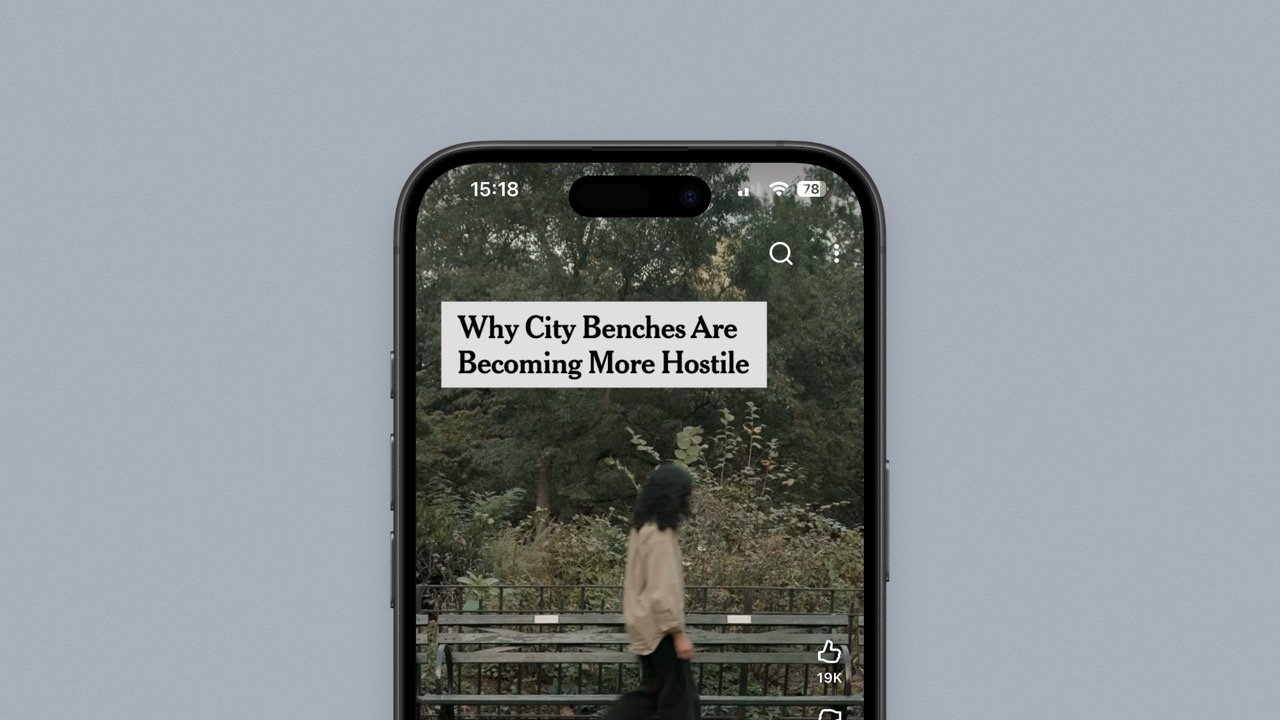
This C1 lesson examines hostile architecture through the evolving design of New York City benches. Students learn advanced vocabulary like “at the expense of,” “stark feature,” and “infamous,” then analyze how public spaces intentionally exclude certain groups. The activities include timeline analysis, comment discussions, and a collaborative urban redesign project using real examples.
Lesson overview
- Build sophisticated vocabulary related to urban planning, social exclusion, and design ethics
- Watch a video tracing how public benches transformed from welcoming to deliberately uncomfortable
- Analyze the relationship between architecture, homelessness, and ideas about who belongs in public space
- Collaborate on redesigning hostile spaces by identifying problems and proposing inclusive alternatives
| Level | Vocabulary | Video Length | Lesson Time |
| C1 / Advanced | 10 words | 2:49 min | 60 min |
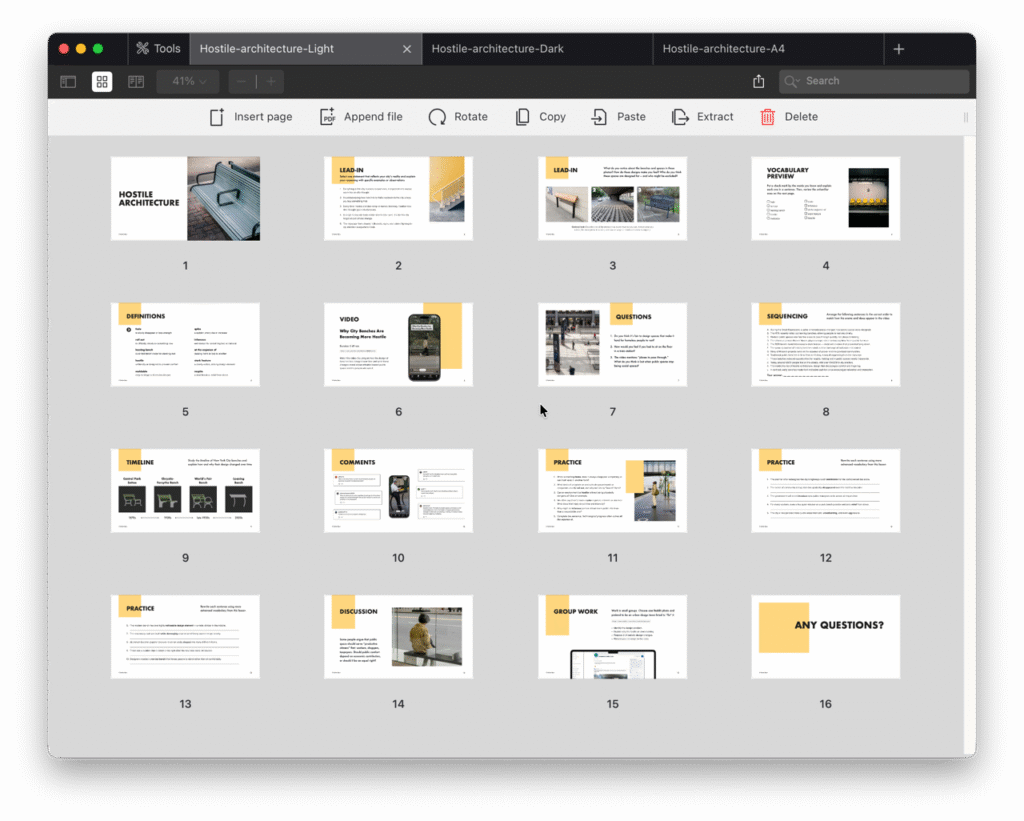
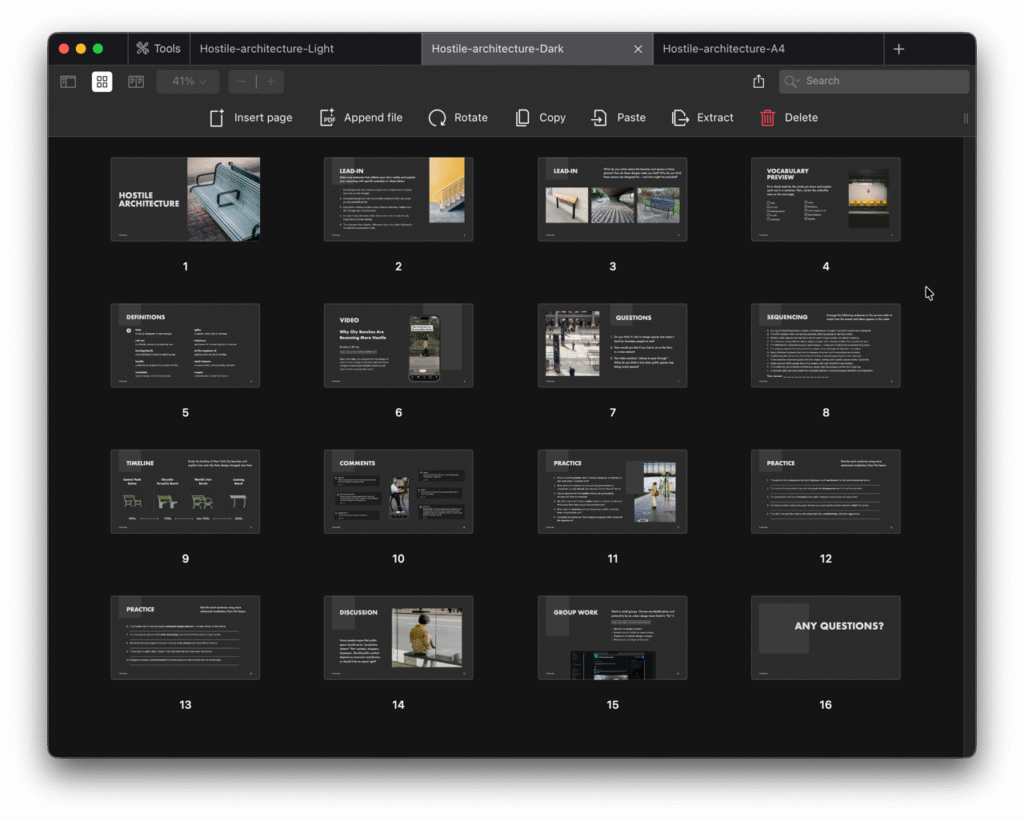
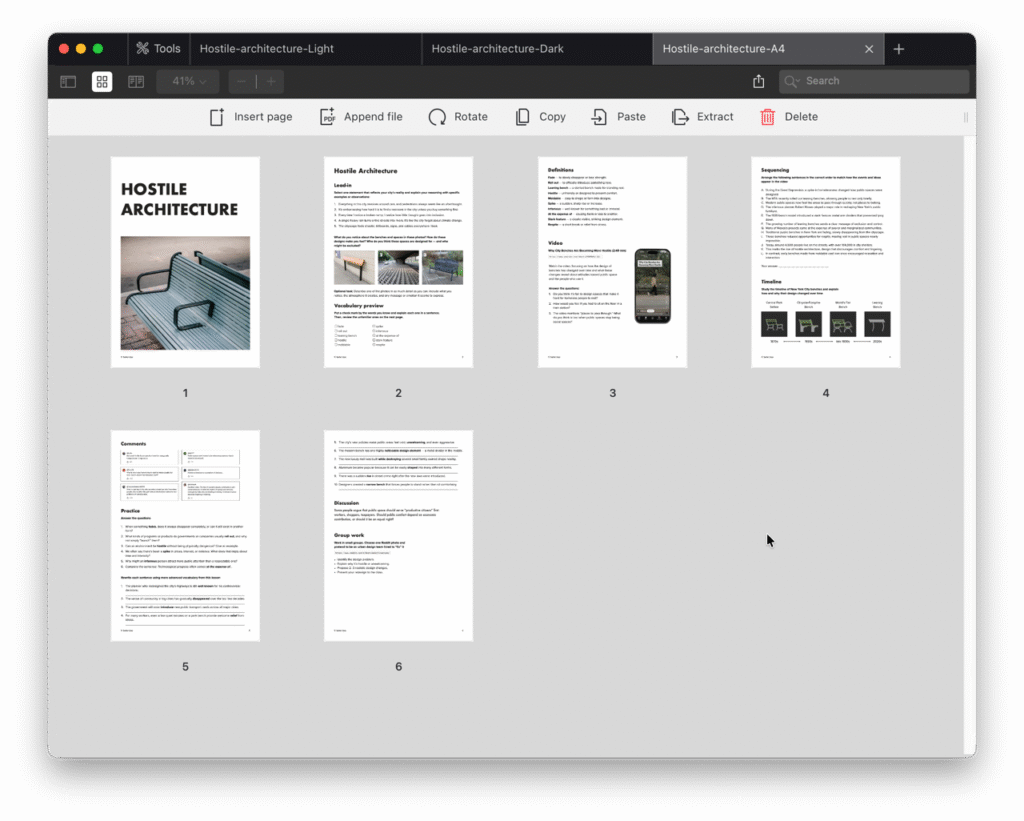
Vocabulary
- Fade
- Roll out
- Leaning bench
- Hostile
- Moldable
- Spike
- Infamous
- At the expense of
- Stark feature
- Respite
Contents
- Lead-in
- Vocabulary preview
- Definitions
- Video
- Questions
- Sequencing
- Timeline
- Comments
- Practice
- Discussion
- Group work
Open with the city reality statements on slide 2. C1 students can handle abstract concepts like “pedestrians as afterthought” and connect them to their own urban experiences. The bench photos on slide 3 introduce visual evidence before students have the vocabulary. Ask them what these designs communicate and who benefits.
The vocabulary section includes phrases that appear in urban planning discussions. Terms like “at the expense of” and “stark feature” help students describe trade-offs and deliberate design choices. Make sure they understand “hostile” in this architectural context means unwelcoming by design, not accidentally uncomfortable.
The video runs under three minutes but covers significant historical ground. It starts with moldable cast iron benches from the 1870s that encouraged rest, then shows how the Great Depression caused a spike in homelessness. Robert Moses introduced the infamous 1939 bench with arm dividers that prevented lying down. Modern leaning benches eliminate sitting entirely. Play twice so students catch both the chronology and the underlying attitudes.
The sequencing activity on slide 8 tests whether students followed the timeline. Correct order matters here because the progression shows deliberate policy shifts, not random changes. After sequencing, the timeline visual on slide 9 reinforces the transformation from welcoming settees to standing-only designs.
The practice section pushes students beyond basic comprehension. Question 1 asks whether fading always means complete disappearance. Question 3 explores non-physical hostility. These nuanced questions work well at C1 level. The rewriting exercises require students to replace simple words with lesson vocabulary, which tests both understanding and application.
The final group activity sends students to the Hostile Architecture subreddit to find real examples. They roleplay as urban designers fixing one hostile space. This combines critical analysis with practical problem-solving and recycles all the new vocabulary naturally.
