
Hobbies Aren’t Fun Anymore
This B2 lesson examines how hobbies have turned into productivity projects instead of pure fun. Students learn vocabulary like productivity mindset, side hustle, trajectory, and antidote, then watch a video explaining why people document everything and feel guilty about frivolous activities. Tasks include matching ideas to quotes, discussing whether hobbies should make money, and creating a personal hobby timeline.
Lesson overview
- Learn vocabulary about productivity culture including side hustle, trajectory, frivolous, antidote, and productivity mindset
- Watch a video explaining how social media and monetization pressure turned hobbies into work
- Discuss whether people would still travel if they couldn’t post photos and how side hustles change hobbies
- Create a timeline showing your hobby’s journey from initial spark to current feelings about it
| Level | Vocabulary | Video Length | Lesson Time |
| B2 / Upper-Intermediate | 10 words | 3:42 min | 60 min |
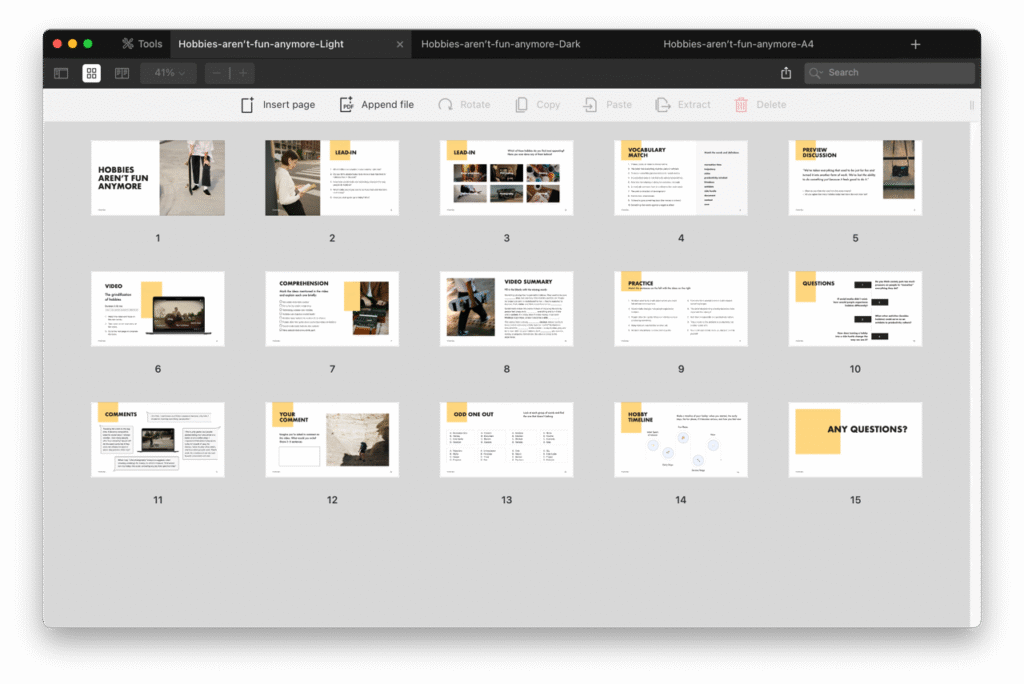
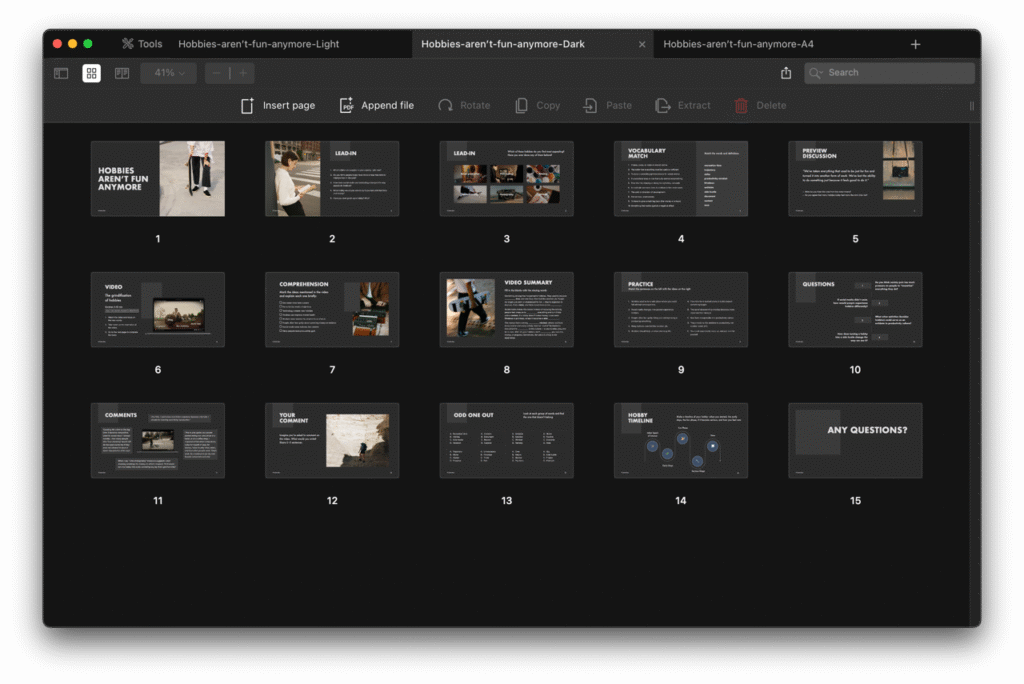
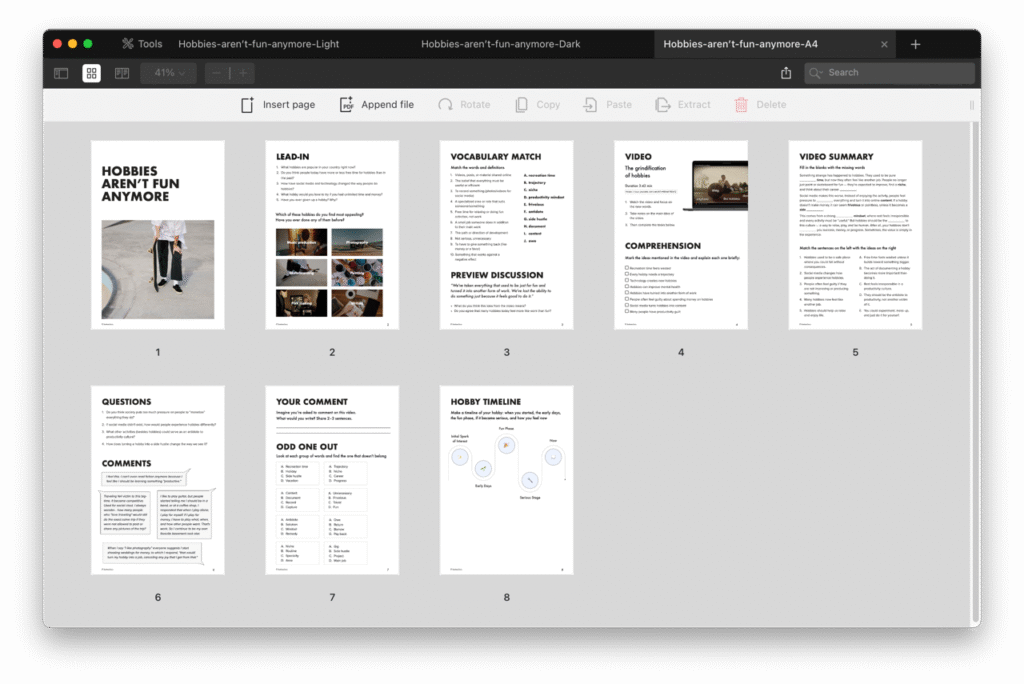
Vocabulary
- recreation time
- trajectory
- niche
- productivity mindset
- frivolous
- antidote
- side hustle
- document
- content
- owe
Contents
- Lead-in
- Vocabulary Match
- Preview Discussion
- Video
- Comprehension
- Video Summary
- Practice
- Questions
- Comments
- Your comment
- Odd one out
- Hobby Timeline
Start with the lead-in questions about popular hobbies and whether people have more free time now. Question 5 about giving up a hobby often gets honest responses about losing interest or feeling pressured. Show the six hobby images and ask which ones appeal to students. Then do vocabulary matching with ten terms. After checking answers, introduce the preview discussion quote about turning fun into work. Students predict what the video will say before watching.
Play the video explaining hobby grindification. It’s about three and a half minutes covering how productivity mindset, social media documentation, and side hustle culture ruined recreation time. Students take notes on the main idea. After watching, they mark which of eight ideas were mentioned and explain each briefly. Ideas like “recreation time feels wasted” and “hobbies have turned into work” should be checked. The summary gap-fill reinforces key vocabulary in context using seven blanks.
The practice section matches five sentences from the video to their deeper meanings. For example, “Hobbies used to be a safe place where you could fail” matches with “You could experiment, mess up, and just do it for yourself.” The four discussion questions push beyond the video. Question 2 about how hobbies would differ without social media usually sparks interesting debate. Question 4 about how side hustles change hobbies connects to the comments section showing real responses about guitar playing, travel, and photography becoming work.
Students write their own two to three sentence comment on the video. The odd one out practice has eight groups where students identify which word doesn’t belong and explain why. For example, in the first group, “mindset” doesn’t fit with antidote, solution, and remedy. End with the hobby timeline activity. Students map one hobby from initial spark through fun phase to current stage using emojis and descriptions. This personalizes the lesson content.
