
Highly Sensitive People at Work
This B2 lesson looks at what it means to be a highly sensitive person in the workplace. Students watch a video about why HSPs can be great employees, learn 12 vocabulary items like “empathetic,” “distress,” and “confide in,” and practice through matching exercises, stereotype discussions, and role plays. It’s a conversation-heavy lesson that works especially well with groups who enjoy talking about personality and work culture.
Lesson overview
- Learn 12 vocabulary items related to sensitivity and emotions, like “trait,” “intuitive,” and “acknowledge”
- Watch a video about why highly sensitive people make strong employees and summarize key points
- Discuss common stereotypes about sensitive people in the workplace using personal examples
- Practice real workplace scenarios through four role plays covering meetings, interviews, and office design
| Level | Vocabulary | Video Length | Lesson Time |
| B2 / Upper-Intermediate | 12 words | 2:18 min | 60 min |
Vocabulary
- sensitive
- bother
- emotional state
- trait
- empathetic
- emotional intelligence
- intuitive
- distress
- confide in
- weakness
- expose
- acknowledge
Contents
- Lead-in 1
- Lead-in 2
- Vocabulary preview
- Vocabulary
- Video preview
- Video
- Summary
- Practice
- Stereotypes
- Role-play
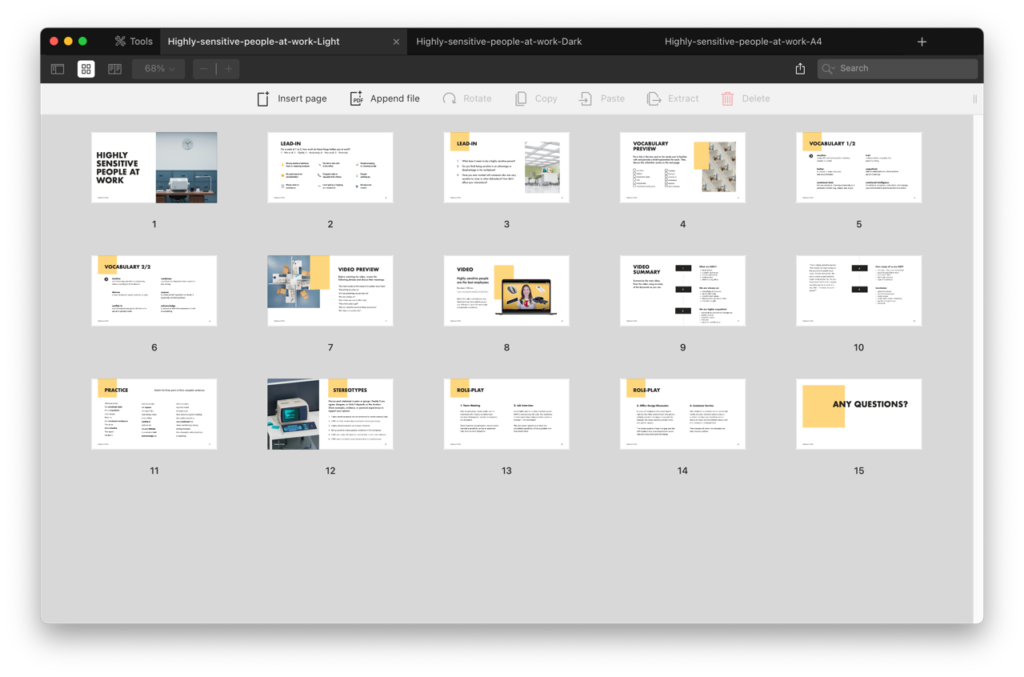
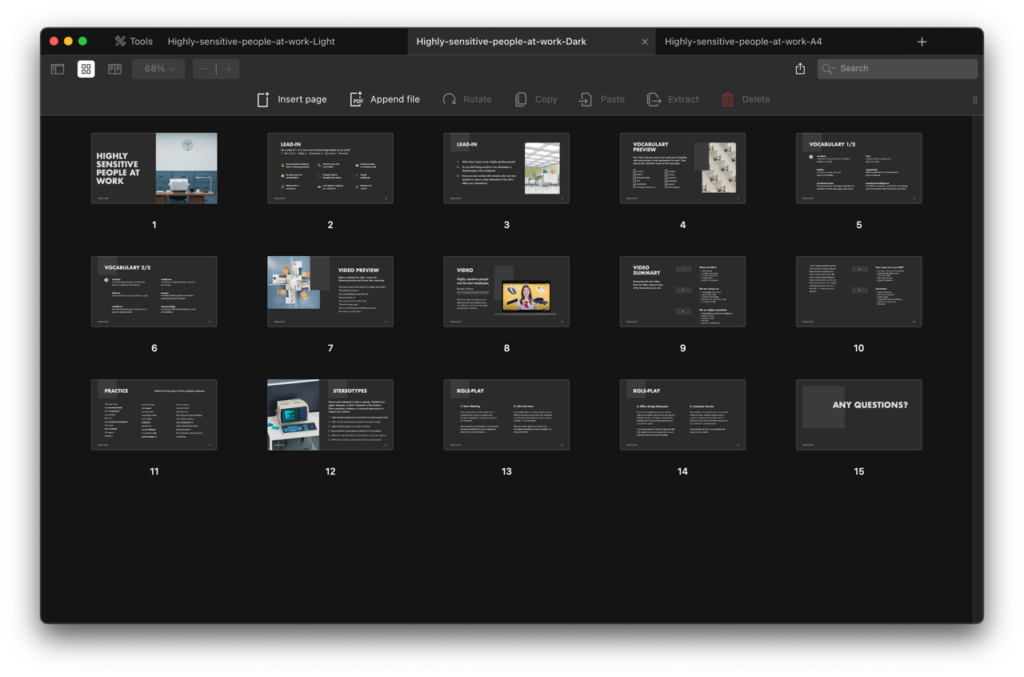
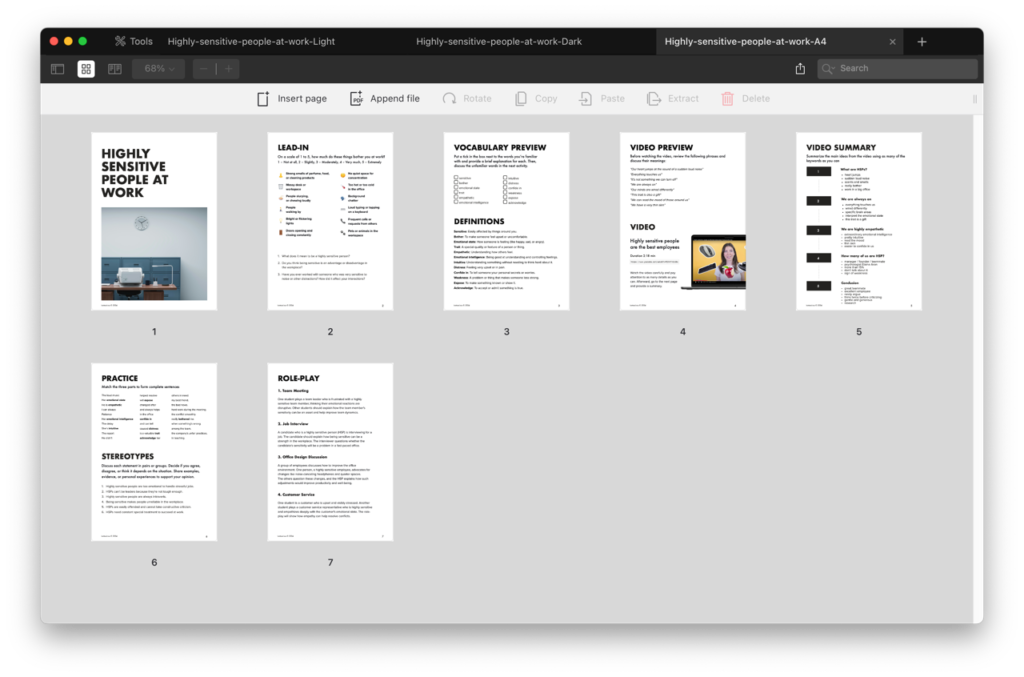
The warm-up on slide 2 is a rating scale where students score how much common office annoyances bother them. Things like loud chewing, strong perfume, and background chatter. This gets everyone talking immediately because most people have a strong reaction to at least a few of these. After the rating, move to the lead-in questions on slide 3 about what it means to be highly sensitive and whether it’s an advantage at work.
Go through the vocabulary preview before the video. Students check off words they already know and try to explain them to a partner. Then review the definitions together on slides 5 and 6. Words like “empathetic” and “emotional intelligence” are often familiar at B2 level, but “confide in” and “expose” may need more attention. Slide 7 has key phrases from the video for students to discuss before watching. This pre-viewing step helps a lot because the speaker talks quickly.
Play the video on slide 8. It’s about two minutes long and argues that highly sensitive people make excellent employees. After watching, students use the keyword prompts on slides 9 and 10 to summarize each section of the video. This is harder than it looks, so let them work in pairs. The matching exercise on slide 11 gives more controlled practice with the vocabulary in sentence context.
The last part of the lesson is where things get lively. The stereotype statements on slide 12 ask students to agree, disagree, or say “it depends.” Then the four role plays on slides 13 and 14 put students in real workplace situations: a frustrated team leader, a job interview, an office redesign discussion, and a customer service scenario. Pick two of these depending on your group’s interests and how much time you have left. These role plays give B2 students a chance to use the vocabulary naturally while practising persuasion and problem-solving.
