
Hello, Summer

This A2 lesson teaches summer vocabulary through pictures, sentence building, and reading. Students learn words like “sunbed,” “flip flops,” and “stand-up paddleboarding,” then read about someone’s summer bucket list. The activities include describing pictures, making choices between summer preferences, and creating a personal bucket list.
Lesson overview
- Learn twelve common summer words from beach equipment to outdoor activities
- Practice making sentences with summer vocabulary using provided prompts
- Read about a young woman’s summer plans and answer comprehension questions
- Develop writing skills by creating a personal summer bucket list
| Level | Vocabulary | Lesson Time |
| A2 / Pre-Intermediate | 16 words and phrases | 60 min |
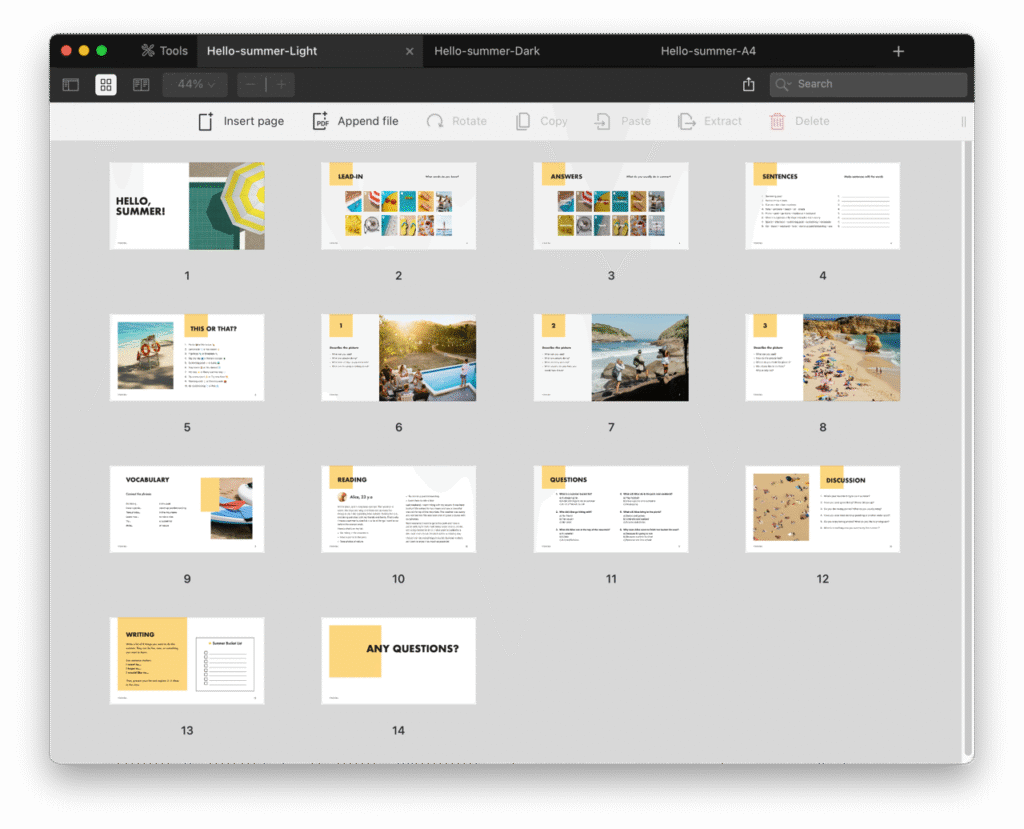
Vocabulary
- Swimming pool
- Sunbed
- Fan
- Umbrella
- Beach
- Stand-up paddleboarding
- Sunbathing
- Flip-flops
- Lemonade
- Barbecue
- Picnic
- Sunglasses
- Go hiking in the mountains
- Take photos of nature
- Learn how to ride a bike
- Make a bucket list
Contents
- Lead-in
- Sentences
- This or that
- Speaking
- Vocabulary
- Reading
- Questions
- Discussion
- Writing
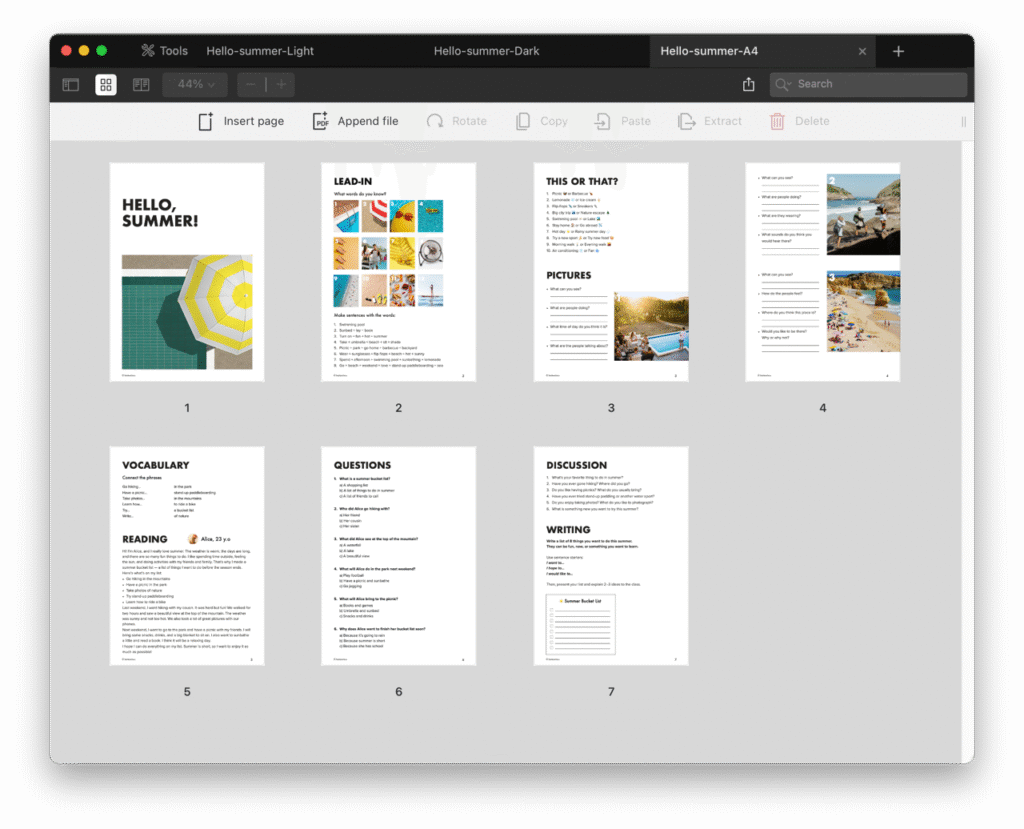
Start with the picture identification where students name twelve summer items. Some words like “sunglasses” and “beach” are basic, while “stand-up paddleboarding” is more specific. After checking answers, ask what they usually do in summer to activate personal connections to the vocabulary.
The sentence building activity gives students key words and they make complete sentences. Number two uses “sunbed + lay + book” so they might write “I lay on a sunbed and read a book.” Number five is longer with “picnic + park + go home + barbecue + backyard,” which practices sequencing two activities. Model the first one if students seem unsure about the format.
The “This or That” activity works well as a speaking warm-up. Students choose between options like picnic or barbecue, lemonade or ice cream, and explain their preference. This recycles the vocabulary in a low-pressure way because there are no wrong answers. The three picture descriptions give structured speaking practice. Each picture has four guiding questions about what students see, what people are doing, and how they might feel.
The vocabulary connection matches sentence beginnings with endings. “Go hiking” connects with “in the mountains” and “Try” goes with “stand-up paddleboarding.” These phrases appear in the reading, so this prepares students for the text.
The reading is about Alice’s summer bucket list. It’s around 150 words and uses simple past and future tenses. Students read about her hiking trip last weekend and her picnic plans for next weekend. The six comprehension questions check understanding with multiple choice format, which works well at A2 level. Question six asks why Alice wants to finish her list soon, and the answer “because summer is short” introduces the idea that seasons are limited time.
The discussion questions personalize the topic. Students talk about their own experiences with hiking, picnics, and photography. Question six asks what new thing they want to try, which leads into the writing task. Students create their own eight-item summer bucket list using sentence starters like “I want to” and “I hope to.” After writing, they present two or three ideas to the class, which gives them speaking practice using their own content.
