
Headphones, Sound, and Protecting Hearing
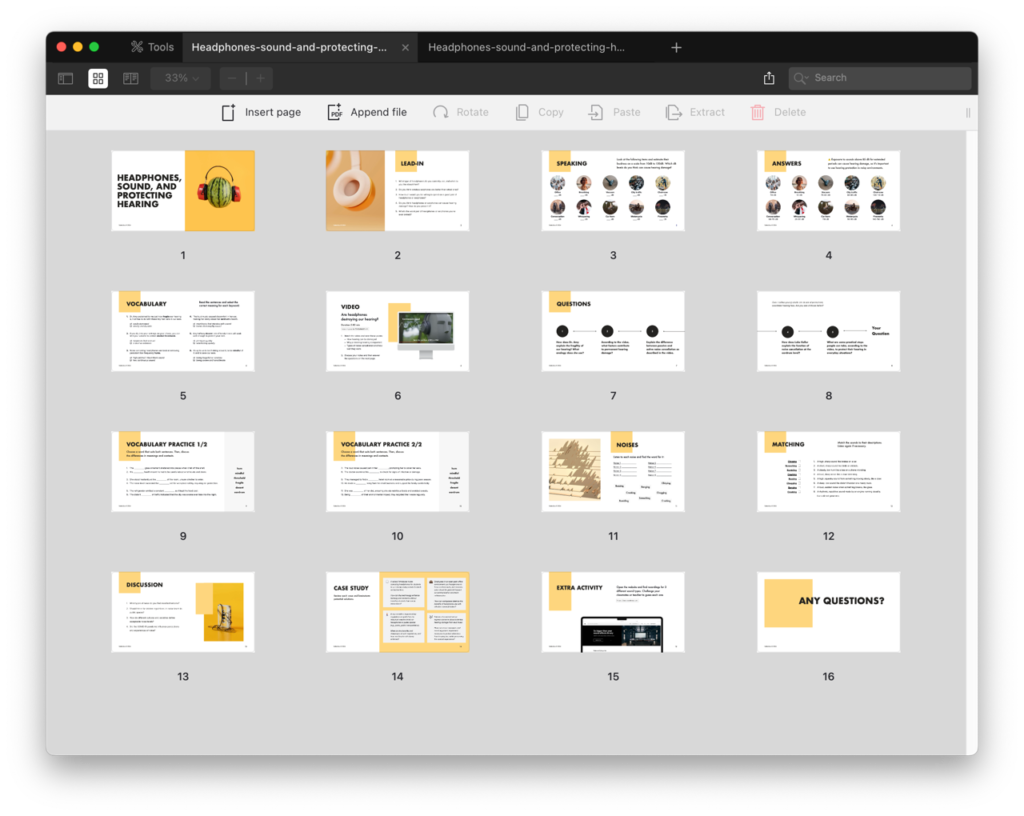
This B2 lesson covers hearing protection and headphones through vocabulary, video, and case study discussions. Students learn terms like fragile, threshold, and eardrum while exploring how loud sounds damage hearing. The lesson combines health education with practical vocabulary about sound levels, noise types, and protecting ears in daily life.
Lesson overview
- Learn vocabulary related to hearing protection, headphones, and sound measurement
- Practice comprehension with video explaining how headphones affect hearing health
- Develop discussion skills through debates on noise regulations and hearing safety
- Build confidence analyzing case studies about headphone use in schools and workplaces
| Level | Vocabulary | Video Length | Lesson Time |
| B2 / Upper-Intermediate | 14 words | 5:00 min | 60-80 min |
Vocabulary
- Fragile
- Threshold
- Hum
- Eardrum
- Decent
- Mindful
- Buzzing
- Crashing
- Creaking
- Rumbling
- Banging
- Screeching
- Chugging
- Chirping
Contents
- Lead-in
- Speaking
- Vocabulary
- Video
- Questions
- Vocabulary practice
- Noises
- Matching
- Discussion
- Case study
- Extra activity
Start with lead-in questions about headphone preferences and the decibel estimation activity. Have students guess sound levels for everyday noises like breathing, traffic, and fireworks. This activity hits differently because students suddenly realize they have zero clue how loud things actually are. When you reveal that 85 dB causes damage, watch the faces of B2 learners who blast music at 95+ dB daily.
Pre-teach vocabulary like fragile, threshold, and eardrum before the five-minute video about hearing damage. The video explains how hearing works, what causes permanent damage, and the difference between passive and active noise cancellation. After watching, discuss the comprehension questions about Dr. Amy’s analogy and the billion young adults at risk. The vocabulary practice has students choose words that work in multiple sentences, which catches whether they actually understand the meanings or just memorized definitions.
Do the noise identification listening next. Students hear eight sounds (chirping, buzzing, screeching, etc.) and match them to descriptions. B2 students know most of these words but mix up similar ones constantly. Rumbling versus chugging. Creaking versus screeching. The matching activity sorts out the confusion.
Wrap up with case studies about headphone use in schools, offices, concerts, and public spaces. Split students into groups and give each group one scenario. They brainstorm solutions for balancing hearing protection with learning, collaboration, or entertainment. These scenarios force students to apply the concepts to actual situations instead of having vague discussions about “health is important.” The soundsnap.com activity works as filler if you finish early and need to burn 10 minutes.
