
Grocery Shopping
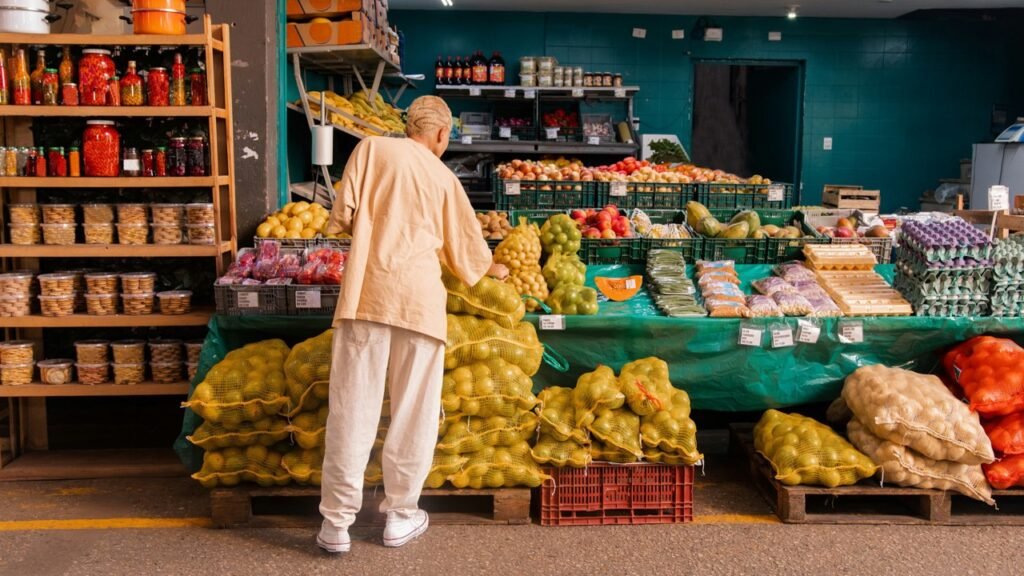
This A2 lesson teaches everyday vocabulary for grocery shopping. Students learn the names of supermarket sections, practice matching items to the right aisle, and talk about their own shopping habits. It’s a practical topic that students can use right away in real life.
Lesson overview
- Learn vocabulary for supermarket sections like produce, dairy, and bakery
- Match common grocery items to the correct store section
- Practice unscrambling sentences with shopping words like cart, aisle, and checkout
- Discuss shopping habits and write a shopping list for fun scenarios
| Level | Vocabulary | Lesson Time |
| A2 / Pre-Intermediate | 10 words | 60 min |
Vocabulary
- dairy
- bakery
- beverages
- meat and seafood
- canned foods
- frozen foods
- household items
- snacks and sweets
- health and beauty
- aisle
- cart
- checkout
- reusable bag
- shelf
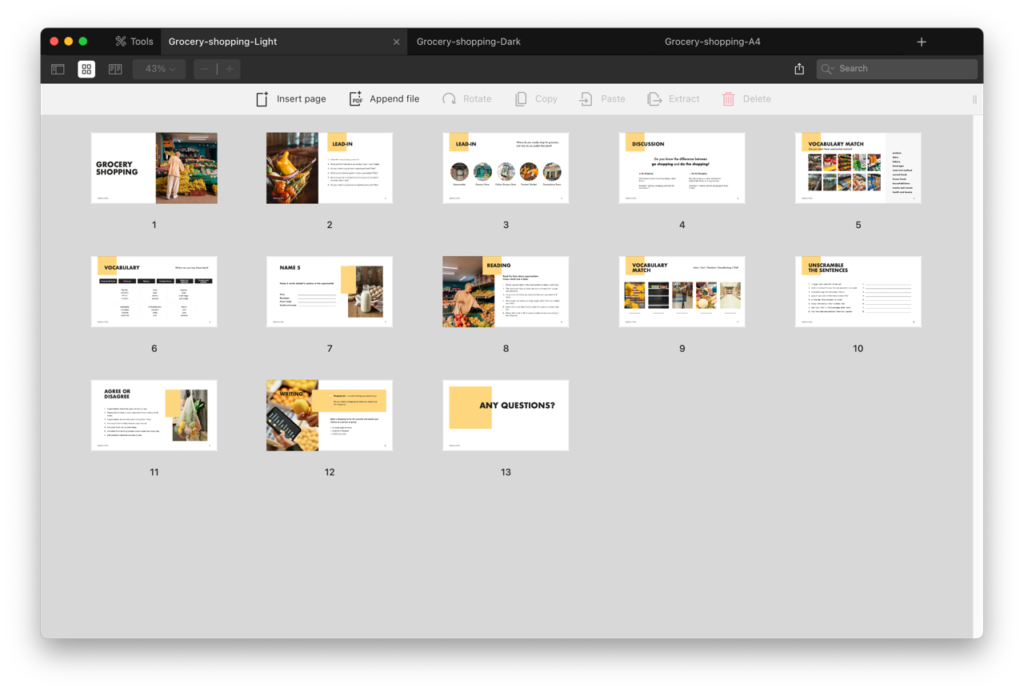
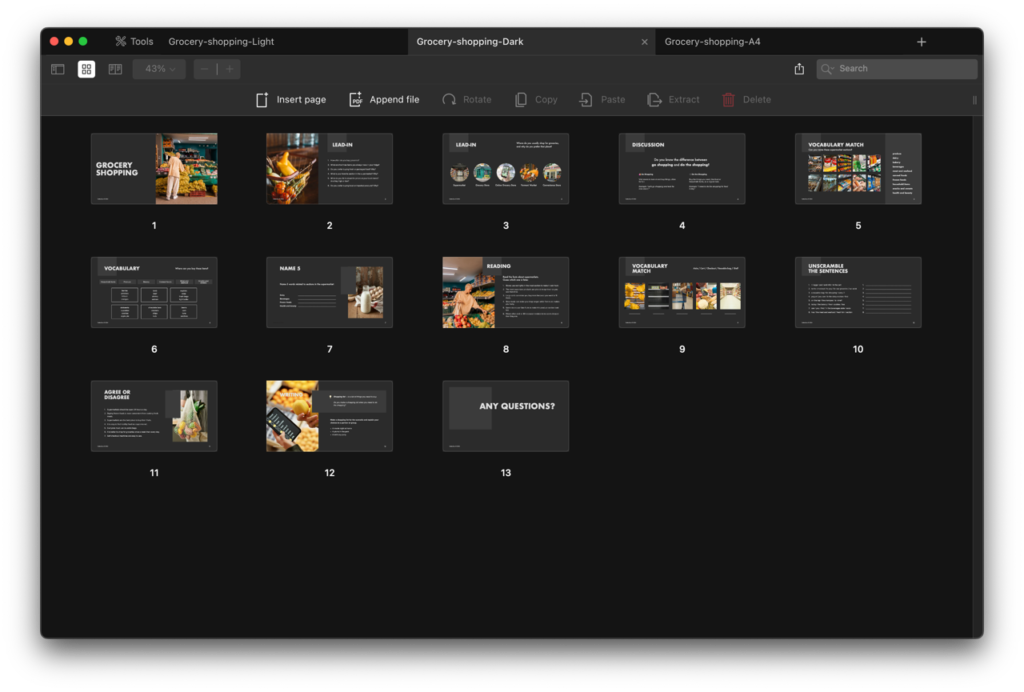
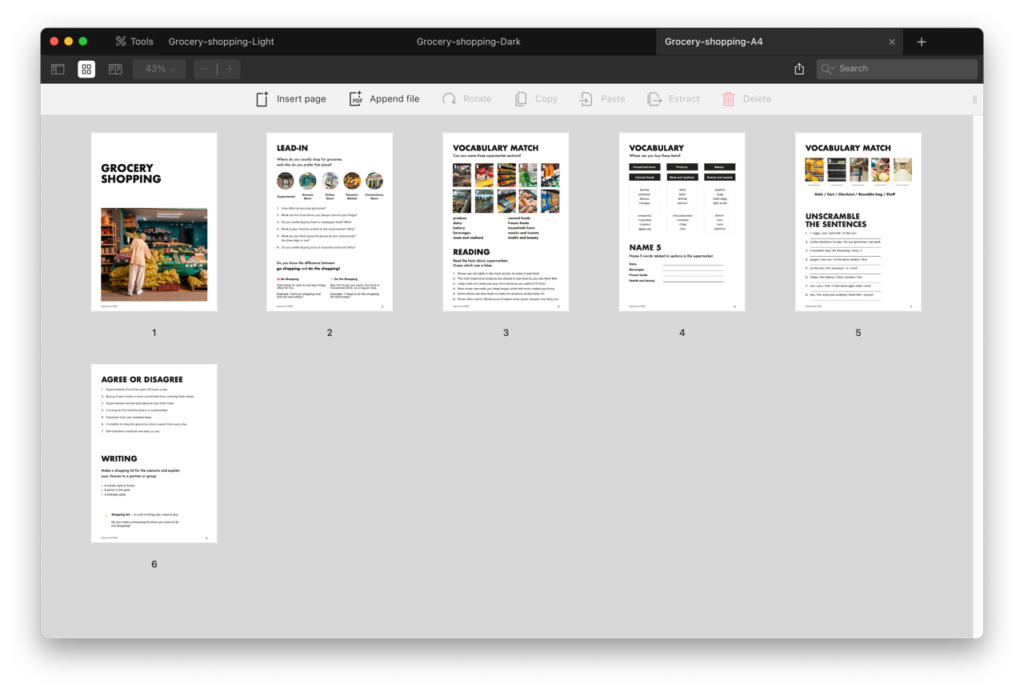
Contents
- Lead-in
- Discussion
- Vocabulary match
- Vocabulary
- Name 5
- Reading
- Vocabulary match
- Unscramble the sentences
- True or False
- Writing
Start with the lead-in questions about grocery shopping habits. A2 students can usually answer questions like “How often do you buy groceries?” and “What’s always in your fridge?” without much trouble. Keep the pace relaxed and help with vocabulary as needed. Then show the five types of stores and ask where students prefer to shop. This is also a good time to teach the difference between “go shopping” and “do the shopping,” which comes up on the next slide. Use the examples on screen and ask students to make one sentence with each phrase.
Move to the supermarket sections vocabulary. Students match ten pictures to section names like produce, dairy, frozen foods, and household items. After checking answers, go to the sorting activity where they put items like berries, shrimp, and trash bags into the correct section. This works well in pairs. Then try the “Name 5” challenge where students list five items for dairy, beverages, frozen foods, and health and beauty. It gets competitive and helps them recall words quickly.
The reading activity about supermarket tricks is a highlight. Students read six facts and guess which one is false. This usually sparks good conversation even at A2 level because the facts are surprising and easy to understand. After the reading, introduce five more vocabulary words: aisle, cart, checkout, reusable bag, and shelf. Students match these to pictures, then unscramble eight sentences using the new words. Go through the first one together as a class so they understand the task.
Finish with the agree or disagree statements and the shopping list writing activity. The statements like “Everyone must use reusable bags” and “Self-checkout machines are easy to use” are great for practicing simple opinions. For the writing task, students pick a scenario like a movie night or a picnic and write a shopping list with reasons for their choices. They can share lists with a partner or small group at the end.
