
Going Vegan
This B1 lesson explores veganism and what happens to your body when you stop eating animal products. Students learn the difference between vegetarian and vegan diets, watch a video about physical changes during the first weeks of going vegan, and practice vocabulary related to nutrition and food groups. The lesson encourages students to think critically about dietary choices while building relevant food vocabulary.
Lesson overview
- Learn vocabulary for macronutrients, food categories, and nutrition terminology
- Explore differences between vegetarian and vegan diets through reading activities
- Watch a video explaining bodily changes when switching to plant-based eating
- Discuss personal dietary preferences and the challenges of changing eating habits
| Level | Vocabulary | Video Length | Lesson Time |
| B1 / Intermediate | 13 words | 4:40 min | 60 min |
Vocabulary
- vegetarian
- vegan
- fats
- carbs
- proteins
- to switch
- to digest
- bowels
- fiber
- calorie
- taste buds
- nutrients
- craving
Contents
- Lead-in
- Reading
- Vocabulary
- Vocabulary Match
- Discussion
- Video
- Questions
- Vocabulary Practice
- Name 3
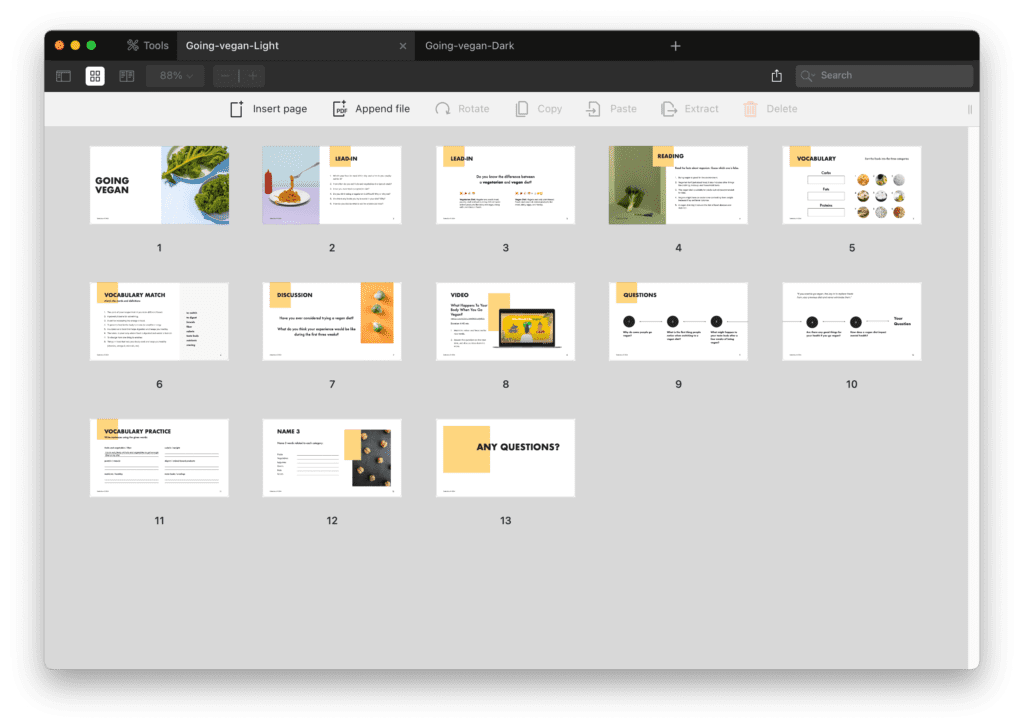
Start with the lead-in questions about eating habits and vegetarianism. These questions show you which students have experience with plant-based diets and which are curious about them. Page 3 clarifies the distinction between vegetarian and vegan diets with simple emoji-based visuals.
The reading activity on page 4 presents five facts about veganism with one false statement mixed in. Have students read individually first, then discuss in pairs which fact they think is false. The answer is number 3 because vegan diets can actually be suitable for kids when properly planned. This opens up discussion about nutrition myths.
Pages 5-6 build food vocabulary. The sorting activity on page 5 teaches macronutrient categories by having students classify foods as carbs, fats, or proteins. Some foods might fit multiple categories, which leads to good discussion. Page 6 introduces nutrition terminology like fiber, nutrients, and digestion through matching definitions to words.
The video on pages 8-10 explains what happens physically when someone goes vegan during the first weeks. It runs about four and a half minutes and covers digestive changes, taste bud adaptation, and potential health benefits. Use the comprehension questions on pages 9-10 to check understanding and ask whether students would try this themselves.
Page 11 provides sentence writing practice with the new vocabulary. Students create original sentences using word pairs like “protein/muscle” and “taste buds/cravings.” The activity on page 12 tests food category knowledge by asking students to name three items from categories like fruits, vegetables, legumes, and seeds.
