
Going for a Hike
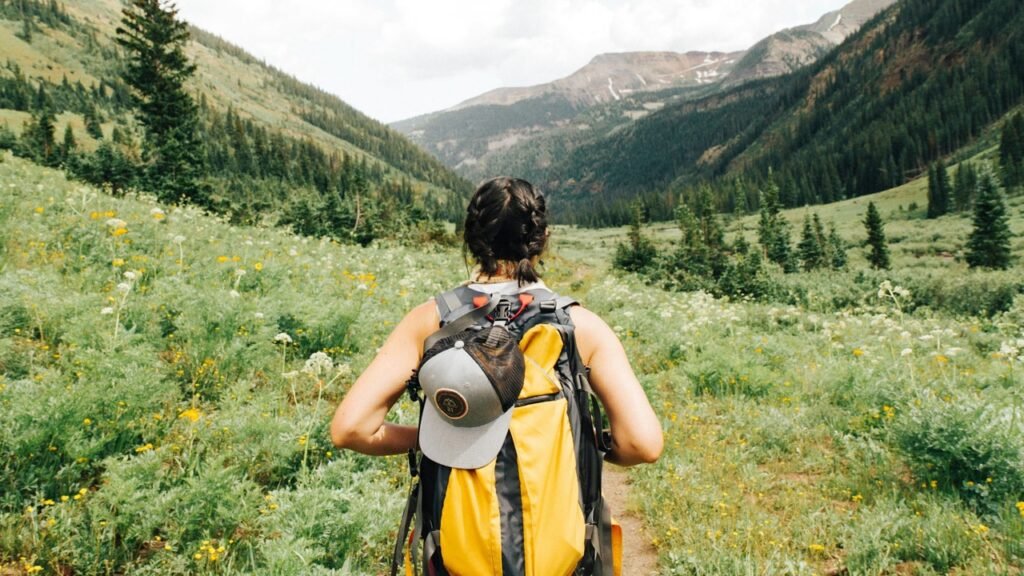
This B1 lesson is all about hiking and why it’s good for you. Students learn outdoor vocabulary like “trail,” “wildlife,” and “endorphins,” read five short texts about the benefits of hiking, and talk about their own experiences in nature. It’s a feel-good topic that gets students talking, especially when they start comparing hiking preferences.
Lesson overview
- Learn ten vocabulary words related to hiking, nature, and outdoor activities
- Read five short texts about why hiking is good for your body and mind
- Play a sorting game choosing which hiking items to use, learn about, or avoid
- Discuss hiking preferences through “this or that” questions and personal experiences
| Level | Vocabulary | Lesson Time |
| B1 / Intermediate | 15 words | 60 min |
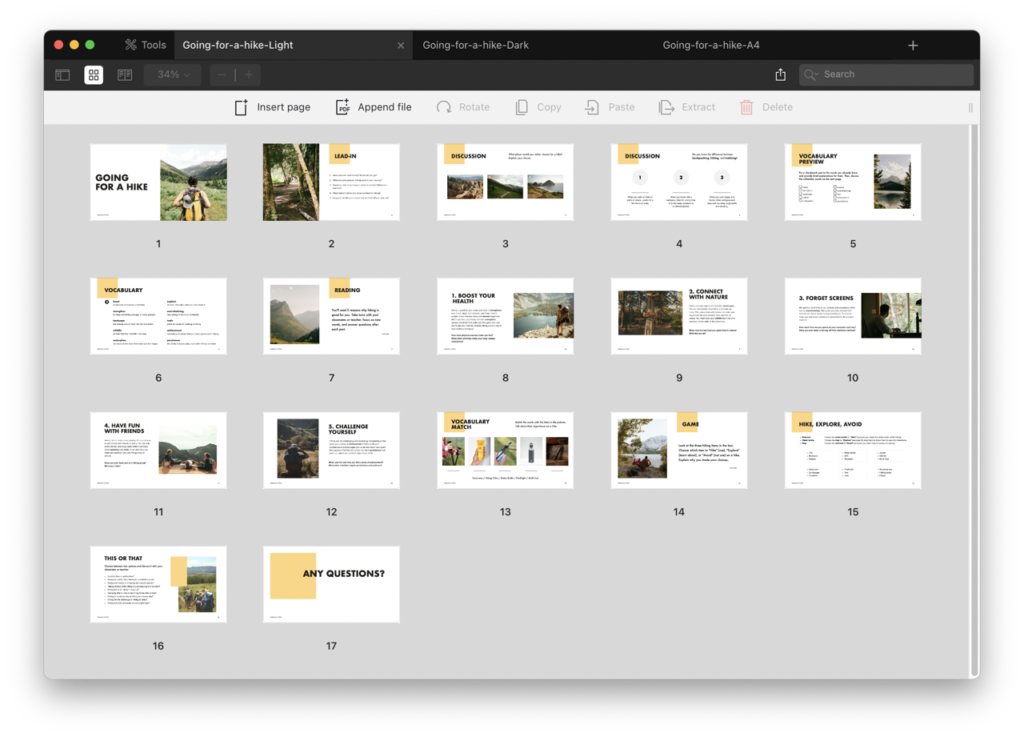
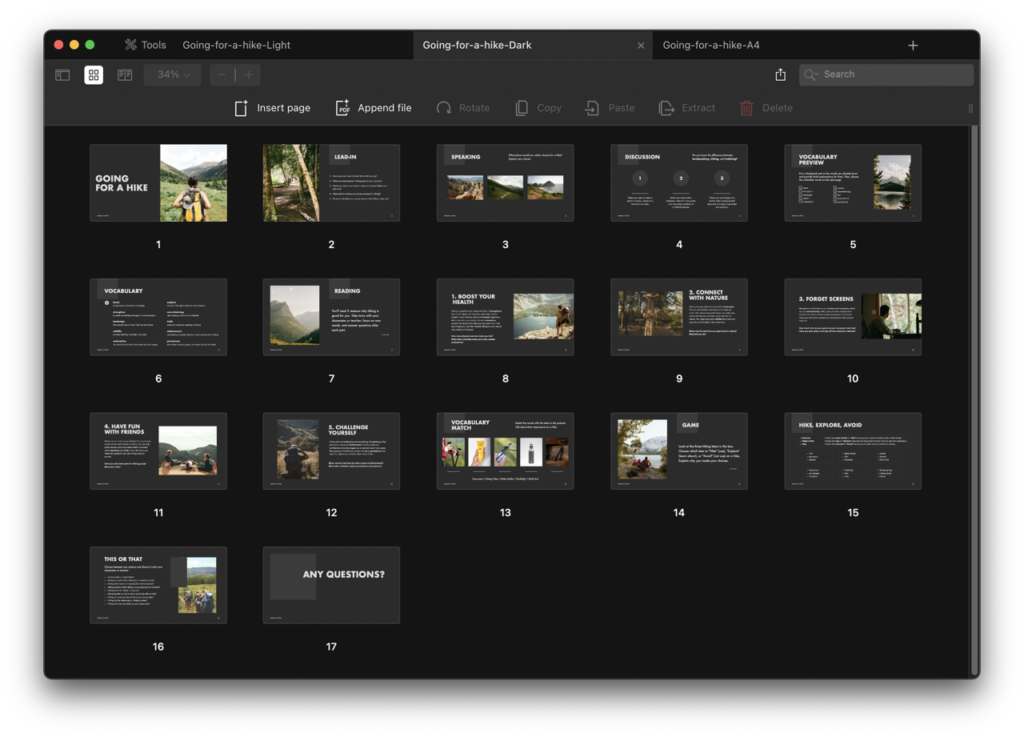
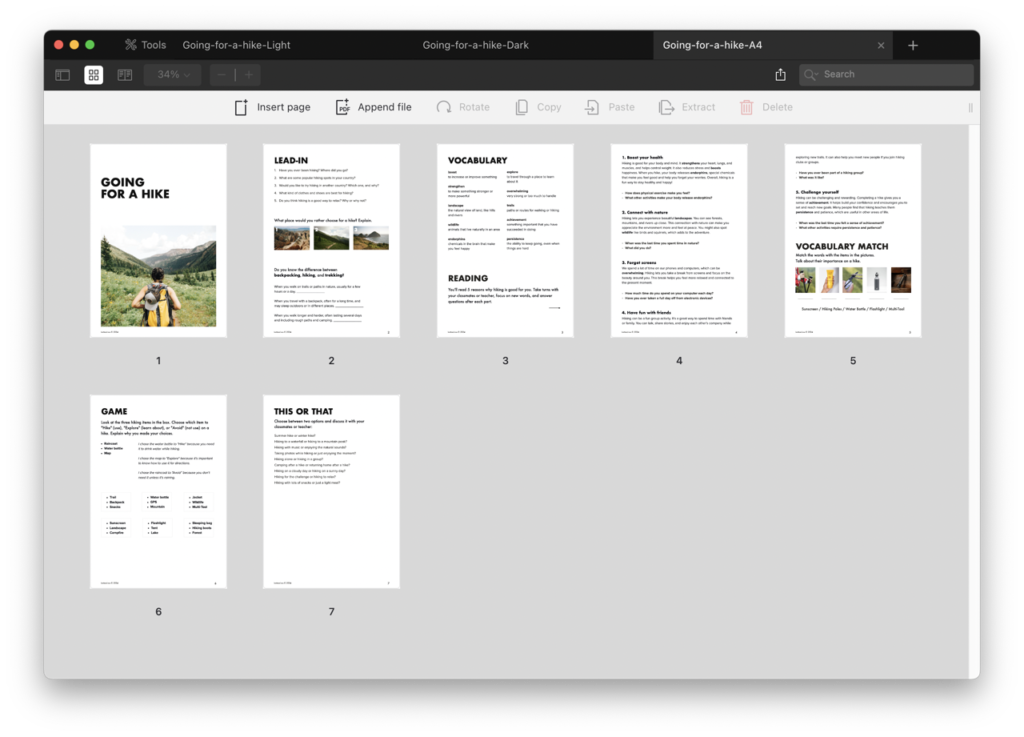
Vocabulary
- boost
- strengthen
- landscape
- wildlife
- endorphins
- explore
- overwhelming
- trail
- achievement
- persistence
- hiking poles
- sunscreen
- water bottle
- flashlight
- multi-tool
Contents
- Lead-in
- Speaking
- Discussion
- Vocabulary preview
- Vocabulary
- Reading
- Vocabulary match
- Game
- This or that
Start with the lead-in questions about hiking experiences. Most B1 students can describe a hike they’ve done or a place they’d like to go. Show the three landscape photos and ask students which one they’d pick for a hike and why. Then introduce the differences between hiking, trekking, and backpacking. Students often mix these up, so the three short definitions with pictures help make the distinctions clear. Have students match the labels to the descriptions before revealing the answers.
Go through the ten vocabulary words next. Students check off the ones they already know and explain them. Then cover the new ones together. “Endorphins” usually needs the most explanation at B1 level, but a simple sentence like “they’re chemicals that make you feel happy after exercise” does the job. “Overwhelming” and “persistence” are also worth a couple of extra examples since students will see them in the reading texts.
The five reading sections are short and manageable. Each one covers a different benefit of hiking: health, nature, screen breaks, socializing, and personal challenge. Have students take turns reading aloud in pairs, then discuss the follow-up question at the bottom of each section. These questions are personal and easy to answer, which keeps the energy up. After the reading, do the vocabulary matching with hiking gear pictures. Students match words like sunscreen, flashlight, and multi-tool to the correct image and explain why each item matters on a hike.
The “Hike, Explore, Avoid” game is the highlight for most classes. Students look at a list of eighteen hiking-related items and sort each one into a category: use it, learn about it, or skip it. They explain their choices, which naturally produces disagreements and good conversation. Finish with the “this or that” activity. Students choose between options like “summer hike or winter hike” and “hiking alone or in a group” and explain their pick. These simple choices generate surprisingly long conversations at B1 level because students enjoy defending their preferences.
