
Global Housing Crisis

This C1 lesson digs into why housing has become so unaffordable around the world and what might be done about it. Students learn 12 vocabulary items like “disposable income,” “housing levy,” and “seismic shift,” watch two short videos comparing house prices across decades, and debate proposed government solutions. It’s a strong choice for advanced groups who like discussing economics and social issues.
Lesson overview
- Learn 12 vocabulary items related to housing, income, and affordability like “deposit” and “median”
- Watch two videos comparing house prices in 1983, 2023, and projected 2033 scenarios
- Evaluate eight proposed government solutions to the housing crisis through group discussion
- Research a global housing topic like Hong Kong affordability or favelas in Brazil and present findings
| Level | Vocabulary | Lesson time |
| C1 / Advanced | 12 words | 60-80 min |
Vocabulary
- Disposable income
- Remainder
- Deposit
- Median
- Skew the average
- Out of reach
- Wage
- Alternate future
- Public housing
- Scattered around
- Seismic shift
- Housing levy
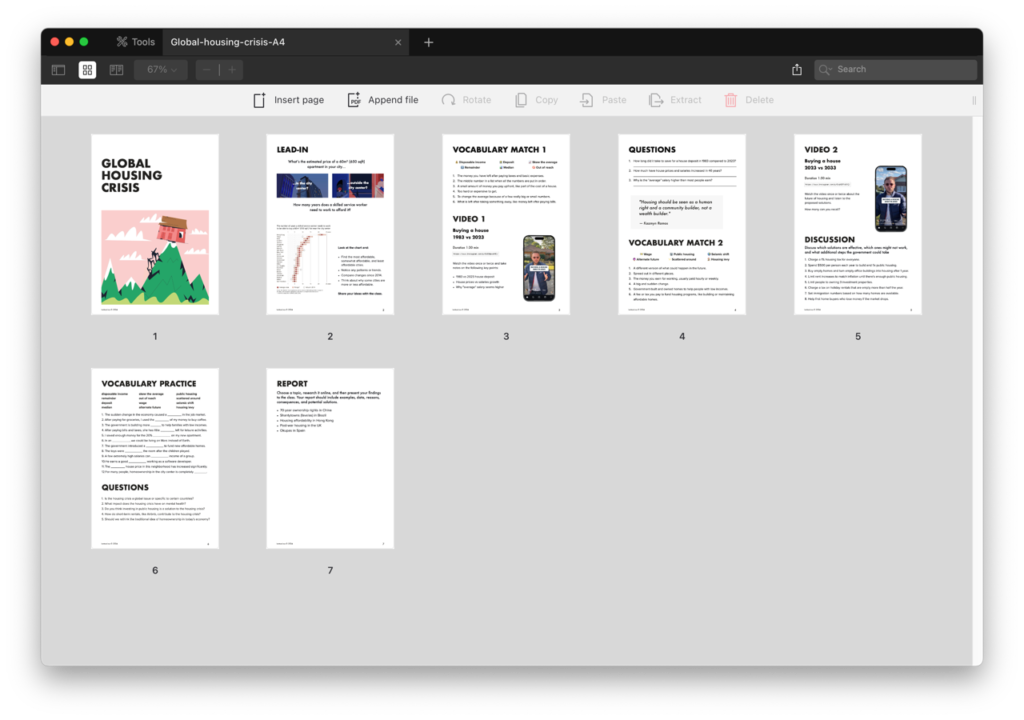
Contents
- Lead-in
- Chart
- Vocabulary match 1
- Video 1
- Comprehension
- Vocabulary match 2
- Video 2
- Discussion
- Quote
- Vocabulary practice
- Questions
- Report
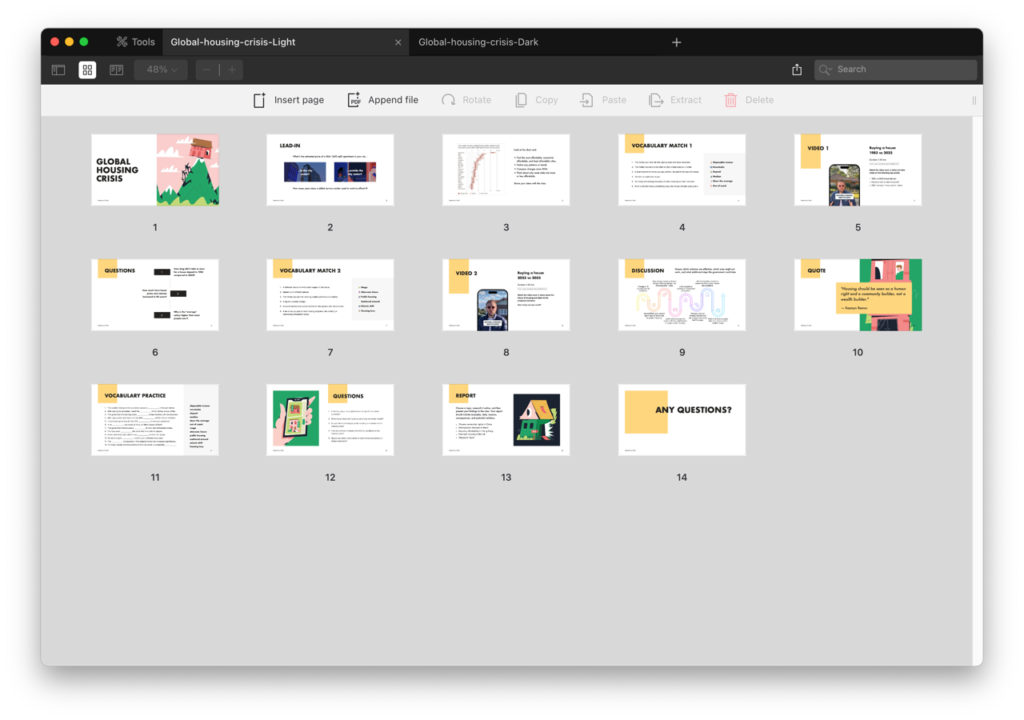
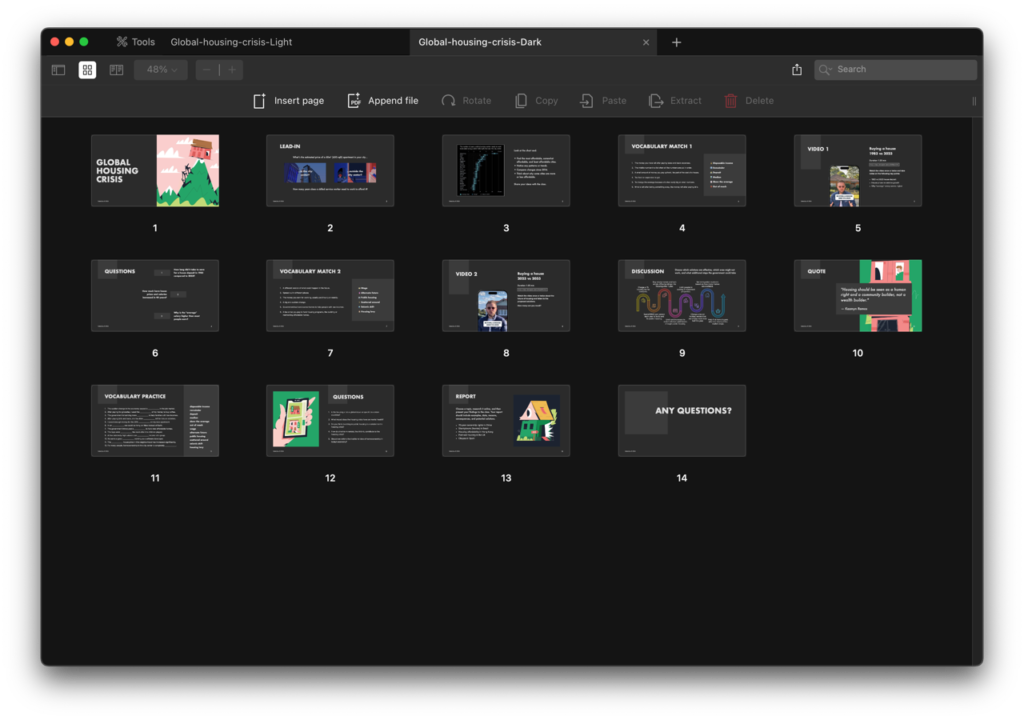
Start with the lead-in on slide 2. Students estimate how much a 60-square-metre apartment costs in their city, both in the centre and outside it. Then they figure out how many years a skilled worker would need to save for it. This usually leads to some shocked reactions, which is exactly the mood you want before getting into the topic. The affordability chart on slide 3 adds a global perspective and gives students a chance to spot patterns and compare cities.
Introduce the first set of vocabulary on slide 4 before playing video one. Words like “disposable income,” “median,” and “skew the average” come up directly in the video, so students need them beforehand. The first video is about 90 seconds and compares house deposits in 1983 versus 2023. Play it twice if needed, then discuss the three comprehension questions on slide 6. The second vocabulary set on slide 7 prepares students for video two, which looks at housing predictions for 2033 and proposes solutions. After watching, students try to recall as many solutions as they can.
The discussion activity on slide 9 is the heart of the lesson. Eight proposed solutions are laid out, from charging a housing levy to limiting investment properties to setting immigration numbers based on housing availability. Students discuss which ones would actually work, which ones wouldn’t, and what else governments could do. With C1 learners, this can easily run fifteen minutes. The vocabulary practice on slide 11 gives students a gap-fill exercise to reinforce all 12 words from both sets.
Wrap up with the discussion questions on slide 12 and the research task on slide 13. Students pick a global housing topic and present their findings to the class. The options range from China’s 70-year ownership model to squatting culture in Spain. This works well as homework or as a presentation task for the following class. It pushes students to use the lesson vocabulary in a new context while practising structured speaking.
