
Ghosting
This B1 lesson uses a short animated video about ghosting to teach informal texting language and conversation skills. Students learn common text abbreviations like “rn,” “lmk,” and “wanna hang tmrrw,” then discuss why people suddenly stop replying and how it feels when someone goes quiet on you. The video hits an emotional note that sticks with students long after class ends.
Lesson overview
- Learn twelve common texting abbreviations and rewrite them as complete English sentences
- Watch an animated short film about ghosting and answer questions about the characters’ relationship
- Match casual text messages with appropriate responses using informal language
- Choose a friendship topic and speak for three minutes about personal experiences
| Level | Vocabulary | Video Length | Lesson Time |
| B1 / Intermediate | 12 phrases | 3:47 min | 60 min |
Vocabulary
- who this
- kinda outta the blue
- same ol same ol
- wanted 2 know if ur free cuz im back in town
- catch up over coffee or something
- was super chill catching up
- I came off so weird
- drop it
- wanna hang tmrrw?
- whenever ur free Imk
- what u up to?
- can’t talk rn srry
Contents
- Lead-in (Would you rather)
- Vocabulary
- Definitions
- Video preview
- Video
- Questions
- Discussion
- Comments
- Matching
- Speaking
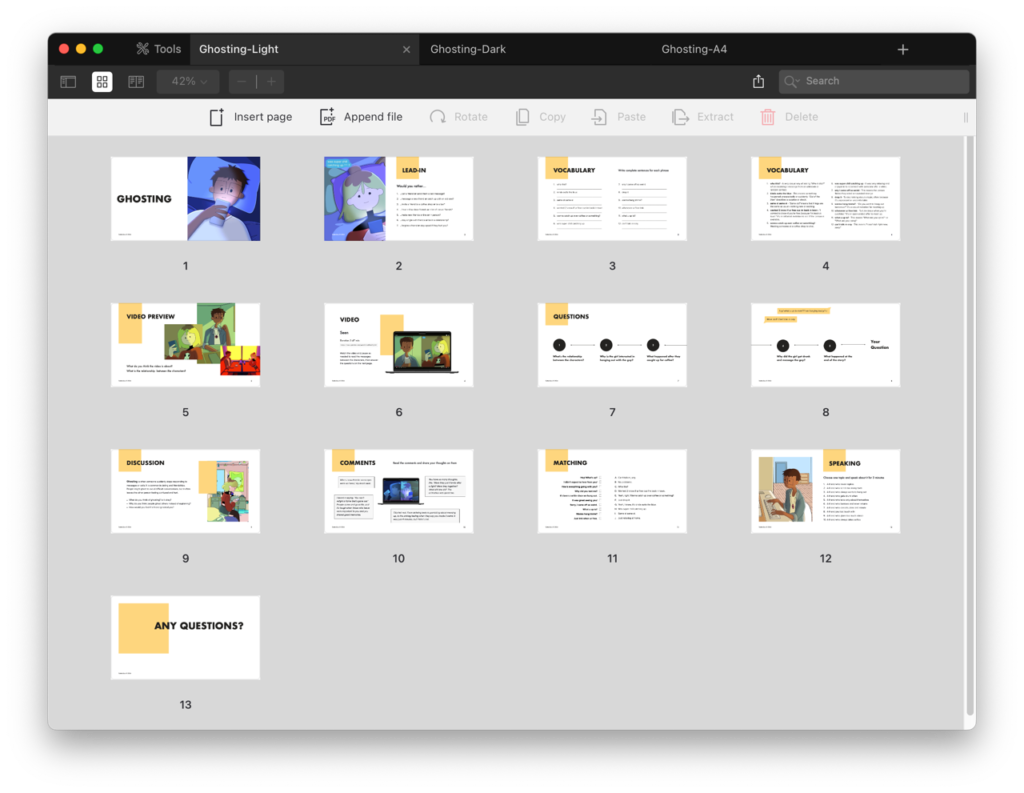
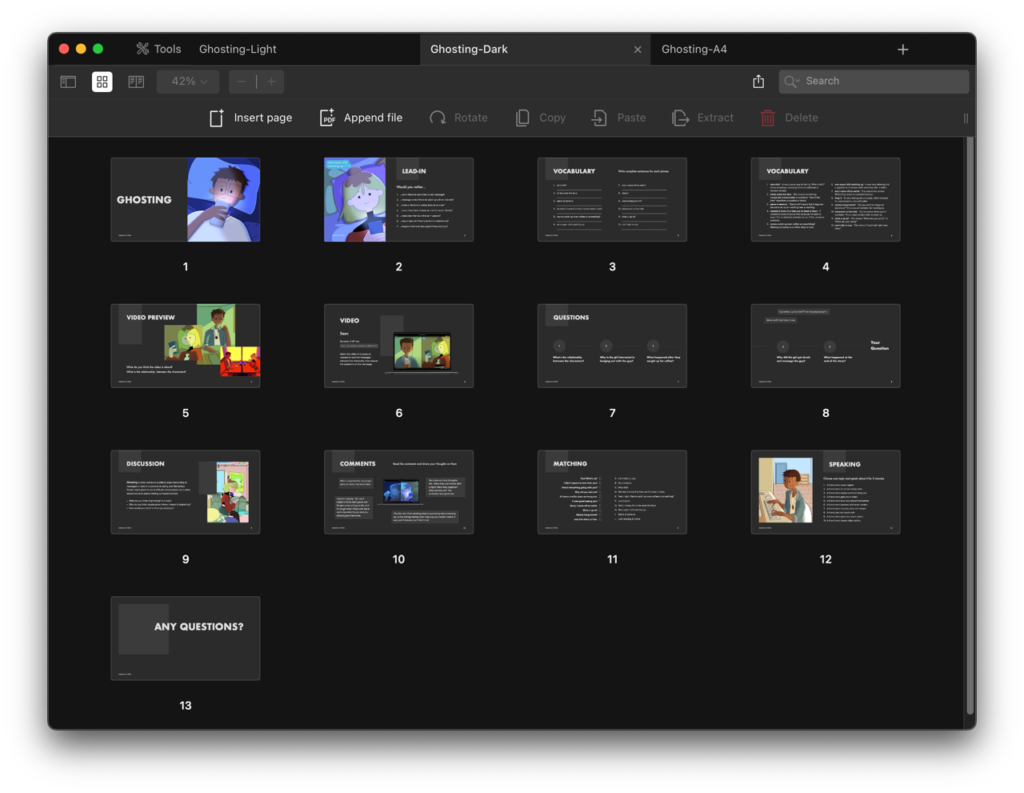
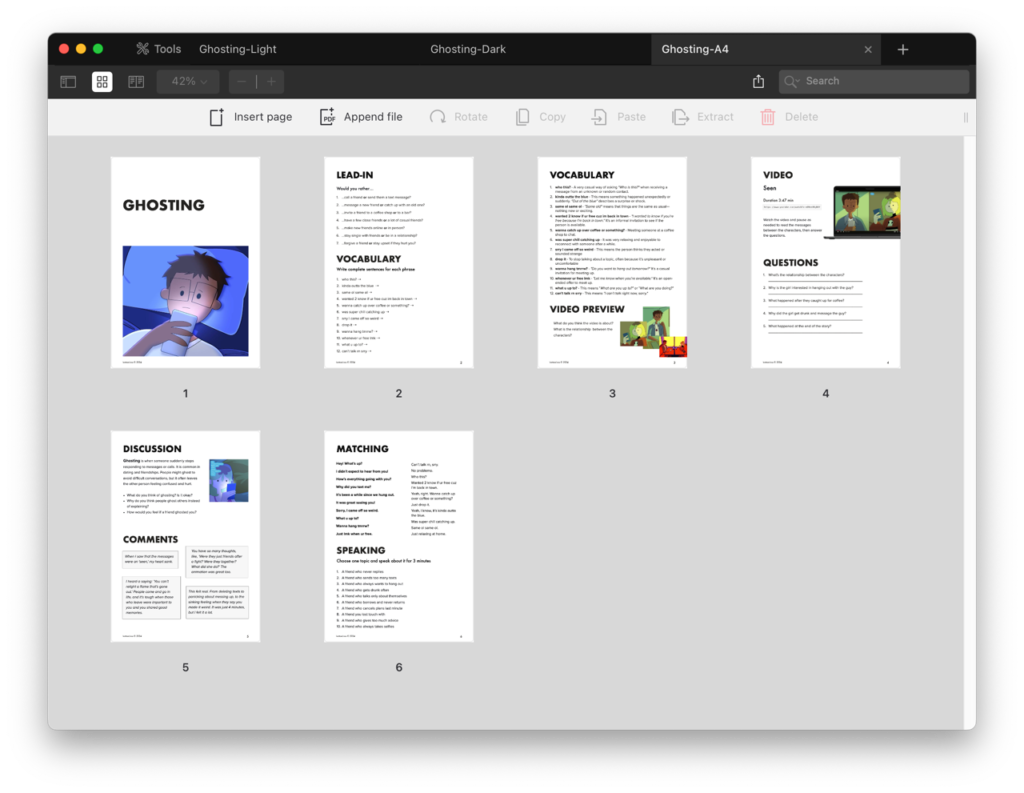
Open with the “would you rather” questions about friendship. These are light and get students talking in pairs right away. Options like “call a friend or send a text” and “forgive a friend or stay upset” set the tone for a lesson about communication and relationships. After a few minutes, move into the texting vocabulary. Twelve text abbreviations appear on screen, and students rewrite each one as a full English sentence. “Srry I came off so weird” becomes “Sorry I came off so weird” or “I’m sorry if I seemed strange.” “Whenever ur free lmk” becomes “Let me know whenever you’re free.” This translation exercise is surprisingly challenging at B1 because students need to understand the meaning before they can rewrite it.
Go through the full explanations on the next slide to make sure everyone caught the right meaning. Pay extra attention to “kinda outta the blue,” “drop it,” and “came off so weird” since these contain phrasal verbs or idioms that B1 students might not know. Then show the video preview screenshot and ask students to predict what the video is about and what the relationship between the characters might be. Play the video. It’s under four minutes but tells a complete emotional story through text messages between two people reconnecting.
Pause the video as needed so students can read the messages on screen. After watching, go through the five comprehension questions. These move from factual to interpretive: what’s the relationship, why did she reach out, what happened after coffee, why did she message him drunk, and how does it end. Then introduce the concept of ghosting with the definition on the discussion slide. The three questions about whether ghosting is okay, why people do it, and how it feels push students to share real opinions. The video comments section adds another layer. Students read three viewer reactions and respond to them, which practices reading comprehension and opinion-giving at the same time.
The matching exercise pairs ten casual messages with ten appropriate responses using the texting language from earlier in the lesson. This checks whether students can use the vocabulary in a conversation flow, not just define individual phrases. End with the speaking marathon. Students pick one of ten friendship topics, like “a friend who always cancels plans” or “a friend you lost touch with,” and speak about it for three full minutes. This is a real challenge at B1, so encourage students to prepare for thirty seconds before starting. Walk around and note good language use or errors to discuss after everyone has spoken.
