
Getting a Haircut

This B1 lesson covers getting a haircut. Students practice vocabulary for hair styles and learn how to talk to a hairdresser or barber. The activities include naming popular cuts, listening to real salon stories, and role-playing tricky situations with a difficult customer or a bad trim.
Lesson overview
- Practice haircut vocabulary including trim, fringe, layers, and split ends
- Discuss personal hair experiences and opinions about visiting the hairdresser
- Role-play conversations at the barber or salon, including common mistakes
- Build listening skills with three real-life stories about haircuts and salon visits
| Level | Vocabulary | Audio Length | Lesson Time |
| B1 / Pre-Intermediate | 10 words | 0:38, 0:37, 0:38 min | 60 min |
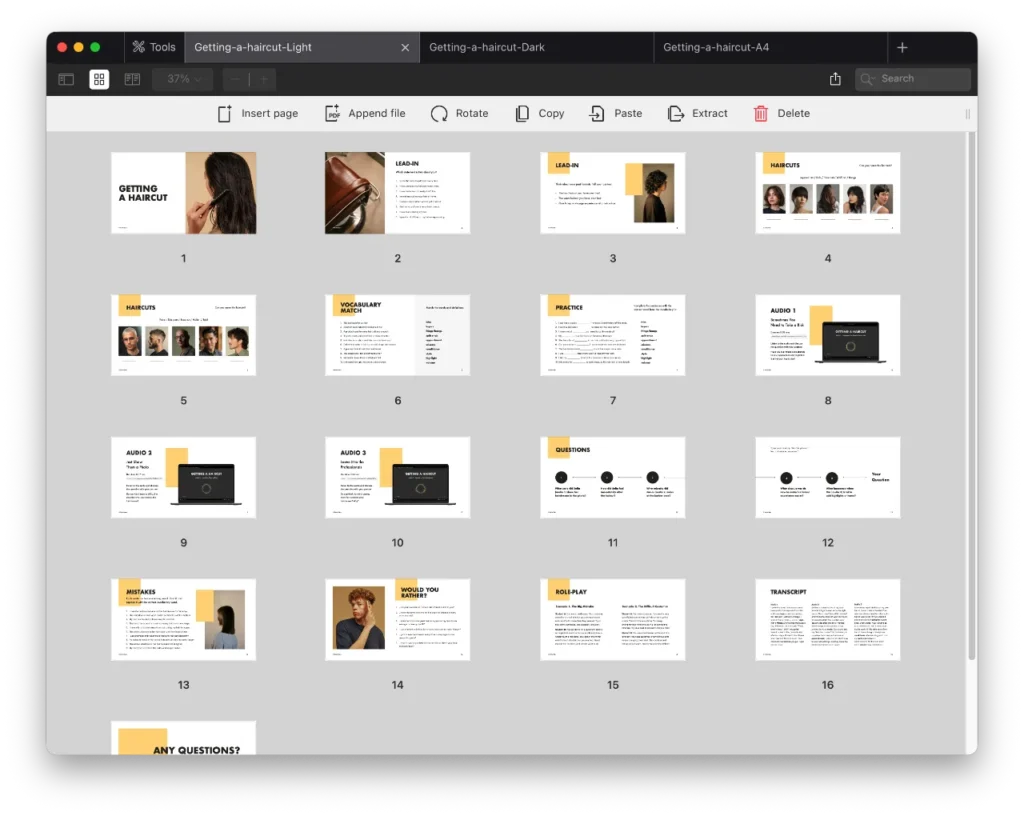
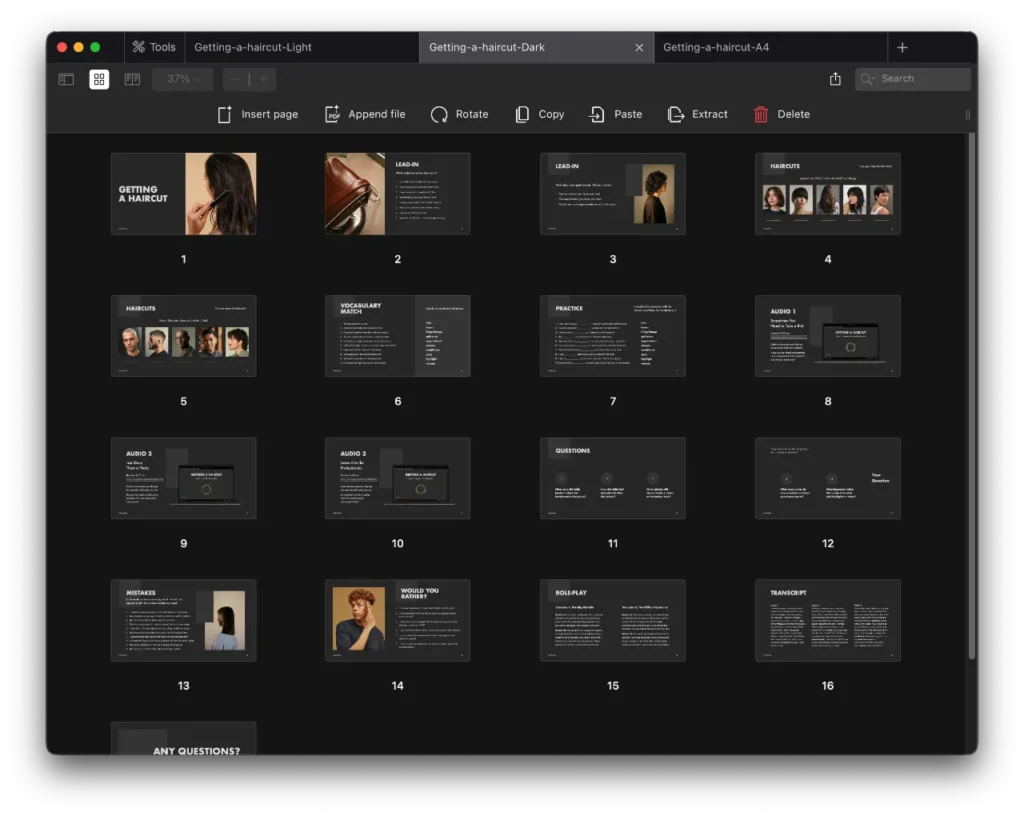
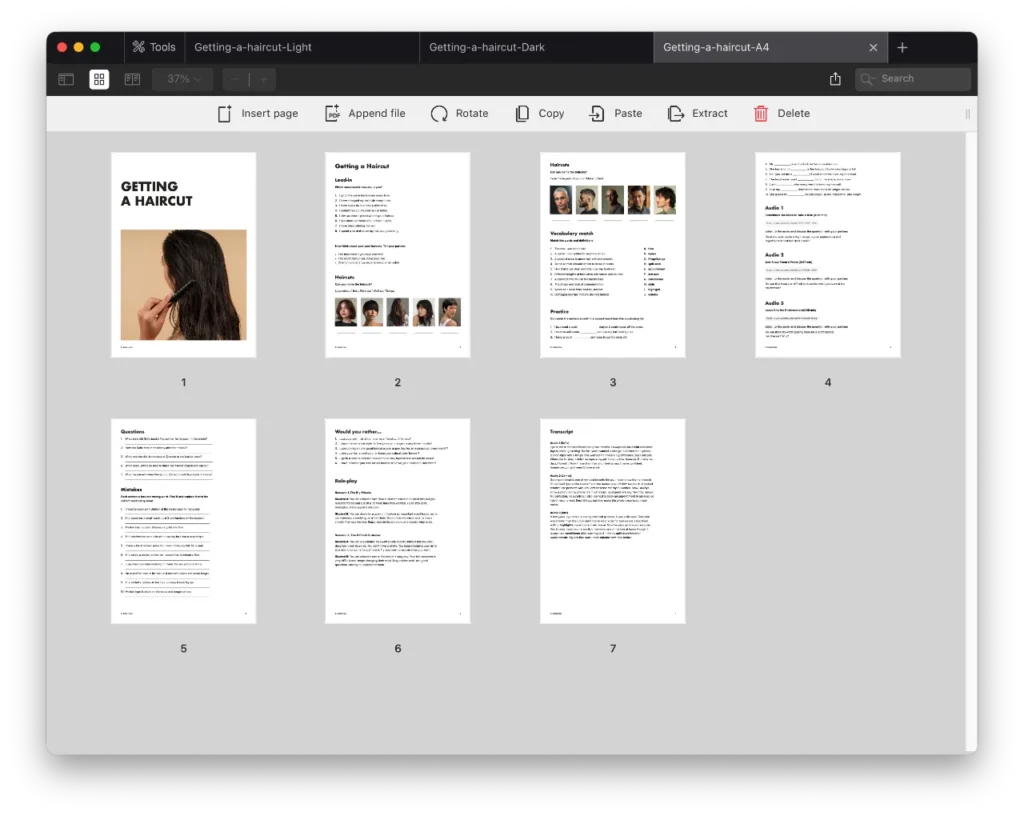
Vocabulary
- trim
- layers
- fringe/bangs
- split ends
- |appointment
- scissors
- conditioner
- style
- highlight
- volume
Contents
- Lead-in
- Haircuts
- Vocabulary match
- Practice
- Audio 1
- Audio 2
- Audio 3
- Questions
- Mistakes
- Would you rather?
- Role-play
- Transcript
Start with the lead-in statements on slide 1. Students read through eight statements and mark which ones are true for them. Give them a minute alone before comparing with a partner. This works well because it pulls in personal experience right away, even before any haircut vocabulary is introduced.
Move to the second lead-in. Students tell their partner about their best haircut, their worst, and one strange or funny experience at a hairdresser or salon. Keep it to about three minutes. It warms up the speaking before the vocabulary activities begin and gives you an early sense of who has a lot to say.
Before the vocabulary matching, go through the hair styles photo slides. Students try to name each cut. They won’t all get it right, and that’s fine. The goal is to build interest before the formal activity. After the photos, students match the ten vocabulary items to definitions, then complete the gap-fill sentences in pairs. The gap-fill prepares them for the listening section, where trim, fringe, and highlights all come up again.
Play each audio clip once, then students discuss. The three stories follow Sofia, who took a risk on a short cut with a fringe. James learned to always show a photo at the barber after one bad experience. Mei tried adding highlights at home and it went badly wrong. Students answer comprehension questions on slides 10 and 11, then correct the ten mistakes sentences on slide 12.
End with the Would You Rather questions and the two role-plays. The role-plays are the most active part of the lesson. Pair students up and give each scenario two to three minutes, then ask them to swap roles. The difficult customer scenario gets a lot of energy out of most groups.
