Gender Equality

This B2 lesson tackles gender equality through a powerful video where men experience questions women hear daily. Students learn vocabulary like “double standard,” “assertive,” and “privileged,” then discuss bias in professional settings. The activities include rewriting inappropriate questions, identifying mistakes, completing opinion statements, and researching female leaders who faced gender-based challenges.
Lesson overview
- Build vocabulary related to bias, privilege, workplace discrimination, and social expectations
- Watch men react to sexist questions women commonly face in professional environments
- Practice identifying double standards and rewriting biased questions in neutral language
- Develop critical thinking by completing personal opinion sentences about gender stereotypes
| Level | Vocabulary | Video Length | Lesson Time |
| B2 / Upper-Intermediate | 10 words | 2:19 min | 60 min |
Vocabulary
- Assertive
- Privileged
- Awkward
- Bias
- Equality
- Perceive
- Double standard
- Inappropriate
- Responsibility
- Confronted with
Contents
- Lead-in
- Discussion
- Vocabulary
- Video
- Discussion
- Agree or Disagree
- Practice
- Comments
- Mistakes
- Speaking
- Quote
- Homework
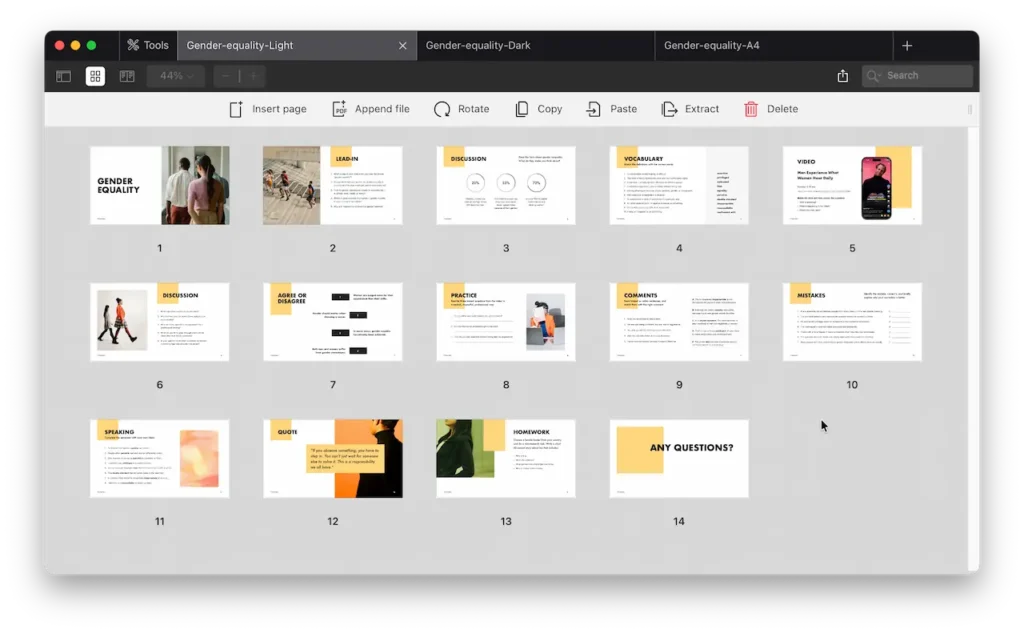
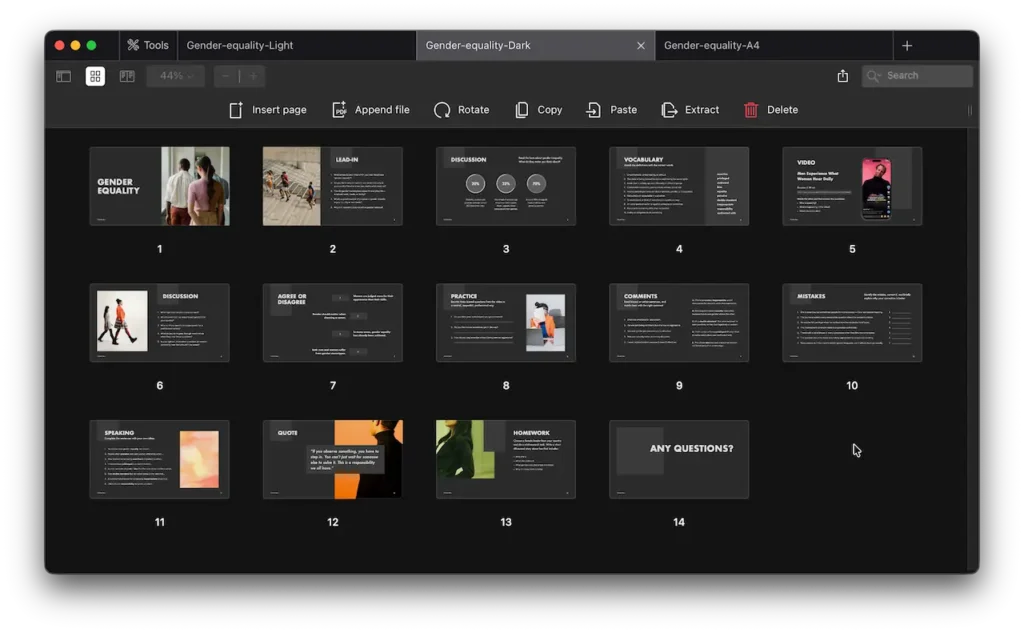
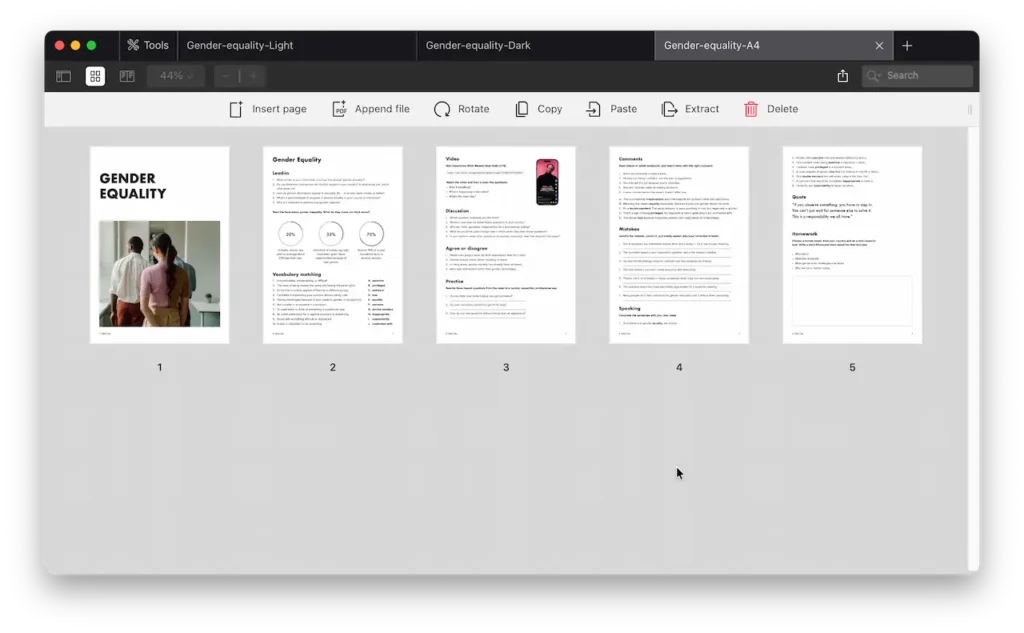
Start with the lead-in questions about what gender equality means and where progress has happened. B2 students can handle abstract concepts like systemic inequality and stereotypes in media. The statistics on slide 3 provide concrete data about pay gaps, opportunity differences, and unpaid labor. Ask students what surprises them most about these numbers.
The vocabulary section introduces ten words central to gender discussions. Make sure students understand the difference between “assertive” and “aggressive” since this distinction appears in the video. “Double standard” is another key term because the lesson explores how identical behavior gets judged differently based on gender. After matching definitions, students see these words in action throughout the activities.
The video runs 2:19 minutes and shows men hearing questions like “Do your looks help you get promoted?” and “How do you balance work and family?” These are questions women face regularly but men almost never encounter. Their awkward reactions reveal how inappropriate these questions are in professional contexts. Play it twice so students catch both the questions and the men’s genuine discomfort.
The discussion questions help students analyze why these questions are problematic and what assumptions drive them. The agree/disagree statements on slide 7 push students to form positions on whether gender equality has been achieved and whether stereotypes harm everyone. These debates work well when students defend their reasoning with examples.
The practice section asks students to rewrite three biased questions professionally. This tests whether they can identify what makes a question inappropriate and fix it. The comments matching activity shows different types of bias like emotional stereotypes, double standards about confidence, and privilege blindness. Students connect biased statements to explanatory comments.
The mistakes exercise requires careful reading. Students find and correct errors like “double meaning” instead of “double standard” or “awkwardly” instead of “awkward.” The sentence completion activity personalizes the vocabulary by asking students to finish statements about their own observations of privilege, bias, and responsibility.
For homework, students research a female leader from their country and write a 60-second story covering her achievements and the gender challenges she faced. This connects the lesson to real examples and gives students speaking practice for the next class.