
Free Time at Home

This A2 lesson teaches free time activities and home vocabulary through pictures, matching, and speaking tasks. Students learn to describe rooms, name household items, and talk about what they do at home. The lesson practices common verbs like watch, play, cook, and clean while building confidence discussing leisure time.
Lesson overview
- Learn vocabulary for rooms, furniture, and common household items for beginners
- Practice verbs used with home activities like cooking, cleaning, and relaxing
- Develop speaking skills by describing favorite rooms and free time activities
- Build confidence using present continuous to talk about what people are doing
| Level | Vocabulary | Lesson Time |
| A2 / Pre-Intermediate | 10 phrases | 60 min |
Vocabulary
- Watch a movie
- Read a book
- Play video games
- Do a puzzle
- Cook dinner
- Clean the house
- Do the laundry
- Surf the internet
- Take a nap
- Play the guitar
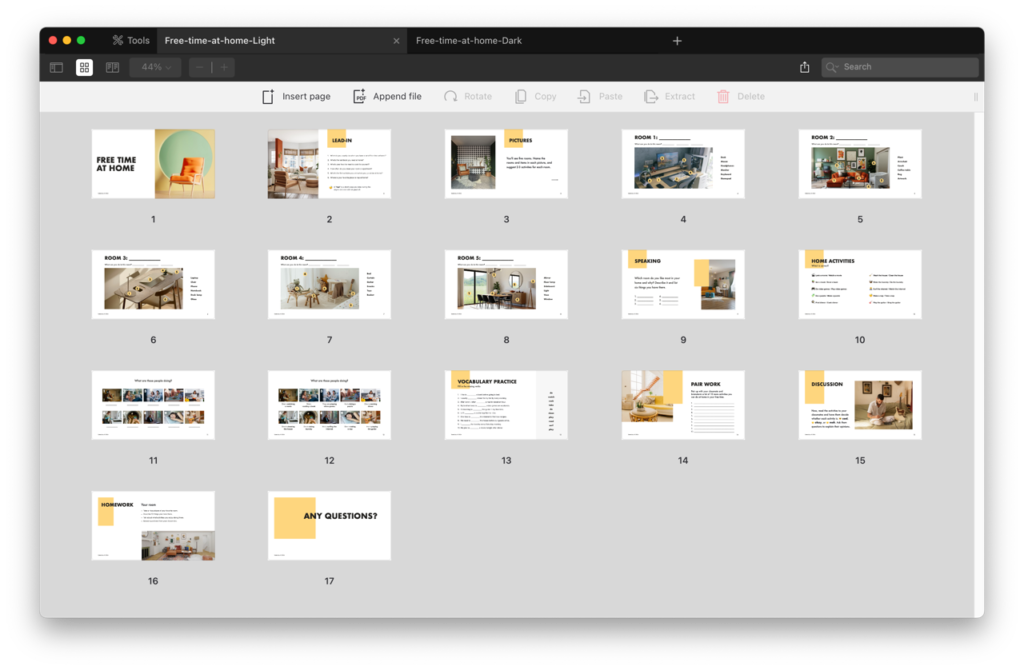
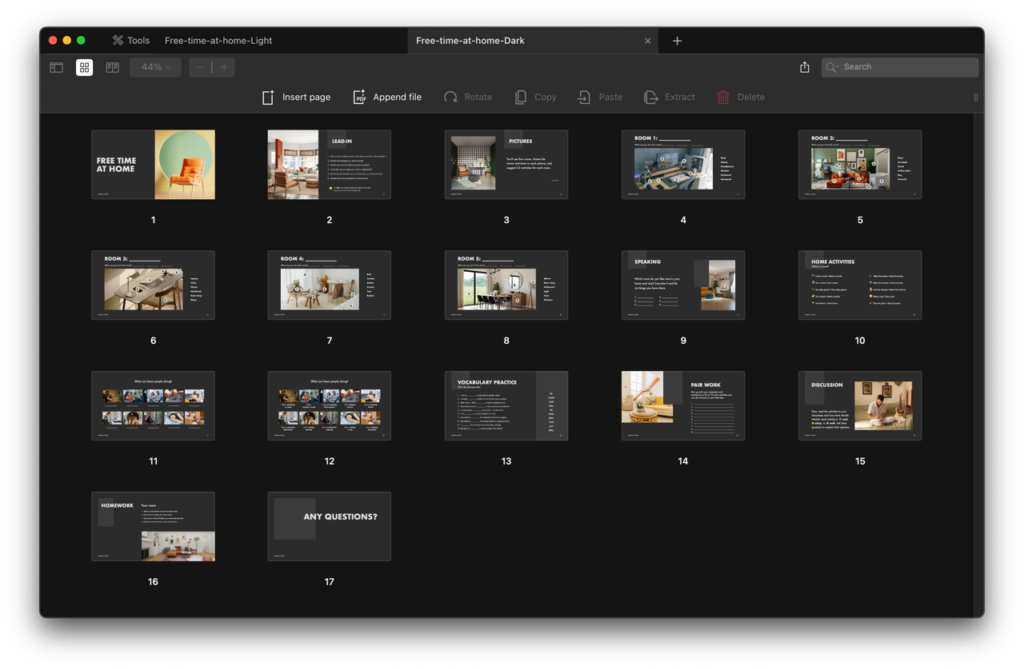
Contents
- Lead-in
- 5 pictures of rooms
- Speaking
- Home activities
- What are these people doing?
- Pair work
- Discussion
- Homework
Start with the lead-in questions about free time at home. These questions are simple enough for A2 learners but personal enough to get everyone talking. Teach the word “nap” upfront since it shows up later and A2 students rarely know it. Move into the picture activity where students name five rooms and suggest activities for each. The pictures work because they show obvious items like desk, couch, and guitar that beginners can actually identify without struggling.
Do the verb collocations activity next. A2 students mess up watch/see, do/make, and play/sing constantly, so drill this hard. Show the pictures of people doing activities and have students practice present continuous. Let them guess first what each person is doing, then show the answers. The repetition locks in both the verbs and the -ing forms if you do it enough times.
The vocabulary practice with fill-in-the-blanks checks if students actually learned the verb collocations or just recognized them during the earlier activity. Walk around and catch common mistakes like “make a nap” or “see a book” while they work.
Wrap up with the pair work where students brainstorm 10 more home activities. A2 students can’t come up with 10 independently, so you’ll need to feed them ideas like “water plants” or “organize photos.” The discussion where classmates rate activities as cool, okay, or meh gets students using opinion language without realizing it. The homework of photographing their favorite room works surprisingly well because students actually care about showing their real space, which makes them triple-check their vocabulary.
