
Fix It or Toss It?

This B1 lesson helps students talk about broken objects and everyday repair decisions. They learn vocabulary like “cracked,” “leaking,” and “chipped,” plus useful phrases like “It’s not worth fixing” and “I’d try to fix it myself.” Activities include picture matching, situational practice, and a personal speaking task.
Lesson overview
- Practice describing common household problems using words like cracked, torn, stained, and won’t turn on
- Learn six functional phrases for talking about repair decisions and when to replace items
- Discuss real scenarios like broken headphones or a ripped backpack and explain your choice
- Prepare a two-minute talk about something broken at home and what you did about it
| Level | Vocabulary | Lesson Time |
| B1 / Intermediate | 16 words and phrases | 60 min |
Vocabulary
- Torn
- Cracked
- Scratched
- Broken
- Dead battery
- Won’t turn on
- Leaking
- Won’t connect
- Chipped
- Stained
- It’s not worth fixing
- I’d try to fix it myself
- I’d take it to a repair shop
- It’s too expensive to fix
- It still works, so I’ll keep using it
- It’s time for a new one
Contents
- Lead-in
- Vocabulary
- Agree or disagree
- Functional language
- Practice
- Fix it or toss it
- Speaking
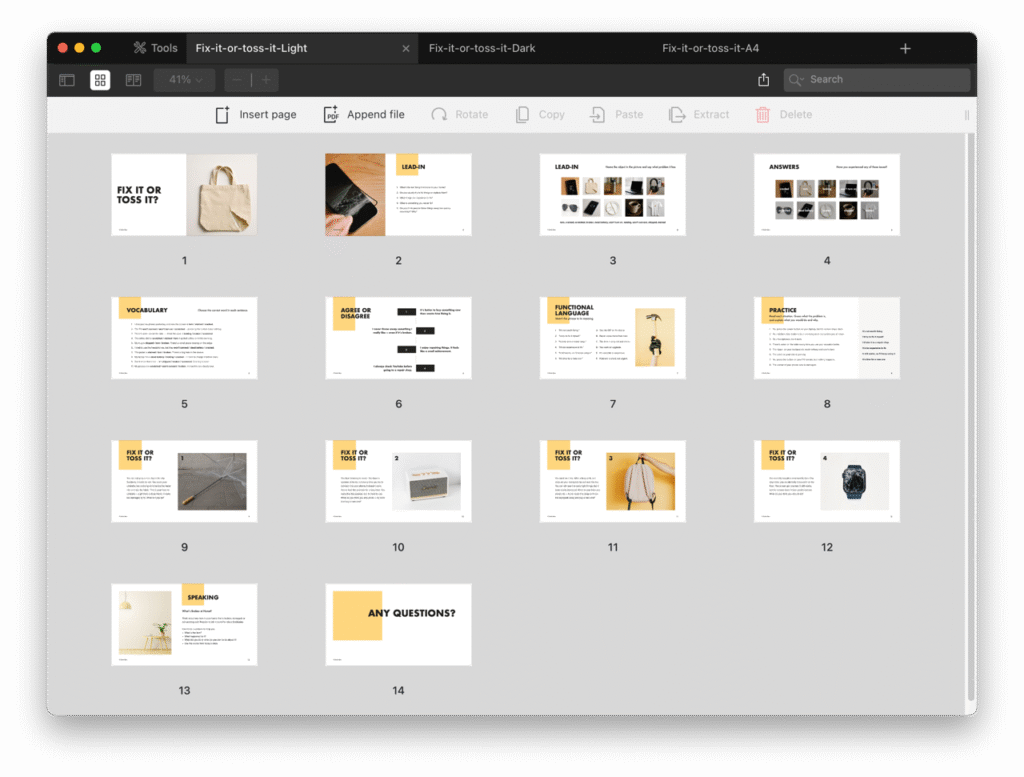
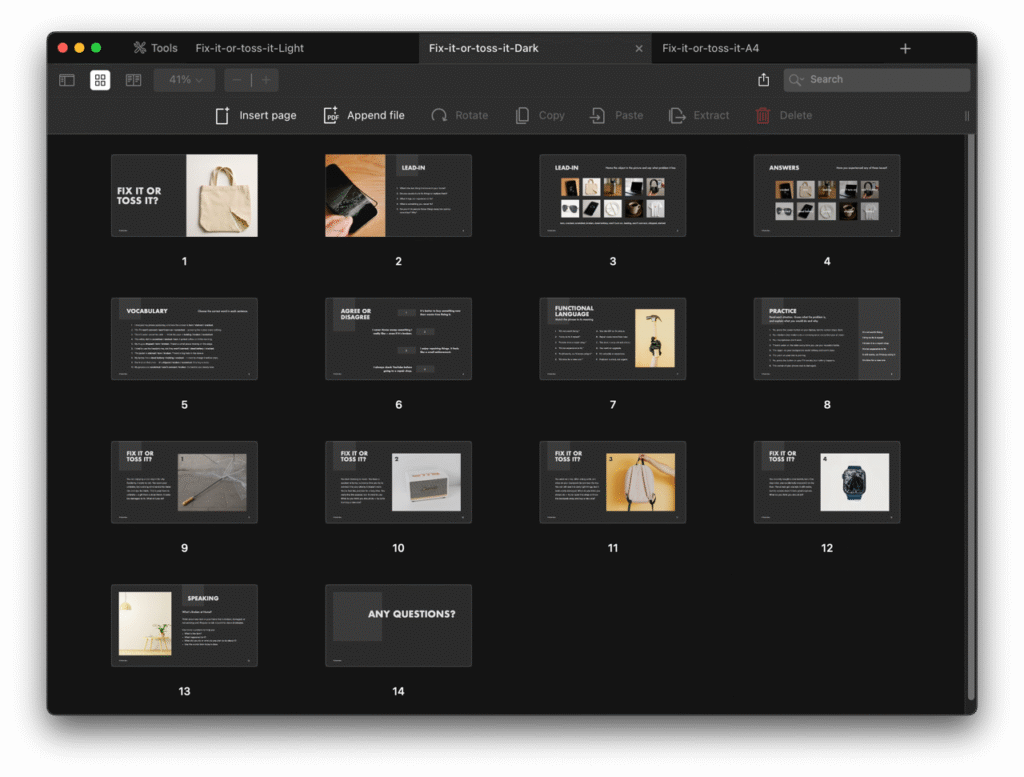
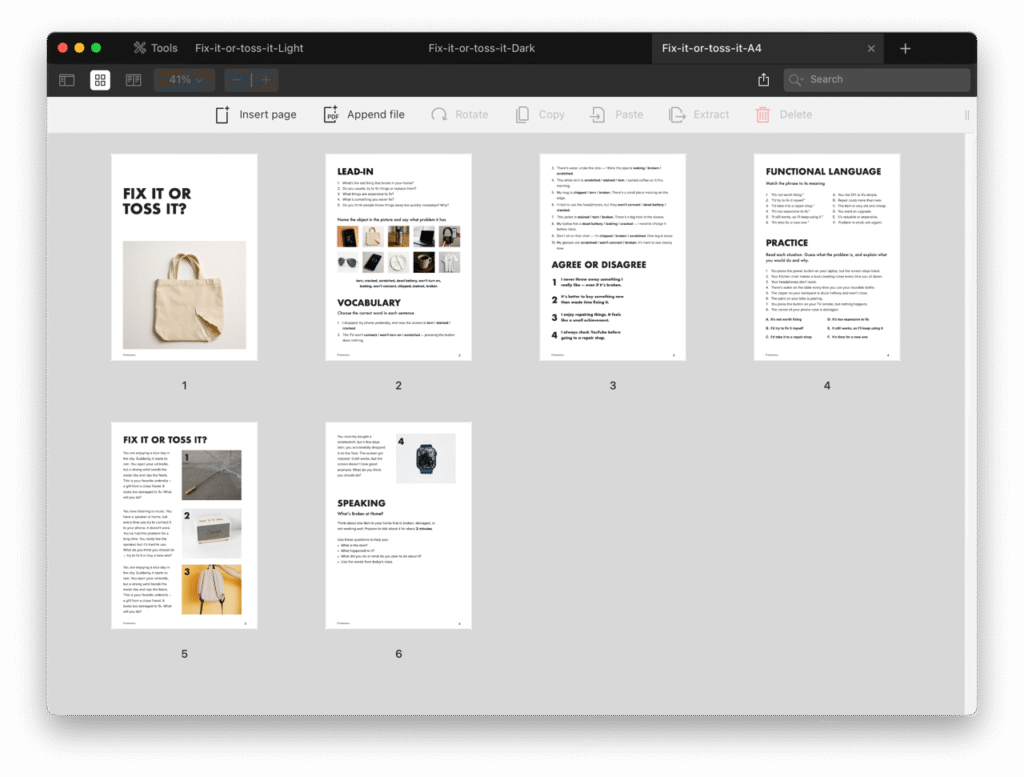
Start with the lead-in questions. These are simple but personal. Most students will have a recent example, so let them share. Question 5 about throwing things away too quickly can spark good discussion if you have a few minutes. Then move to the picture matching. Students name the object and identify the problem using the word bank. Go through answers together and ask who’s experienced each issue. This makes the vocabulary stick.
The vocabulary exercise is straightforward. Students choose the correct word in each sentence. Do the first two together so they understand, then let them finish alone or in pairs. Check answers as a class and drill pronunciation on tricky words like “chipped” and “leaking.” The agree/disagree section works well in pairs. Students read each statement and explain their opinion. Walk around and listen. You’ll hear who’s comfortable and who needs help.
Next is functional language. Students match phrases to meanings. After checking answers, model each phrase with natural intonation. Then move to the practice situations. Students read each problem, guess what’s wrong, and say what they’d do using the phrases. This is where they actually use the language, so don’t skip it. For the four “Fix It or Toss It” scenarios, put students in small groups. Each group discusses one scenario, then shares their decision with the class. Expect different answers. That’s the point.
End with the speaking task. Give students three minutes to prepare their two-minute talk about something broken at home. They can use the guiding questions. Pair them up or do it as a class depending on time. Encourage them to use today’s vocabulary and phrases. If someone finishes early, they can ask follow-up questions.
