
Five Days You Need Monthly

This B1 lesson introduces five types of monthly reset days for better mental health and balance. Students learn vocabulary like “life admin,” “digital detox,” and “recharge,” then read about reset days, wellness days, and reflection days. Activities include ranking the days by usefulness, discussing personal habits, and creating a sixth special day.
Lesson overview
- Practice mental health vocabulary including clutter, pile up, comfort zone, reflection, consistency, and wellness
- Read about five monthly reset days covering life admin, digital detox, exploration, reflection, and wellness
- Rank the five days from most to least useful and explain reasoning using comparative language
- Create and present a sixth special day with activities and benefits using target vocabulary
| Level | Vocabulary | Lesson Time |
| B1 / Intermediate | 10 words | 60 min |
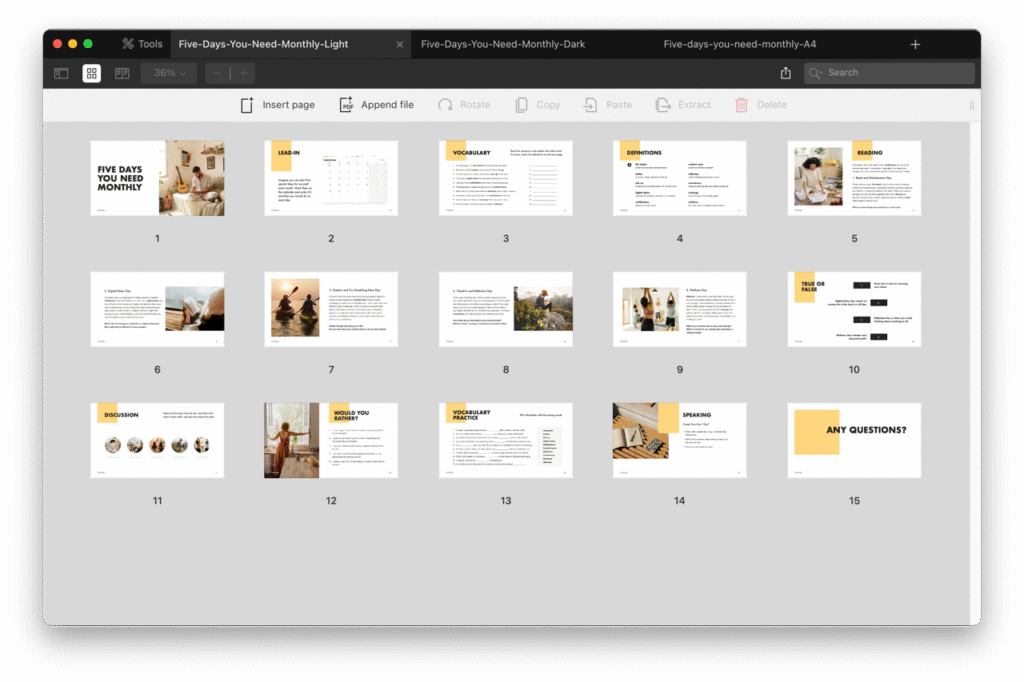
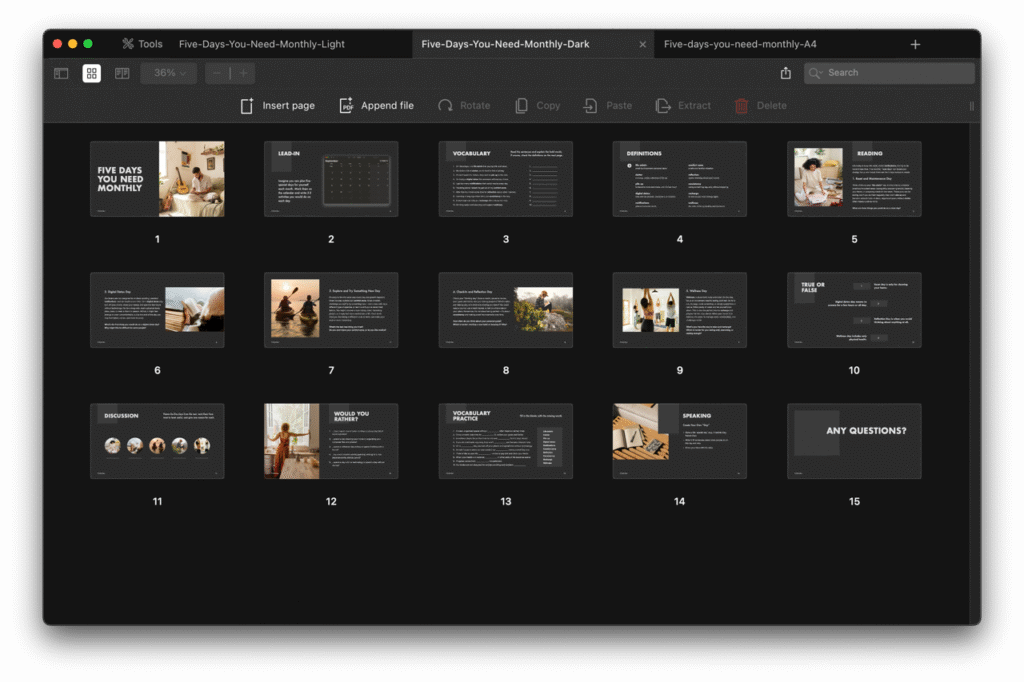

Vocabulary
- Notifications
- Life admin
- Clutter
- Pile up
- Digital detox
- Comfort zone
- Reflection
- Consistency
- Recharge
- Wellness
Contents
- Lead-in
- Vocabulary
- Definitions
- Reading
- True or false
- Discussion
- Agree or disagree
- Would you rather
- Vocabulary practice
- Speaking
Start with the calendar activity. Students imagine five special days each month and write activities for each. This personalizes the topic before they see the reading. Give them three minutes, then ask a few students to share one day they chose. Move to vocabulary. Students read sentences and explain bold words. If they’re unsure, they check definitions on the next page. This self-check approach works well at B1 because students can assess their own knowledge first.
The reading has five sections, one per reset day. Each section ends with questions. Read the first section together, then answer the questions as a class. After that, students can read the remaining four sections alone or in pairs and discuss the questions. Walk around and listen. The questions ask about personal experience and opinions, so answers will vary. That’s good because it keeps the discussion authentic.
After reading, do the true/false activity to check comprehension. Then move to the ranking discussion. Students name all five days, rank them from most to least useful, and give reasons. This pushes them to use comparative structures and justify opinions. Expect different rankings. Some students will value wellness day most, others will pick digital detox or reflection. The “would you rather” questions add a lighter tone after the heavier ranking task. These work well in pairs.
The vocabulary practice reinforces the ten key words. Students fill in blanks using the word bank. Check answers together and clarify any confusion. End with the speaking task. Students create a sixth special day, write five to ten sentences about it, then present to the class. Examples might include Creativity Day, Family Day, or Adventure Day. Give them five minutes to prepare, then have each student or pair present. Encourage them to use vocabulary from the lesson.
